
Septoria
Septoria
Description
How to identify
Septoria refers to a large genus of imperfect fungi (Ascomycota) that act as significant plant pathogens. These fungi are responsible for causing various leaf blotch diseases across a wide range of monocot and dicot plant species.
The fungus survives as mycelium or pycnidia within crop debris, infected seeds, or volunteer plants. Under favorable environmental conditions, the pycnidia release spores (conidia) which serve as the primary source of infection for new growth.
Dissemination is primarily driven by rain splash, which transports spores from lower leaves to the upper canopy. The pathogen thrives in cool, wet environments, making prolonged spring rains particularly dangerous for crop health.
Once a spore lands on a susceptible host tissue, it germinates and penetrates the leaf surface via stomata or epidermal ruptures. The incubation period depends on temperature, typically ranging from a few days to two weeks.
Septoria species are highly adaptive and can evolve rapidly, necessitating constant vigilance and effective resistance management programs in agricultural production systems.
What it damages
The economic impact of Septoria is substantial, primarily affecting wheat and other cereal grains. The disease damages the photosynthetic area of the leaves, directly reducing the plant's ability to produce carbohydrates.
Severe infestations lead to premature senescence and leaf death, which significantly lowers the yield potential by reducing the grain filling duration and individual kernel weight.
In addition to yield loss, the quality of the harvested grain is often compromised. Lower protein content and shriveled grains are common consequences of untreated Septoria epidemics.
While the most visible damage occurs on foliage, systemic infections or early stem colonization can weaken the plant's structural integrity, making it susceptible to lodging.
The pathogen can also affect horticultural crops, such as tomatoes and leafy greens, rendering produce unmarketable due to unsightly lesions and accelerated decay.
Signs of infestation
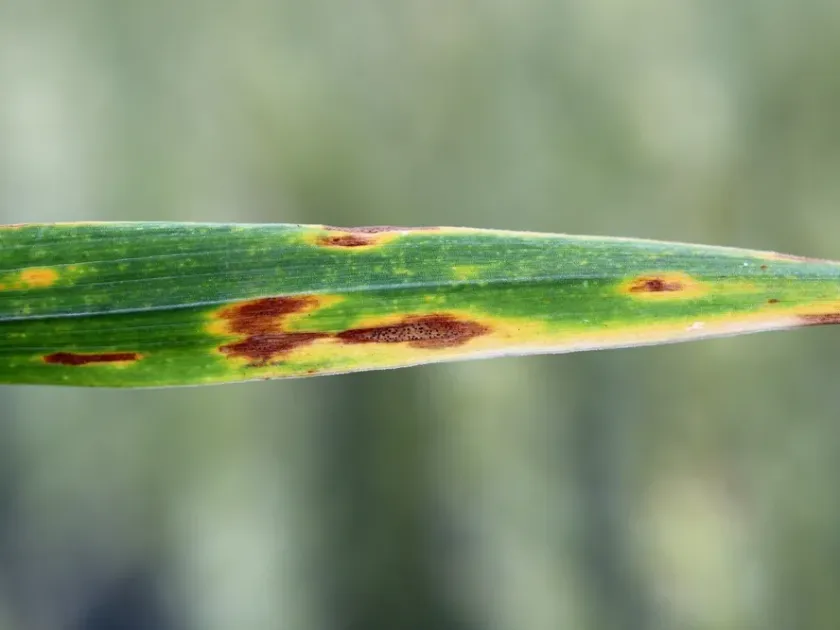
Symptoms typically begin as small, pale spots that gradually enlarge into irregular, necrotic lesions often surrounded by a chlorotic halo. These lesions eventually turn brown or grey.
A diagnostic characteristic of Septoria infection is the presence of pycnidia, appearing as tiny, black, pepper-like specks embedded within the necrotic tissue of the lesion.
On wheat, the disease progresses from the lower leaves upward. If the flag leaf is heavily infected, the impact on grain yield is maximized, making timing of control measures critical.
In tomatoes, Septoria leaf spot manifests as small, circular lesions with dark brown borders and lighter centers, causing leaves to yellow and drop prematurely.
In conditions of high humidity, the fungal mass may appear as a milky or slimy exudate oozing from the pycnidia, facilitating further spread by insect vectors or machinery.
Control measures
Effective management of Septoria requires an integrated strategy that combines cultural practices with targeted fungicide applications during the growing season.
- Crop rotation to break the pathogen's life cycle by eliminating the host crop for at least two years.
- Destruction of infected crop residue via deep plowing or burning to reduce primary inoculum.
- Utilization of resistant or tolerant cultivars to minimize the baseline pressure of the disease.
- Strategic fungicide application, prioritizing systemic treatments during periods of high humidity.
Chemical control usually involves triazoles, strobilurins, or multi-site inhibitors. It is essential to rotate chemical modes of action to mitigate the development of fungicide resistance.
Field scouting and disease forecasting models are vital tools for agronomists to determine the optimal timing for protective sprays, ensuring maximum efficacy and return on investment.
Causes diseases · 3
Discussion
No discussions yet — be the first.