
Septoria albopunctata
Septoria albopunctata
Septoria albopunctata is a fungal phytopathogen belonging to the kingdom Fungi, phylum Ascomycota, and genus Septoria.
What the section contains
Septoria albopunctata
It acts as a causative agent of septoria-related diseases on various plant species, colonizing the tissue and forming specialized structures for asexual reproduction.
The fungus is characterized by the production of pycnidia, small flask-shaped fruiting bodies that emerge through the plant epidermis during the late stages of infection.
Inside these pycnidia, the fungus produces conidia, which are released into the environment to initiate new infection cycles under suitable weather conditions.
Taxonomically, this species is part of a complex group of fungi that require careful observation and molecular analysis for accurate identification and differentiation.
The primary damage caused by this pathogen is the necrosis of leaf tissue, which directly disrupts the plant's photosynthetic capacity.
By reducing the functional leaf area, the fungus impairs the plant's ability to produce biomass, leading to reduced growth and poor overall development.
Severe infections often cause premature leaf senescence and abscission, which weakens the plant significantly before it reaches maturity.
In agricultural settings, this infection translates into lower yields and poor grain or fruit quality, resulting in economic losses for producers.
Secondary infections are more likely to occur on plants already stressed by Septoria, as the structural integrity of the leaf tissues is compromised.
The disease cycle is strongly dependent on environmental factors, particularly temperature and humidity levels during the growing season.
Infection is most active during periods of high humidity or frequent rainfall, which facilitate the germination of conidia and their spread across the canopy.
The pathogen can survive the off-season by resting in crop residues, soil, or even on infected seeds, providing a reservoir for infection in the spring.
Once the environmental conditions become favorable, the fungus begins a new cycle of infection, spreading rapidly from the lower leaves to the upper foliage.
High temperatures and dry periods can suppress the development of the fungus, although the mycelium may remain dormant until moisture returns.
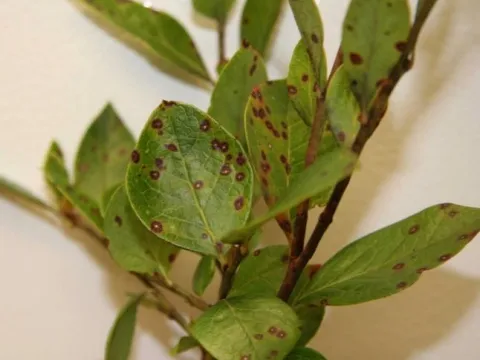
The most visible sign of infection is the development of necrotic spots on leaves, which typically have a pale, whitish, or grey center.
Small, dark-colored pycnidia can often be seen inside these spots, appearing as tiny black specks when examined with a hand lens.
- Formation of chlorotic and necrotic spots on leaves.
- Brown or dark margins surrounding the pale-colored infection sites.
- Leaf yellowing followed by premature dropping of lower foliage.
Symptoms are usually most pronounced on older, lower leaves where the moisture level remains higher for longer periods of time.
In cases of heavy infestation, the spots may coalesce, covering large parts of the leaf and causing severe defoliation of the crop.
Effective management begins with strict adherence to crop rotation, which breaks the pathogen's life cycle by removing its host plant.
Sanitation practices, such as the deep incorporation of crop residues into the soil, are essential for reducing the primary inoculum source.
Chemical control involving the application of registered fungicides is recommended when infection levels reach a certain economic threshold.
The use of certified disease-free seeds and resistant crop cultivars remains the most sustainable approach to managing Septoria outbreaks.
Regular field scouting is vital for early detection of the disease, allowing farmers to apply protective measures before the infection spreads extensively.