
Septoria leaf blotch
Septoria tritici
Description
How to identify
The causative agent of the disease is a microscopic fungus belonging to the kingdom Fungi, phylum Ascomycota. Modern taxonomy classifies it as Zymoseptoria tritici. It is an obligate phytopathogen that specifically targets the vegetative organs of cereals.
The fungus overwinters on plant debris, volunteers, and winter crops in the form of mycelium and pycnidia. The primary source of infection consists of ascospores carried by wind and conidia dispersed by rain splashes.
The life cycle includes both asexual (conidial) and sexual (ascospore) reproduction. Multiple generations of conidia can occur during the growing season, facilitating the rapid epidemic spread of the disease under favorable conditions.
Ideal conditions for pathogen development include moderate temperatures ranging from 15 to 25 degrees Celsius and high relative humidity. Prolonged rainy periods during the stem elongation phase significantly accelerate disease outbreaks.
The pathogen can infect the crop at all stages of development, from seedling emergence to grain filling. A heavy infection load leads to a drastic reduction in the leaf area available for photosynthesis.
What it damages
Septoria primarily affects wheat but can also be found on barley, rye, and various wild grass species. The disease impacts leaves, leaf sheaths, stems, and occasionally the wheat ears.
The primary damage is the premature death of infected leaves, which severely limits the plant's photosynthetic capacity. This results in stunted ear development and a significant reduction in the thousand-kernel weight (TKW).
Early season infection can reduce tillering and cause overall plant decline. In years with high disease pressure, yield losses can range from 15 to 40 percent of the potential harvest.
Infected grain often suffers from reduced bushel weight, lower germination rates, and poor technological quality. Furthermore, the fungal metabolism within the host plant can impair the baking quality of the resulting flour.
Beyond quantity losses, severe infestations compromise the market value and grade of the grain, leading to significant economic losses for producers.
Signs of infestation
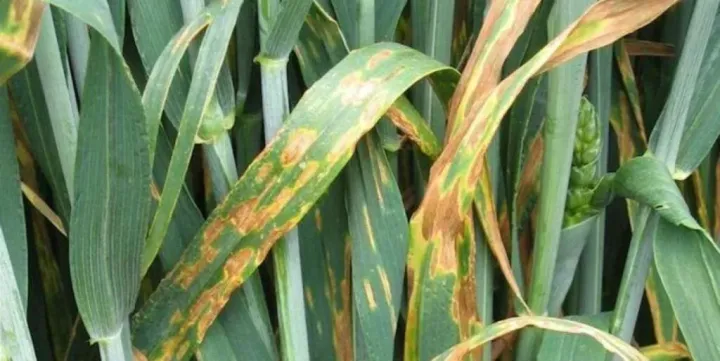
Initial symptoms appear as small, chlorotic spots that gradually expand into larger, yellow-brown lesions. A diagnostic hallmark is the presence of small, dark brown or black specks within the spots, known as pycnidia.
The lesions are often irregular or elongated in shape, frequently surrounded by a yellow halo. In humid weather, clusters of conidia may be visible as slimy masses or tendrils emerging from the pycnidia.
As the disease progresses, these lesions coalesce, leading to necrosis and tissue death, eventually causing the entire leaf to wither. Infection typically begins on the lower canopy and moves upwards to the upper leaves.
Stem infection appears as brownish or greyish discolored patches containing pycnidia, which may cause lodging. Ear infection results in discolored, spotted glumes that can mimic other leaf spot diseases.
For accurate field diagnosis, using a magnifying lens to identify pycnidia is highly recommended. This visual confirmation is the most reliable way to distinguish Septoria from other types of leaf spots.
Control measures
Effective management relies on a combination of cultural practices and chemical control. Crop rotation is essential to break the life cycle of the fungus and prevent the buildup of inoculum in the field.
Proper burial of infected crop residue via deep plowing is a crucial cultural measure, as these remains are the primary reservoir of the pathogen. Controlling volunteer wheat is also vital for reducing disease carryover.
Selecting resistant or tolerant wheat varieties is a key strategy for mitigating damage. Adjusting planting dates to avoid high-risk periods for primary infection can also provide substantial benefits.
Chemical control involves the application of fungicides, particularly when symptoms appear on the flag leaf. Effective products typically belong to the triazole, strobilurin, and carboxamide classes of chemistry.
- Implementation of diverse crop rotation schemes.
- Deep soil cultivation to bury infected stubble.
- Monitoring of disease incidence from stem elongation onwards.
- Application of fungicides based on threshold levels and weather forecasts.
Causes diseases · 1
Discussion
No discussions yet — be the first.