
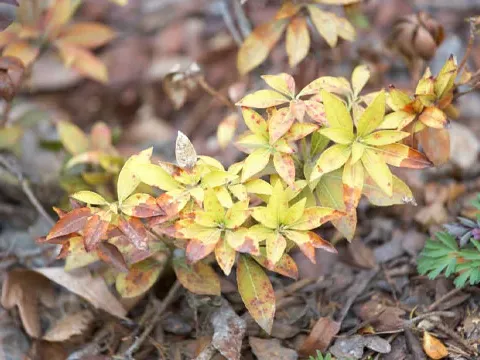
Septoria leaf spot of rhododendron
Septoria rhododendri
The causative agent of the disease is the fungus Septoria rhododendri, which belongs to the kingdom Fungi, division Ascomycota. This pathogen specifically targets rhododendron species.
What the section contains
Septoria leaf spot of rhododendron
The fungus reproduces through the formation of pycnidia, small fruiting bodies embedded within the infected plant tissue. Inside these structures, numerous conidia are produced and released under humid conditions.
The pathogen thrives in cool, moist environments and is commonly spread via splashing water from rain or irrigation. It survives the winter in fallen leaves and on infected branches, creating a reservoir of inoculum.
After finding a suitable host leaf, the spores germinate and penetrate the tissue through stomata or small wounds. Once inside, the fungal mycelium begins to colonize the leaf, extracting nutrients from the host cells.
This fungus is taxonomically classified as a coelomycete, meaning it produces spores within a protected structure, which makes it particularly resilient to unfavorable environmental conditions.
The disease primarily affects the foliage of both evergreen and deciduous rhododendrons. In severe cases, it can spread to young twigs and buds, causing localized necrosis.
Premature leaf drop is the most significant consequence of a Septoria infection. As leaves fall, the plant loses its aesthetic value and its ability to photosynthesize efficiently, leading to reduced vigor.
Weakened plants become significantly more susceptible to environmental stress, including winter damage and secondary pest infestations, which can further jeopardize the health of the entire shrub.
In nursery settings, Septoria leaf spot can lead to heavy economic losses as the plants become unsuitable for sale due to their unsightly appearance and potential to spread infection.
The cumulative effect of tissue damage over several seasons can lead to stunted growth and, in extreme cases, the death of branches or the entire plant.
Symptoms appear as small, circular, or irregular spots on the leaves. These spots usually feature a gray or brown center, often surrounded by a dark purple or reddish-brown halo.
A distinctive feature of this disease is the presence of tiny, black, pepper-like dots scattered within the infected spots. These are the pycnidia, which are easily visible under a hand lens.
As the infection progresses, individual spots may coalesce into larger blotches, covering a significant portion of the leaf surface. Affected leaves often turn yellow and fall off prematurely.
During periods of high humidity, the pycnidia may exude a mass of spores, appearing as a slight, slimy, or dusty coating on the leaf surface, which facilitates further disease spread.
The symptoms typically manifest first on older leaves in the lower part of the shrub, gradually working their way up as the fungus spreads across the canopy.
The foundation of effective control is sanitation. Removing and destroying all fallen leaves at the end of the season is essential to break the life cycle of the pathogen.
Improving air circulation around the plants through proper spacing and pruning helps keep foliage dry, which limits the ability of spores to germinate and infect healthy leaves.
Fungicide applications are recommended for chronic infections. Copper-based sprays or systemic fungicides should be applied preventively or at the very first sign of spotting.
- Remove and destroy infected plant debris consistently.
- Ensure adequate spacing to promote quick drying of leaves.
- Apply fungicide treatments during wet, humid weather conditions.
- Disinfect pruning tools with alcohol or bleach after each use.
Promoting overall plant health through balanced fertilization and proper soil pH management significantly enhances the natural resistance of rhododendrons to fungal leaf spots.