
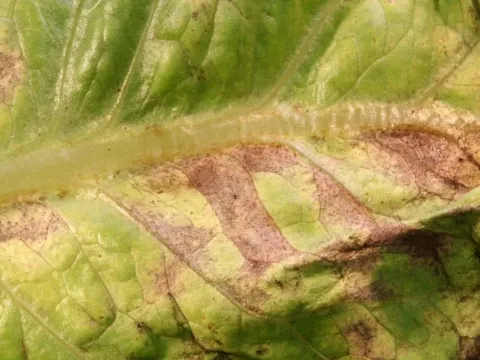
Septoria leaf spot of lettuce
Septoria lactucae
Septoria leaf spot of lettuce is caused by the fungus Septoria lactucae, an ascomycete pathogen that specializes in infecting lettuce plants. It is a common disease in regions with moderate, humid climates.
What the section contains
Septoria leaf spot of lettuce
The fungus produces pycnidia, which appear as small, dark, embedded fruiting bodies on the surface of necrotic leaf spots. These structures release spores that spread the infection throughout the field.
The pathogen persists in the soil on crop debris, making sanitation one of the most critical aspects of disease management in lettuce production.
Taxonomically, the fungus is classified within the order Sphaeropsidales. It is known for its ability to quickly colonize host tissue under favorable environmental conditions.
Under a microscope, the pycnidia contain numerous thread-like spores (pycnidiospores). These spores are the primary means of transmission via water splash and wind dispersal.
The disease primarily damages the foliage of the lettuce plant. Symptoms typically start on the lower, older leaves that are closer to the damp soil surface.
As the spots enlarge and coalesce, significant necrosis occurs. This reduces the photosynthetic area of the plant, leading to stunted growth and reduced head weight.
The aesthetic value of the lettuce is severely compromised, rendering it unsuitable for the fresh market. In severe cases, the entire head may wither and collapse.
Economic losses are highest in commercial production when infection occurs near harvest time, as damaged leaves cannot be trimmed without affecting the final product weight.
Secondary infections, such as soft rot bacteria, often colonize the weakened, necrotic tissues, accelerating the decay of the lettuce heads.
Septoria leaf spot thrives in cool to moderate temperatures, typically ranging from 15°C to 25°C, accompanied by high moisture levels.
The disease is most prevalent during periods of frequent rainfall, high humidity, or heavy dew, which promote spore germination and infection of the leaves.
In greenhouse settings, the disease cycle is often triggered by poor ventilation and the buildup of condensation on leaves following irrigation.
Spring and autumn seasons provide the most favorable conditions for disease progression, as the nights remain cool and humid for long periods.
Extended wet weather cycles facilitate the rapid spread of the fungus, allowing it to transition from minor leaf spotting to a widespread field epidemic.
Initial signs include small, water-soaked, circular to irregular spots that appear on the lower leaves. These spots soon turn light brown or tan in color.
A diagnostic feature is the appearance of tiny, black, pepper-like pycnidia within the center of these dead areas, which are visible to the naked eye or with a hand lens.
Surrounding the lesions, a yellowing (chlorosis) of the leaf tissue often occurs as the plant attempts to wall off the infection.
As the disease progresses, the centers of the spots may dry out and become brittle, often tearing away and leaving irregular holes in the leaf blades.
When humidity is high, the fungus may produce a mass of spores that can be seen as a dull, grayish film on the surface of the lesions.
Effective management requires a multi-faceted strategy focused on preventing the introduction of the pathogen and reducing favorable conditions for fungal growth.
Crop rotation is essential; planting lettuce in the same field should be avoided for at least 3 years to allow soil-borne inoculum to decline.
- Use pathogen-free seeds and transplants to avoid initial field contamination.
- Switch from overhead irrigation to drip irrigation to keep foliage dry.
- Remove and destroy all crop debris immediately after harvest to reduce overwintering sites.
- Ensure wide spacing between plants to maximize airflow and reduce canopy humidity.
Fungicides can be used as a preventative measure, but they should be part of an integrated program to avoid the development of resistant fungal strains.
Selecting varieties with known field resistance or tolerance to Septoria is a long-term solution that significantly reduces the reliance on chemical inputs.