
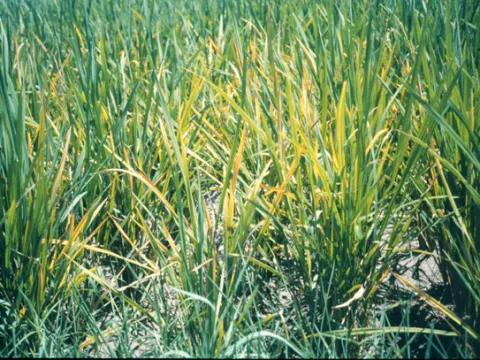
Rice tungro
Rice tungro
Rice tungro is a major viral disease caused by a combination of two viruses: Rice tungro bacilliform virus (RTBV) and Rice tungro spherical virus (RTSV). This phytopathogen acts as a complex that requires specific vectors for transmission.
What the section contains
Rice tungro
The virus is taxonomically classified as a plant-infecting virus that relies on insect vectors, specifically the green leafhopper (Nephotettix virescens), to move between plants. It cannot survive independently in the soil or water.
Transmission occurs in a semi-persistent manner. A leafhopper acquires the virus after feeding on an infected plant for a short time and remains infectious for a relatively brief period before needing to feed again on an infected host.
The severity of the disease is often linked to the interaction of both virus particles. While the spherical virus (RTSV) facilitates the transmission, the bacilliform virus (RTBV) is largely responsible for the most severe symptoms observed in infected rice.
Field diagnosis often relies on observation of symptoms, but confirmation requires molecular tools like PCR or ELISA tests. These identify the presence of viral RNA or proteins in the leaf sap of the affected rice stalks.
The primary host is Oryza sativa, the common rice plant. Tungro disease causes significant economic losses globally, particularly in South and Southeast Asia, where it is considered one of the most destructive rice diseases.
The damage caused by Rice tungro is particularly devastating to young seedlings. When a crop is infected early in its life cycle, it can lead to complete failure of the plant to produce a harvestable yield.
The virus interferes with the plant's metabolic pathways, reducing the photosynthetic efficiency of the leaves. This energy deficit prevents the formation of healthy grains and leads to sterility in the flower heads.
Infected plants may exhibit stunted growth, which makes them less competitive in the field. This stunted appearance is often accompanied by reduced tillering, drastically decreasing the overall biomass of the crop.
Economic impact is further exacerbated by the secondary effects of the disease, such as the increased vulnerability of stressed plants to other pests, pathogens, and unfavorable environmental conditions.
The most recognizable symptom of Rice tungro is the yellowing or orange discoloration of the leaves. This usually starts from the tip of the leaf and moves downwards, creating a stark contrast with healthy green foliage.
Stunting is a universal sign of the infection. The internodes of the plant fail to elongate properly, resulting in a significantly reduced height that is clearly visible when comparing infected plants to healthy ones in the same plot.
Reduced tillering is a characteristic trait of tungro-infected plants. Instead of the expected dense cluster of stems, the plant remains sparsely populated, which limits the number of potential panicles per plant.
Delayed flowering is common, and panicles that do manage to emerge are often small, partially trapped within the leaf sheaths, and frequently display high levels of sterility, producing empty or deformed grains.
Leaves on infected plants may also show a slight twisting or crinkling, accompanied by a mottled appearance. These physical deformities are clear indicators of systemic viral infection affecting the plant's structural development.
The use of resistant or tolerant rice varieties is the most sustainable approach for managing Rice tungro. Breeding programs focus on creating cultivars that either inhibit virus replication or discourage leafhopper feeding.
Cultural practices, such as synchronizing planting times across large areas, can prevent the mass migration of leafhoppers onto vulnerable young seedlings. Avoiding staggered planting is crucial to limiting the "green bridge" for the virus.
Vector management involves the timely application of insecticides to control leafhopper populations. This is particularly effective during the early growth stages of the rice crop when the plants are most susceptible to the virus.
Sanitation measures, including the removal of weeds that act as alternative hosts for the virus and the elimination of rice stubble, help reduce the local inoculum levels before the next planting cycle begins.
Integrated Pest Management (IPM) strategies, which combine resistant varieties, proper water management, and careful monitoring of vector populations, are essential for keeping the disease incidence below the economic threshold.