
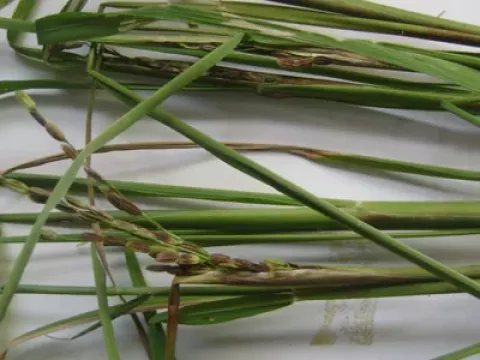
Rice sheath rot
Sarocladium oryzae
The causative agent of sheath rot is the fungus Sarocladium oryzae (formerly known as Acrocylindrium oryzae), which belongs to the Ascomycota phylum. It produces septate mycelium and cylindrical conidia.
What the section contains
Rice sheath rot
The pathogen survives in infected plant debris and seeds. Spore dispersal is facilitated by wind, rainfall splashes, and physical contact with insect vectors like rice bugs.
Microscopic inspection reveals hyaline conidia formed in heads, characteristic of this species. The fungus acts as a facultative parasite, often colonizing tissues weakened by other stressors.
The fungus primarily targets the leaf sheaths enclosing the developing panicle. Under humid conditions, it produces a distinctive white, cottony growth inside the sheath.
Its life cycle is polycyclic, allowing the fungus to produce multiple generations per season, which poses a significant threat during periods of high humidity and heat.
The primary host is Oryza sativa (rice). The pathogen specifically attacks the leaf sheaths that wrap the young panicle during the booting and heading stages.
The economic impact is severe as the fungus prevents the panicle from emerging from the leaf sheath. If the panicle fails to emerge, the grains do not fill properly, leading to sterility.
Infected grains that do develop are usually discolored, shriveled, and lighter, which significantly reduces the quality and market value of the harvested rice crop.
Yield losses due to sheath rot can range from 30% to over 80% in severe cases, making it one of the most critical diseases in intensive rice-producing regions.
Furthermore, the physical damage to the leaf sheaths creates entry points for secondary bacterial pathogens, complicating the disease management for farmers.
The disease is most prevalent during the heading stage of rice. High humidity levels at this developmental phase are crucial for the establishment of the infection.
Warm temperatures ranging from +25°C to +30°C are optimal for fungal growth. Continuous rainfall or heavy dew during the heading stage triggers rapid disease outbreaks.
Poor water management in paddies, leading to excessive humidity near the canopy, significantly increases the likelihood and severity of the disease spread.
The pathogen exploits the microclimate created by dense plant spacing. Poor ventilation within the crop canopy during the late vegetative phase favors rapid transmission.
Monitoring the fields during the transition from the boot stage to heading is essential to detect the onset of infection and apply control measures promptly.
The characteristic symptoms begin as oblong lesions on the leaf sheath. These spots often have a gray or brown center surrounded by a diffuse, yellow-orange halo.
As the infection progresses, these lesions merge, eventually covering large portions of the leaf sheath and causing the tissue to rot or turn dark brown.
A white, powdery mold is commonly visible on the inner surface of the infected sheath, particularly when humidity is high and the panicle is trying to emerge.
- Lesions on the uppermost leaf sheaths.
- White fungal growth inside the sheaths.
- Partial emergence of the panicle (choking).
- Discolored, empty, or shriveled grains.
Symptoms are easily observed in the field as plants show stunted growth and poor panicle development during the reproductive phase of the crop cycle.
Management relies on integrated pest management (IPM) practices, starting with the use of resistant rice cultivars to minimize susceptibility to the pathogen.
Controlling insect vectors, especially the rice bug (Leptocorisa oratorius), is vital, as these insects facilitate the entry of the fungus into the plant tissue.
Proper field management, including balanced fertilizer application, helps prevent lush, overly dense growth that would otherwise create a favorable environment for the fungus.
Seed treatment with systemic fungicides before sowing is a standard practice to reduce the primary inoculum load and protect the young seedlings.
Foliar application of fungicides during the boot to early heading stage is necessary in high-risk areas to protect the panicles from direct infection.