
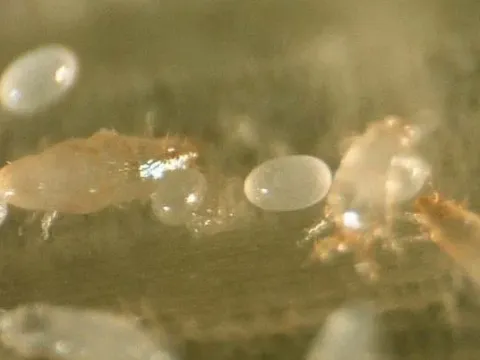
Rice tarsonemid mite
Rice tarsonemid
The rice tarsonemid mite (Steneotarsonemus spinki) is a microscopic pest belonging to the Tarsonemidae family. Measuring less than 0.3 mm in length, these mites are invisible to the naked eye, making field detection difficult without specialized equipment.
What the section contains
Rice tarsonemid mite
Their bodies are elongated and translucent, ranging from whitish to pale yellow. The life cycle comprises egg, larva, protonymph, and adult stages. Under optimal tropical conditions, a full life cycle can be completed in as little as 4–7 days.
These mites prefer protected environments, typically aggregating within leaf sheaths and near the stem nodes of rice plants. This hidden behavior makes it difficult to apply contact-based control measures effectively.
The rapid reproductive rate of this species allows populations to explode in a short time. Moisture levels play a critical role in their survival, with high humidity levels significantly boosting their population density.
Dissemination occurs through wind currents, irrigation water, and the movement of infested seeds or seedlings. Once established, they spread quickly across a paddy field if conditions remain favorable.
Rice (Oryza sativa) is the primary host. The mite feeds by piercing the epidermal cells of leaves, stems, and developing panicles, extracting plant sap and depleting the crop of essential nutrients.
Beyond mechanical damage, the mite secretes toxic saliva into the plant tissues. This causes physiological stress, inhibits photosynthesis, and triggers developmental abnormalities in the vegetative and reproductive stages.
One of the most severe impacts is panicle deformation. Mites often cause panicles to remain trapped within the leaf sheath or prevent proper grain filling, leading to high levels of empty or sterile spikelets.
Furthermore, the mite acts as a vector for various fungal and bacterial pathogens, most notably sheath rot. The feeding wounds provide easy entry points for these secondary infections to invade the plant.
In cases of severe infestation, crop yields can be reduced by 30% to 50% or more. The reduction in grain quality—characterized by discoloration and reduced weight—also lowers market value significantly.
Early symptoms include brownish, elongated spots or stripes on the leaf sheaths. These lesions often expand and coalesce, leading to severe necrosis of the leaf tissues as the infestation progresses.
A classic sign is the twisting or curling of the flag leaf, often accompanied by stunted growth of the main stem. Affected plants often appear significantly shorter and less vigorous than healthy ones.
Panicles may fail to emerge completely, staying curled or distorted within the sheath. When they do emerge, they often appear brown or black, showing signs of severe blast-like damage or rot.
A "sooty" appearance is common on the affected parts of the plant. This is usually caused by the growth of sooty mold fungi, which thrive on the sugary secretions left behind by the mites.
- Brown streaks on leaf sheaths.
- Twisting or curling of top leaves.
- Incomplete panicle emergence.
- Severe sterility and unfilled grains.
- Stunted plant growth and overall yellowing.
Using resistant rice varieties is the most sustainable approach to control. Effective crop residue management after harvest is essential, as the mites can survive in rice stubble.
Avoiding excessive nitrogen fertilization is recommended, as high nitrogen promotes lush, soft growth that is more susceptible to mite colonization and rapid population growth.
Chemical control focuses on systemic acaricides. These must be applied carefully before the flowering stage, as once the panicles are fully formed, it becomes much harder for the chemicals to reach the mites.
Strict phytosanitary protocols for seed distribution are critical. Using certified, clean seeds prevents the long-distance spread of the mite between different geographical areas or farms.
Integrated Pest Management (IPM) is encouraged, combining biological monitoring and timely chemical interventions. Regular sampling of leaf sheaths ensures that treatments are applied only when thresholds are exceeded.