
Ring nematode
Mesocriconema xenoplax
Description
How to identify
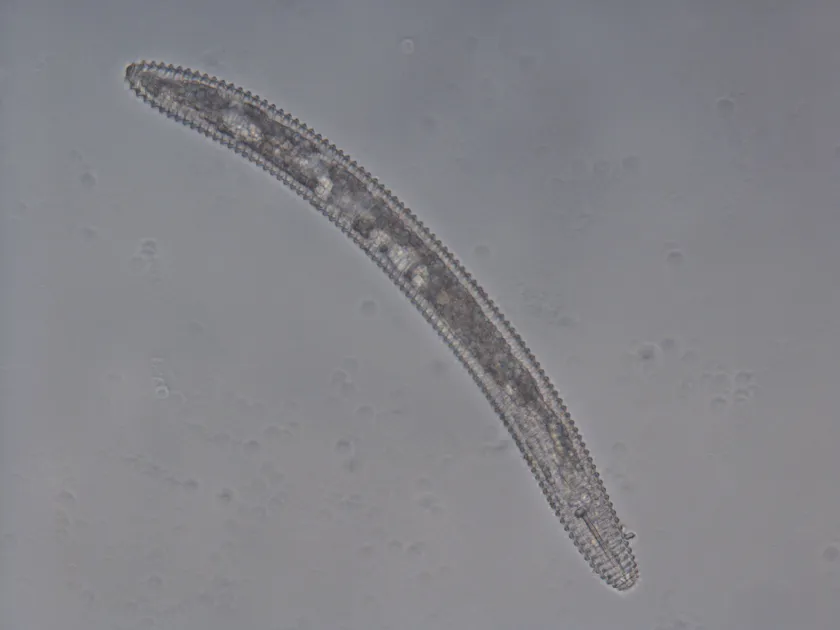
The ring nematode Mesocriconema xenoplax belongs to the family Criconematidae. It is a microscopic, ectoparasitic nematode that is widely recognized for its characteristic, heavily annulated (ringed) cuticle that gives it a distinct appearance under magnification.
Adult females are approximately 0.5 mm in length, possessing a stout, short body. They are equipped with a long, robust stylet, which they use to pierce the cortical cells of plant roots to extract essential nutrients.
This species is an obligate parasite, meaning it completes its life cycle within the soil environment, specifically within the rhizosphere of its host plants. It does not enter the vascular tissue but remains attached to the root surface.
The nematode favors light-textured, sandy soils where the porosity allows for easier movement between soil particles. Populations can thrive in diverse climates, making them a persistent challenge in fruit orchards worldwide.
Identification typically requires soil sampling and professional laboratory extraction techniques. Due to their small size and soil-dwelling nature, microscopic analysis is necessary to confirm their presence and population density.
What it damages
Mesocriconema xenoplax primarily affects stone fruits, including peaches, nectarines, plums, and cherries. It is a critical factor in the complex known as "peach tree short life" (PTSL), leading to rapid tree decline.
By feeding on the root tips, these nematodes cause physical damage that inhibits root development. This leads to the stunting of root systems, reducing the plant's ability to absorb water and minerals efficiently.
The feeding sites serve as entry points for secondary pathogens, such as fungi and bacteria, which can cause severe rot and tissue necrosis, ultimately weakening the structural integrity of the root system.
Affected trees often exhibit symptoms of chronic stress, such as leaf chlorosis, thinning of the canopy, and reduced fruit size. Over time, the cumulative impact of these nematodes leads to significant economic loss.
In orchards with high nematode pressure, tree vigor declines rapidly, leading to the premature death of productive trees and the necessity for costly orchard replanting before the expected lifespan is reached.
Signs of infestation
Visible symptoms often mimic nutrient deficiencies or drought stress. Foliage may become yellow (chlorotic), and in advanced stages, leaves may drop prematurely during the growing season.
Root system examination typically reveals a lack of healthy, white feeder roots. Instead, the roots appear discolored, brittle, and stunted, reflecting the damage caused by the nematode's feeding activity.
Peach trees, in particular, may suffer from sudden collapse in early spring. This collapse is often the result of the cumulative stress caused by nematode damage in combination with environmental factors and other pathogens.
Declining productivity and stunted overall growth are key field indicators. When these symptoms appear despite adequate irrigation and fertilization, root health issues related to parasitic nematodes should be investigated.
Quantitative analysis of soil samples taken from the root zone is the most reliable method for diagnosing the presence of this nematode and assessing the risk to orchard health.
Control measures
Managing Mesocriconema xenoplax is challenging because once a population is established in the soil, eradication is extremely difficult. Integrated management strategies are essential for success.
Pre-plant soil fumigation is a common practice in intensive orchard systems to reduce nematode populations before establishing new trees, significantly improving the chances of tree longevity.
The use of cover crops or green manures, such as certain varieties of rapeseed or mustard, can help suppress nematode populations through natural biofumigation processes when incorporated into the soil.
Cultural practices, including ensuring high soil organic matter and proper nutrient management, can help trees better withstand the stress caused by the nematodes, prolonging their productive life.
- Utilizing nematode-resistant rootstocks for stone fruits.
- Ensuring the use of certified, clean nursery stock.
- Sanitation protocols to prevent the spread of contaminated soil via equipment.
- Regular monitoring of nematode population thresholds in the rhizosphere.
Causes diseases · 3
Discussion
No discussions yet — be the first.