
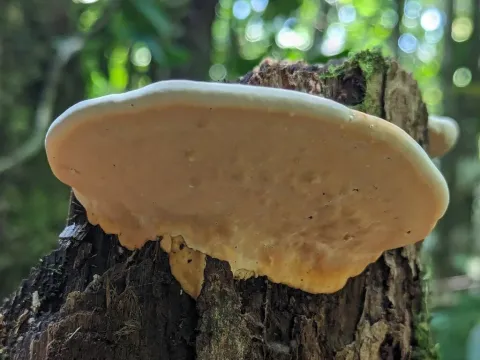
Rigidoporus microporus
Rigidoporus microporus
Rigidoporus microporus is a basidiomycetous fungus classified within the Meruliaceae family, known primarily as a destructive plant pathogen.
What the section contains
Rigidoporus microporus
The fungus produces white mycelial mats that colonize the root systems of various woody species, leading to progressive decay of the vascular tissues.
It exists as a facultative parasite, meaning it can survive in the soil by decomposing organic matter or infecting living hosts when available.
The basidiocarps, or fruiting bodies, of this fungus are typically leathery or woody and appear at the base of infected trunks or on exposed roots.
Taxonomically, it represents a significant threat to tropical forestry, particularly affecting plantations where root-to-root contact is common.
This pathogen is most famously known for causing white root disease in Hevea brasiliensis (rubber tree), resulting in massive economic losses.
The fungus severely impairs the root system, blocking water and nutrient transport, which causes canopy dieback and reduced latex production.
Infected trees often lose their anchorage in the soil, making them highly susceptible to wind-throw, even before the tree dies completely.
The disease spread occurs through the growth of mycelial strands along roots or from contact with infested root debris left in the ground.
Severe infestations can lead to total plantation failure, requiring expensive site clearing and replanting efforts to manage the soil-borne inoculum.
In tropical environments, the fungus remains active throughout the year, as warm and moist soil conditions provide optimal support for mycelial growth.
Periods of high rainfall facilitate the production and dispersal of basidiospores, which can start new infection sites on healthy wood.
The pathogen can persist in the soil for several years by colonizing dead roots, making the timing of site preparation critical for new plantings.
While infection rates may fluctuate, the cumulative impact of the disease is constant once the fungus has been established in the soil environment.
Agricultural operations that move soil or root fragments contribute to the distribution of the pathogen across unaffected areas during the rainy seasons.
Initial symptoms are often cryptic, manifesting as a gradual yellowing and shedding of leaves as the root system begins to fail.
Direct inspection of the roots reveals dense white or creamy mycelial strands that adhere tightly to the bark and permeate the woody tissue.
The wood within the roots becomes soft and spongelike, turning whitish or pale yellow as the fungus breaks down the lignin components.
Fruiting bodies may emerge near the soil line, appearing as tough, shelf-like structures that produce spores for further reproduction.
Sudden collapse of trees without obvious crown symptoms is a common indicator that the root rot has progressed to an advanced stage.
The primary control strategy involves the thorough removal of all stumps and root remnants from the soil before establishing a new crop.
- Complete clearing of woody debris to reduce the initial fungal inoculum in the soil.
- Application of systemic fungicides to protect nursery seedlings or newly planted trees.
- Utilization of biological control agents, such as beneficial Trichoderma species, to suppress pathogen growth.
- Digging isolation trenches around infected patches to physically stop root-to-root transmission.
Regular surveillance is essential to identify early symptoms and intervene by removing affected individuals before the fungus spreads further.
Maintaining high plant vigor and minimizing root injury during weeding or fertilization can also help trees withstand early stages of fungal infection.