
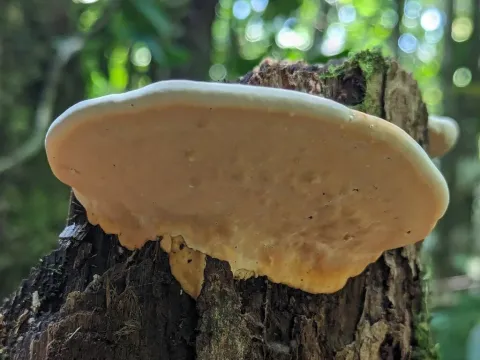
Rigidiporus microporus
Rigidiporus microporus
Rigidiporus microporus is a basidiomycete fungus within the Meruliaceae family, widely recognized as a major pathogen in plantation agriculture, particularly in tropical regions.
What the section contains
Rigidiporus microporus
The fungus is characterized by the formation of leathery, resupinate to pileate fruit bodies with a distinct, small-pored hymenophore, from which its name is derived.
It thrives by colonizing the root systems of susceptible hosts, where it functions as a necrotrophic parasite, actively decaying wood tissues using specialized enzymes.
The pathogen utilizes rhizomorphs to spread through the soil, bridging the gaps between root systems and ensuring the survival of the fungus in the absence of a living host.
Taxonomically, it sits within the order Polyporales, and its presence is often signaled by its conspicuous sporocarps found on the stumps or base of infected trunks.
The most notable economic damage caused by Rigidiporus microporus is white root disease, which primarily affects Hevea brasiliensis (rubber tree) plantations worldwide.
The fungus attacks the root bark and cambium, progressing into the xylem, which results in the severe degradation of the structural integrity of the root system.
Infected roots exhibit a characteristic white, stringy rot, where the wood tissue loses its hardness and becomes susceptible to easy breakage.
The death of the root system causes the foliage to wilt and turn yellow, often leading to total tree collapse and significant yield losses in rubber production.
Because the fungus is soil-borne and spreads via root-to-root contact, it can cause rapid, circular expansion of infected areas within a plantation, leading to localized tree mortality.
Initial symptoms are often subtle, including canopy thinning and leaf chlorosis, which are indicators of impaired nutrient and water uptake from the root system.
A definitive field diagnostic sign is the presence of white, fan-like mycelial mats or rhizomorphs firmly attached to the surface of the primary and secondary roots.
The presence of orange-to-brown, crust-like or shelf-like sporocarps at the base of the stem or on exposed surface roots is a clear indication of advanced colonization.
On cross-sectioning an infected root, the wood appears bleached and brittle, often displaying a "stringy" texture due to the enzymatic breakdown of lignin and cellulose.
In cases of severe infection, the tree becomes loose in the ground, showing clear signs of instability, and may fall even under moderate wind conditions.
Effective management begins with rigorous pre-planting land preparation, which necessitates the complete excavation of stumps and root debris to minimize inoculum sources in the soil.
Isolation of infected pockets is achieved by digging deep trenches around the affected trees to prevent further root-to-root transmission of the pathogen.
Biological control using antagonistic fungi, such as Trichoderma species, has shown promise in reducing the inoculum density of R. microporus in the soil environment.
Long-term strategies involve the selection of resistant cultivars and the implementation of sound soil management practices to enhance the overall health of the plantation.
- Regular inspection of the root collar area.
- Sanitation pruning and removal of severely infected trees.
- Proper soil drainage to discourage excessive fungal activity.