
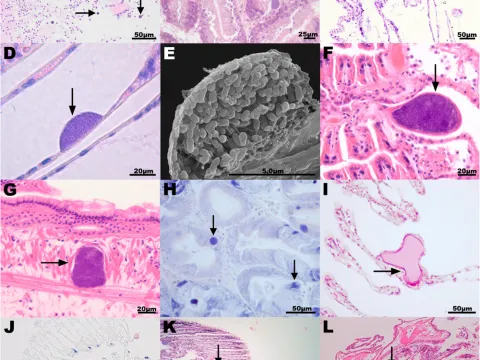
Rickettsia-like organisms
Unnamed rickettsia-like
Rickettsia-like organisms (RLO) are specialized intracellular prokaryotes that inhabit the phloem tissue of host plants. They are often characterized by defective or absent cell walls, which makes them distinct from typical bacteria.
What the section contains
Rickettsia-like organisms
These organisms belong to the Mollicutes-related group of pathogens and are obligate parasites. Because they cannot be cultured on standard laboratory media, their study relies heavily on molecular diagnostic techniques.
The life cycle of RLO is strictly dependent on insect vectors, primarily leafhoppers and psyllids, which transmit the pathogen while feeding on the plant's vascular sap.
Advanced diagnostic methods such as PCR (Polymerase Chain Reaction) and transmission electron microscopy are essential for identifying the presence of these organisms within plant tissues.
Distinguishing RLO from phytoplasmas is a critical aspect of plant pathology, as these organisms can cause similar systemic diseases but require different monitoring and management strategies.
RLO infection primarily causes systemic damage by blocking the phloem, which disrupts the transport of water and essential nutrients throughout the plant.
For crops like grapes, RLO are responsible for devastating conditions such as Pierce's disease, which leads to the rapid decline and death of infected vines.
The damage manifests as reduced crop yields, poor fruit quality, and stunted plant development, making the infected areas economically non-viable for farmers.
Since the infection is systemic, it spreads throughout the entire plant, making it a persistent source of inoculum for the entire orchard or field if not managed correctly.
Long-term damage includes weakened immunity, increased susceptibility to secondary infections, and ultimately, the complete death of the host plant over several seasons.
The spread of RLO is directly linked to the activity periods of their insect vectors. Infection rates peak during the late spring and summer months when vector populations are most active.
As insects migrate between plants, they transmit the pathogens, initiating new infection cycles across the agricultural landscape.
Although symptoms may be slow to appear due to the long incubation period, the initial transmission typically occurs during the periods of highest vector density.
Environmental factors such as warm, dry weather promote the rapid reproduction of vectors, thereby increasing the risk of widespread disease outbreaks within the crops.
Winter dormancy provides a temporary respite for the plant, but the pathogen persists in the vascular tissues, becoming active again as soon as the vegetation period begins.
The most common symptoms include leaf chlorosis, which usually starts at the margins and progresses inward, followed by necrosis of the affected tissues.
Stunted growth, shortened internodes, and leaf deformation are typical indicators that the plant's vascular system has been compromised by the RLO.
- Marginal leaf scorching or burning appearance.
- Premature leaf drop while petioles remain attached.
- Significant reduction in fruit size and quality.
- Dieback of individual shoots or entire branches during the growing season.
In woody plants, the vascular blockage can cause sudden wilting and death, even when soil moisture levels are adequate, which is a hallmark of systemic phloem diseases.
Visual identification can be challenging because these signs often mimic nutrient deficiencies or fungal wilt, requiring expert verification to confirm the RLO infection.
Management of RLO focuses primarily on controlling the population of insect vectors using systemic insecticides to prevent the spread of the pathogen.
Strict sanitation measures, including the immediate removal and destruction of symptomatic plants, are vital to reducing the source of infection in the field.
Utilizing certified, pathogen-free plant material obtained through tissue culture is the most effective preventative strategy for establishing new plantations.
Quarantine and phytosanitary regulations are essential to restrict the movement of potentially infected nursery stock into non-infested agricultural regions.
Since there are no curative chemical treatments for already infected plants, an integrated approach combining vector management and prevention is the only way to safeguard crops.