
Rice stem rot
Sclerotium oryzae
The causal agent of stem rot is the fungus Sclerotium oryzae (teleomorph Magnaporthe salvinii). It is classified within the kingdom Fungi and the class Ascomycetes. The pathogen acts as a facultative parasite.
What the section contains
Rice stem rot
The fungus survives primarily as sclerotia, which are small, black, hardened masses of fungal mycelium. These structures can persist in the soil and rice stubble for several years, ensuring the pathogen remains viable even during fallow seasons.
When rice paddies are flooded, the sclerotia float on the water surface and come into contact with the lower leaf sheaths of the rice plants. Under warm and humid conditions (25–30°C), they germinate and initiate the infection process.
The infection spreads through the penetration of the epidermal tissues by the fungal hyphae. Once inside, the fungus invades the inner stem tissues, where it continues to produce new sclerotia, completing its life cycle within the host plant.
Environmental factors, such as high moisture and warm nights, play a critical role in the epidemic spread of the disease. Furthermore, high plant density prevents air circulation, creating a microclimate that strongly favors the pathogen.
The disease primarily affects rice (Oryza sativa). It is a major global concern in rice cultivation, often leading to lodging, poor grain filling, and significant yield losses in susceptible varieties.
Stem rot causes severe damage to the plant's vascular system, preventing proper nutrient and water transport to the panicle. This results in the formation of chaffy, lightweight grains and a reduction in overall crop quality.
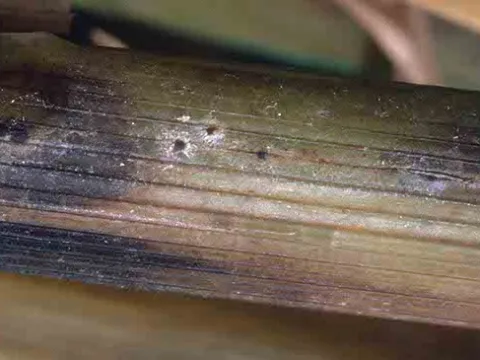
Visible signs typically appear on the lower leaf sheaths as small, dark, and irregular spots. As the infection progresses, these lesions enlarge and turn black, eventually penetrating the entire stem structure.
Internal examination of the infected stems reveals decay and the presence of numerous black, spherical sclerotia. In advanced stages, the stem weakens, causing the plant to lodge or break easily under mild pressure.
Management of rice stem rot requires an integrated strategy to minimize the inoculum density and enhance plant resistance. Cultural practices remain the most effective tool for long-term control.
- Practice crop rotation to break the survival cycle of the pathogen.
- Ensure field drainage at appropriate stages to reduce fungal growth.
- Avoid excessive nitrogen application, which can soften tissues and promote infection.
- Apply potassium-based fertilizers to improve plant cell wall strength.
- Utilize systemic fungicides during the early onset of symptoms if necessary.