
Pseudocercospora
Pseudocercospora
Description
How to identify
Pseudocercospora is a large genus of anamorphic fungi in the order Capnodiales. These phytopathogens are responsible for various leaf spot diseases that can severely affect the development and productivity of numerous agricultural and horticultural crops worldwide.
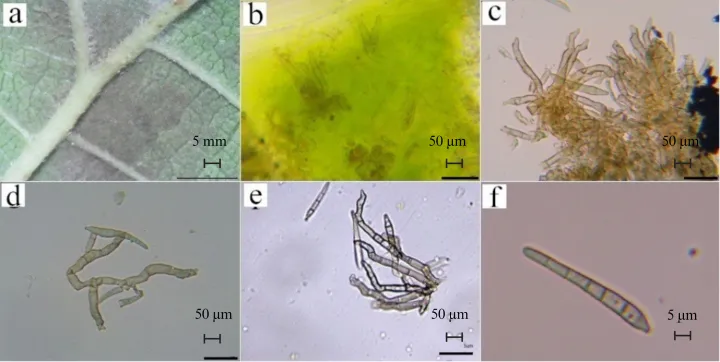
The fungus colonizes plant tissues, and as the infection progresses, it produces conidiophores that emerge through the plant epidermis. These structures carry conidia, which serve as the primary inoculum for spreading the disease within a crop and to neighboring fields.
The life cycle of Pseudocercospora is highly dependent on environmental factors, particularly humidity and temperature. Optimal conditions for infection involve prolonged periods of leaf wetness and moderate to warm temperatures, which facilitate the germination of conidia.
Survival mechanisms include the ability of the fungus to persist in crop residues, soil, or on infected plant parts during unfavorable seasons. The pathogen remains dormant as mycelium or chlamydospores until favorable conditions return to trigger new cycles of infection.
Accurate identification of the specific Pseudocercospora species is essential for effective disease management. Taxonomy often relies on the morphology of conidia and conidiophores, which require professional phytopathological analysis to distinguish from similar fungi.
What it damages
This genus affects a wide range of host plants, including fruits, vegetables, and ornamental trees. A notable example is Pseudocercospora musae, the causal agent of black Sigatoka in bananas, which is considered one of the most destructive diseases in tropical fruit production.
The damage caused by Pseudocercospora primarily manifests as leaf necrosis, which reduces the surface area available for photosynthesis. This leads to impaired growth, reduced fruit quality, and, in severe cases, the complete death of the plant organs.
In perennial crops, repeated annual infections weaken the trees, reducing their vigor and overall yield potential over time. Premature leaf drop is a classic sign of high infestation levels, which exposes the fruit to sunscald and weakens the plant's structural integrity.
Beyond the direct impact on plant physiology, the presence of the pathogen imposes heavy economic costs due to the necessity for constant fungicidal applications and the loss of produce that fails to meet market quality standards.
The cumulative effect of persistent disease pressure can lead to complete plantation abandonment if not properly managed, highlighting the pathogen's significant role as a threat to global food security in specific regions.
Signs of infestation
The first symptoms of Pseudocercospora infection are typically small, chlorotic spots that appear on the leaf surface. Over time, these spots expand and turn necrotic, often displaying a dark color due to the accumulation of fungal structures and toxins.
A distinctive sign is the appearance of a dark, velvety, or grayish fungal mat on the underside of the affected leaf spots. This mat consists of dense clusters of conidiophores and conidia, which are easily spread by rain and wind under humid conditions.
As the infection advances, individual spots frequently merge to cover large areas of the leaf blade. This extensive necrosis disrupts the leaf's physiological functions, leading to yellowing (chlorosis) of the surrounding tissue and subsequent death of the leaf.
In some cases, the disease symptoms can be accompanied by deformation or stunted growth of shoots and fruits. Careful observation is required, as the visual presentation can vary depending on the host plant species and the specific environmental conditions at the time of infection.
Diagnostic field inspections should focus on the progression of spots from the lower to the upper canopy, which is a common pattern for Pseudocercospora diseases, signaling the need for immediate control interventions.
Control measures
Managing Pseudocercospora requires an integrated pest management (IPM) approach. The most fundamental step is strict field sanitation, which includes removing and destroying infected plant debris that acts as a reservoir for the pathogen.
Chemical control involving systemic and contact fungicides is standard practice in many commercial operations. Effective control relies on early detection and the timely application of treatments, rotating different modes of action to prevent the development of resistant fungal populations.
Breeding for host resistance is the most sustainable long-term solution. Many agricultural research programs prioritize the development of cultivars that exhibit natural immunity or high levels of resistance to specific species of Pseudocercospora.
Improving cultural practices, such as optimizing plant spacing and pruning, helps create an unfavorable environment for the fungus by improving airflow and reducing the humidity levels around the foliage, which inhibits spore germination.
Continuous monitoring of the crop, including weather data analysis to predict infection risks, allows for precise timing of management activities, maximizing the effectiveness of protective measures and ensuring the long-term health of the plantation.
Causes diseases · 8
Discussion
No discussions yet — be the first.