
Description
Symptoms
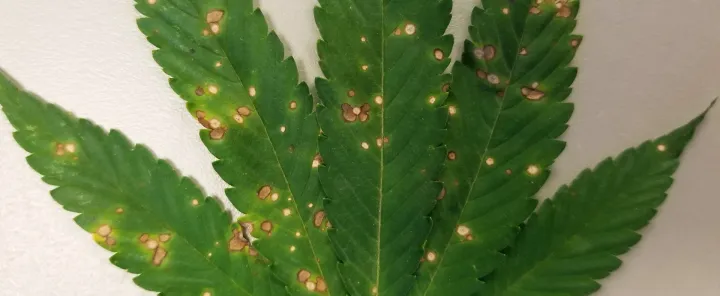
Initial symptoms manifest as small, chlorotic spots appearing on the lower leaves of the hemp plants. Over time, these spots expand and turn brown or dark tan in color.
The spots are often defined by the leaf veins, giving them an angular appearance. A necrotic center usually develops within the spot, which is a hallmark of cercospora infection.
In humid conditions, a grayish or olive-colored velvety layer appears on the underside of the leaves, directly beneath the spots. This layer consists of the fungus's conidiophores and spores.
As the disease progresses, heavily infected leaves turn yellow, wilt, and eventually drop off. This leads to premature defoliation, starting from the base of the plant and moving upwards.
The infection can eventually affect petioles and stems, resulting in stunted growth and a general decline in the plant's health. The loss of leaves significantly reduces the plant's photosynthetic capacity.
Pathogen
The causative agent of this disease is the imperfect fungus Pseudocercospora cannabina. It is a specialized pathogen that primarily targets industrial and fiber hemp crops.
The fungus overwinters in plant debris and soil, remaining viable for several seasons. It spreads through conidia, which are easily dispersed by wind currents, splashing rain, and agricultural equipment moving across the field.
During the growing season, the pathogen produces multiple generations of spores. This rapid reproductive cycle allows the disease to spread quickly across a field, especially in humid and warm climates.
Infection typically occurs through the plant's stomata or through minor mechanical wounds on the leaves. Once inside, the fungal mycelium colonizes the leaf tissue, disrupting normal metabolic processes.
Pseudocercospora cannabina is considered a persistent pathogen in areas where hemp is grown continuously. Its ability to survive in the soil makes it a significant challenge for long-term hemp production.
Conditions for development
High relative humidity (typically above 75%) is the most critical factor for the development of hemp cercospora. Periods of prolonged leaf wetness are essential for spore germination.
The fungus thrives in warm temperatures, with the optimal range being 20°C to 28°C. These conditions accelerate the fungal life cycle and increase the severity of the infection.
Dense planting patterns that restrict airflow create favorable microclimates for the fungus. Reduced air circulation prevents the foliage from drying out, facilitating continuous infection cycles.
Improper crop rotation is a major driver of this disease. Planting hemp in the same field year after year allows the pathogen population to build up to damaging levels.
Nutrient stress, particularly excessive nitrogen fertilization coupled with low potassium, can weaken plant cell walls, making them more susceptible to fungal penetration.
Why it matters
The primary impact of cercospora leaf spot is the reduction of green leaf area, which limits photosynthesis. This results in significant biomass loss and stunted development of the hemp crop.
For fiber hemp, the quality of the raw material is negatively affected. Infected plants tend to produce brittle fibers, which lowers the commercial value and marketability of the processed fiber.
The disease weakens the plants, making them more vulnerable to secondary infections and pest attacks. This synergistic effect can lead to severe crop failure in heavily infested fields.
Crop yields are significantly reduced due to premature defoliation and poor filling of seeds. In high-pressure years, economic losses can be substantial for hemp producers.
Beyond yield loss, the cost of fungicides and the extra labor required for management increase production expenses. Early detection and prevention are vital to maintaining profitability.
Protection
Implementing a robust crop rotation plan is the most effective way to manage the disease. Avoid planting hemp in the same soil for at least three to four years to break the infection cycle.
Thorough post-harvest sanitation, including deep plowing to bury plant debris, is essential. This practice exposes the fungus to soil microorganisms that aid in its decomposition.
Using certified, high-quality, and pathogen-free seed is crucial to prevent the introduction of the disease into new fields. Seed treatments can also provide initial protection against seedling infection.
- Manage plant density to ensure adequate airflow and light penetration.
- Control weeds that might act as alternate hosts for the pathogen.
- Ensure balanced potassium fertilization to improve plant structural integrity.
- Apply registered fungicides if the disease threshold is reached.
Monitoring fields regularly during the active growing phase is essential for timely intervention. Targeted fungicide applications can prevent widespread outbreaks if detected early.
Pathogens and affected parts
Affects crops · 1
Discussion
No discussions yet — be the first.