
Blackberry mite
Acalitus essigi
Description
How to identify
The blackberry mite (Acalitus essigi) is a microscopic pest belonging to the family Eriophyidae. These mites are invisible to the naked eye, requiring microscopic examination for positive identification.
The mites have elongated, worm-like bodies with two pairs of legs situated at the anterior end. This structural feature is a key characteristic of eriophyid mites.
The life cycle of Acalitus essigi is entirely dependent on the host plant. They spend their life stages protected within buds, flower bracts, or fruit drupelets.
Reproduction is rapid, with multiple generations developing throughout the growing season. The mite relies on plant sap for nutrition, utilizing specialized mouthparts to pierce plant cells.
Survival during the dormant winter period is achieved by sheltering in blackberry buds or within the crevices of the bark, waiting for the spring flush of new growth.
What it damages
The primary host for this pest is the cultivated blackberry (Rubus spp.). It causes a condition commonly referred to in agriculture as "redberry disease."
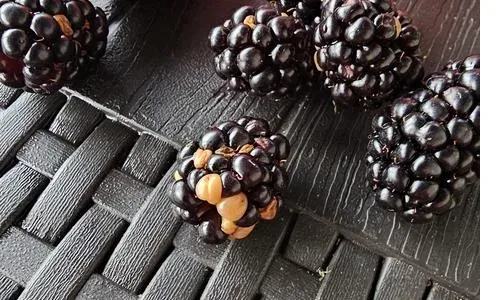
The feeding activity of the mites prevents the drupelets of the blackberry fruit from developing properly. The affected cells fail to mature or change color as expected.
This results in fruits that remain hardened and turn a mottled red or green even when the rest of the berry is supposed to be fully ripe and black.
The aesthetic and commercial impact is severe, as the affected berries are unmarketable, sour, and woody in texture, leading to significant economic losses for growers.
In cases of high infestation, the entire crop on a plant can be rendered unusable, as the mites proliferate across the clusters of the developing fruit.
Signs of infestation
The hallmark symptom of infestation is the irregular ripening of blackberry fruits. While healthy berries ripen to a deep black, infested berries stay partially red or green.
The affected fruit typically appears lumpy and distorted. Because the individual drupelets do not fully expand, the berry retains a hard, knotty, and stunted appearance.
There is no evidence of surface webbing or rot initially, which distinguishes this condition from fungal diseases or other insect pests like the spotted wing drosophila.
The texture of the fruit is a definitive diagnostic sign. If a grower feels a blackberry and discovers hard, woody drupelets that do not crush easily, it is a clear indicator of Acalitus essigi.
Ongoing infestations eventually affect the overall vigor of the plant, as the mites drain nutrients from developing buds and flowers throughout the spring.
Control measures
Integrated Pest Management (IPM) is essential for controlling the blackberry mite. The first line of defense is the selection of blackberry varieties known for resistance or tolerance.
Cultural practices, such as rigorous pruning of old fruiting canes and removing weeds surrounding the plantation, significantly reduce the available overwintering sites.
Chemical control is challenging due to the mite's protected habitat. Applications must be timed precisely, usually before the fruit sets or when the mites are migrating.
- Application of sulfur-based products during the early spring dormant stage.
- Use of specific miticides approved for berry crops during the critical migration period.
- Sanitation by removing and destroying infested plant material immediately upon detection.
Regular monitoring of fruit development is crucial to determine the timing of interventions, ensuring that control measures are applied before the mites infiltrate the fruit clusters.
Causes diseases · 1
Discussion
No discussions yet — be the first.