
Description
Symptoms
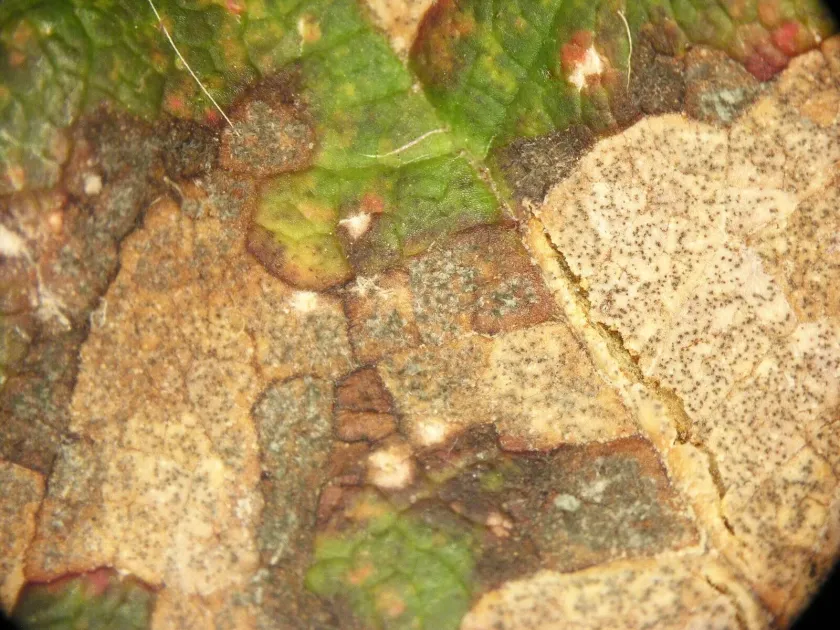
The initial symptoms appear as small, circular or irregular spots on the leaves. These spots are usually light brown initially and gradually develop a deep purple or reddish-brown border.
As the disease progresses, tiny black dots appear within the necrotic centers of the spots. These are pycnidia, the asexual reproductive structures of the fungus, and serve as a reliable diagnostic marker.
Severe infestations lead to premature yellowing of the foliage and significant leaf drop. This reduces the plant's photosynthetic capacity, which is essential for healthy development and fruit production.
On raspberry canes, the infection may cause bark lesions that eventually crack. These lesions weaken the structure of the cane and may facilitate the entry of secondary opportunistic pathogens.
In stone fruits like peaches, the disease affects not only the foliage but also the vitality of annual shoots, potentially reducing the tree's cold hardiness during the winter months.
Pathogen
The disease is caused by the ascomycete fungus Mycosphaerella confusa. It is a specialized pathogen that affects various fruit-bearing crops by colonizing the leaf and stem tissues.
The fungus overwinters primarily in fallen leaves and on infected plant debris. In the spring, primary infections are initiated by ascospores discharged into the air during periods of rainfall.
Secondary spread within the growing season is driven by conidia, which are easily dispersed by water splash, wind, and agricultural machinery. This allows the disease to spread rapidly through the orchard.
The pathogen thrives by infecting the host through stomata or mechanical wounds. Once inside, the fungal mycelium colonizes the intracellular spaces, disrupting normal physiological processes.
Due to its complex life cycle involving both sexual and asexual stages, this pathogen exhibits significant adaptability, making it a persistent challenge for commercial fruit growers.
Conditions for development
High relative humidity and frequent rainfall are the most critical environmental factors for disease development. Prolonged periods of leaf wetness are essential for spore germination and infection.
The optimal temperature range for the pathogen's growth is between 18°C and 25°C. Within this range, the incubation period is shortened, leading to rapid disease progression.
Dense planting configurations and poor canopy management reduce airflow, trapping humidity. This creates a favorable microclimate that prevents leaf surfaces from drying quickly after rain.
Over-fertilization with nitrogen can make plant tissues succulent and more susceptible to infection. These weakened plant defenses allow the fungus to penetrate and colonize tissues with less resistance.
Orchards that lack proper sanitation measures tend to accumulate higher levels of inoculum in the soil and debris, leading to more severe outbreaks in subsequent seasons.
Why it matters
The primary damage is caused by premature defoliation, which severely restricts the plant’s ability to store carbohydrates for future growth. This leads to a substantial decline in overall plant vigor.
Reduced vigor results in fewer fruit buds being formed for the following year, which significantly lowers the total yield of raspberries and peaches.
Weakened raspberry canes are less resistant to frost and winter kill. This can lead to significant loss of productivity, especially in regions with harsher winter climates.
Peach trees infected by Mycosphaerella confusa suffer from weakened metabolic rates, making them more prone to secondary pests, including aphids and various wood-boring insects.
The economic impact is multifaceted, involving both the direct loss of fruit yield and the increased overhead costs associated with intensive fungicide spray programs.
Protection
Cultural control is the first line of defense. Thoroughly removing and destroying all infected fallen leaves and pruning debris in the autumn significantly reduces the overwintering inoculum.
Proper pruning and training of raspberries and peach trees are vital to ensure adequate air circulation. This helps keep foliage dry and discourages the conditions needed for fungal infection.
Chemical control should be implemented based on scouting results. Strategic fungicide applications before bloom and throughout the growing season are effective if timed correctly.
Fungicides such as copper-based products or systemic triazoles and strobilurins are commonly used. It is essential to rotate chemical groups to prevent the development of resistance.
Continuous monitoring of the plantation is crucial. Early detection of symptoms allows for localized interventions, which can effectively curb the spread of the disease to the entire orchard.
Pathogens and affected parts
Affects crops · 2
Discussion
No discussions yet — be the first.