
Description
Symptoms
The primary symptoms appear as small, angular spots on the leaves, which are initially brown or purple. Over time, these spots expand and become more necrotic.
On the underside of the leaves, a grayish-olive coating develops, which consists of fungal spores. This coating is a hallmark of active cercospora infection.
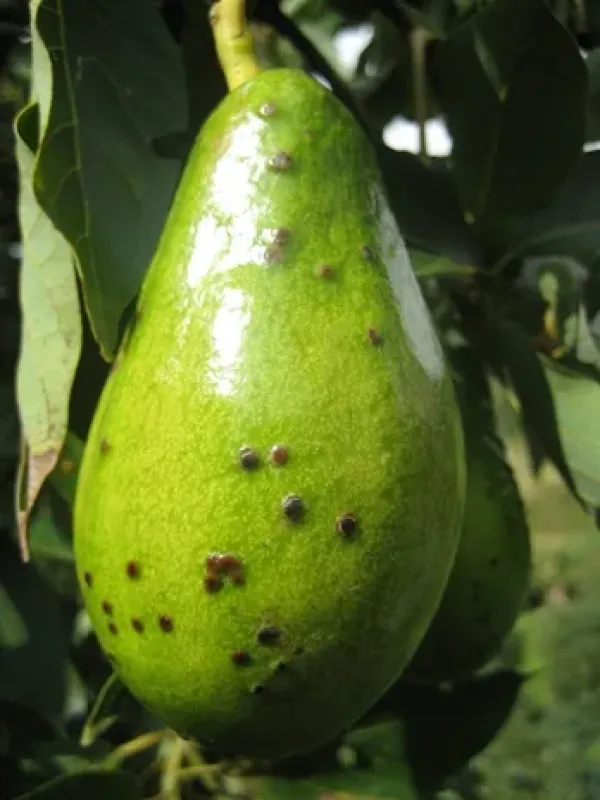
Fruit symptoms include small, brown, hardened spots on the rind. As the fruit matures, these spots may crack, increasing the risk of secondary pathogen entry.
Heavy infections lead to significant defoliation, which weakens the tree and stunts its growth, potentially affecting future fruit development.
- Angular brown-to-purple leaf spots.
- Grayish-olive spore layer on the underside of leaves.
- Hardened lesions and cracking on fruit skin.
- Premature leaf drop in severe cases.
Pathogen
The causative agent of the disease is the fungus Pseudocercospora purpurea (formerly Cercospora purpurea). It is a significant pathogen affecting various tropical and subtropical plants.
The fungus propagates through spores (conidia) that are easily spread by wind and rain splashes. This mechanism allows the pathogen to infect healthy parts of the canopy rapidly.
Besides avocado, the pathogen is known to affect plants in the Passiflora genus, where it causes similar necrotic spot symptoms on foliage.
The fungus survives during unfavorable periods in infected plant debris, including fallen leaves and twigs remaining in the orchard environment.
Upon germination, the fungal mycelium penetrates the leaf or fruit epidermis, colonizing the tissues and extracting nutrients, which severely stresses the host tree.
Conditions for development
High humidity and frequent rainfall are the most critical factors favoring the development and spread of Pseudocercospora purpurea spores.
The optimal temperature range for the pathogen's growth is between 20°C and 28°C, which is typical for avocado-growing regions.
Poor orchard ventilation, often caused by overly dense planting or lack of pruning, keeps foliage wet for longer periods, promoting fungal growth.
Water droplets remaining on leaf surfaces are essential for the germination of conidia, allowing the fungus to infect the host tissue effectively.
Neglecting orchard sanitation, such as leaving diseased plant matter on the ground, creates a continuous reservoir for reinfection each season.
Why it matters
The main economic damage is caused by fruit blemishing, which significantly reduces the market value and export quality of the avocado harvest.
Reduction of the photosynthetic leaf area limits the tree's ability to produce energy, leading to smaller fruit size and decreased overall yield.
Cracked skin caused by the fungus allows opportunistic secondary rot organisms to enter the fruit, leading to post-harvest decay.
Repeated stress from severe infection can lead to branch dieback and an overall decrease in tree vigor, making it susceptible to other pests.
In young plantations, uncontrolled spread of the disease can cause significant growth retardation and mortality, requiring costly tree replacement.
Protection
Effective management relies on a schedule of copper-based fungicidal sprays, usually initiated shortly after the flowering period.
Pruning is essential to open up the canopy, which improves airflow and allows the foliage to dry out quickly after rains, reducing infection risk.
Rigorous orchard sanitation is required; all fallen leaves and infected fruit should be removed and destroyed to minimize the inoculum load.
Maintaining adequate spacing between trees during orchard establishment is crucial to prevent microclimates favorable to the fungus.
Regular monitoring of orchards is necessary to detect early symptoms, allowing for immediate and localized fungicide treatment before the disease spreads.
Pathogens and affected parts
Affects crops · 2
Discussion
No discussions yet — be the first.