
Acidovorax
Acidic
Description
How to identify
Acidovorax is a genus of Gram-negative, motile, rod-shaped bacteria belonging to the Comamonadaceae family. These organisms are recognized as significant plant pathogens that cause various vascular and necrotic diseases in a broad range of agricultural crops.
Biologically, these bacteria are highly adapted to survive in diverse environments, including soil, irrigation water, and seeds. They act as systemic parasites, primarily colonizing the xylem vessels of the host plant, which disrupts water and nutrient transport.
The pathogenicity of Acidovorax is linked to its secretion systems, which inject effector proteins into plant cells. These proteins manipulate host immunity, effectively suppressing the plant's natural defense responses and allowing for unrestricted colonization of plant tissue.
Dissemination occurs primarily through contaminated seeds, infected plant debris, and mechanical transmission during agricultural activities. Wind-driven rain and irrigation splashes are major contributors to the rapid spread of the bacteria within a field.
Accurate identification of the pathogen is complex due to the similarity of its symptoms with other biotic and abiotic disorders. Professional diagnostics often involve isolation on selective media and molecular techniques such as PCR to confirm the species.
What it damages
The genus Acidovorax causes severe economic losses in various important crops. One of the most studied pathogens, Acidovorax citrulli, is responsible for bacterial fruit blotch, causing devastating effects on watermelons, melons, and other cucurbits.
In cereal crops like rice, the pathogen induces bacterial leaf streak. This condition significantly impairs the plant's photosynthetic capacity, leading to reduced grain filling and, consequently, lower overall yields and poor crop quality.
Damage to the fruit includes the development of dark, necrotic lesions that quickly expand, often resulting in total fruit rot. The quality of the produce is severely compromised, making the yield unsellable and susceptible to opportunistic secondary infections.
Seedling blight is a common manifestation of the disease. When infected seeds germinate, the pathogen kills the emerging sprouts, leading to poor plant stand and forcing farmers to incur additional costs for replanting and field management.
Systemic vascular infection leads to physiological disruption, including wilting and stunted growth. The obstruction of xylem vessels by bacterial biofilms prevents the uptake of water, leading to the rapid collapse of entire stems or leaves.
When it appears
The pathogen thrives in warm and humid conditions, which are highly conducive to rapid bacterial replication. Temperatures ranging between 25°C and 32°C facilitate the most aggressive development of the disease cycle.
High relative humidity, typically exceeding 85%, is critical for the survival and motility of Acidovorax bacteria. In such environments, the presence of surface moisture on foliage acts as a bridge for the movement of bacteria into stomata or hydathodes.
In greenhouse environments, the disease cycle can continue indefinitely if the humidity is not controlled and condensation is permitted on plant surfaces. Proper environmental management is essential to break the infection cycle in sheltered crops.
In open fields, the infection risk spikes after heavy rainfall or overhead irrigation events. These conditions promote the splash dispersal of bacterial inoculum from the soil or infected debris onto healthy plant parts.
The pathogen can persist in a latent state in soil and on non-decomposed plant residues during the off-season. Once environmental temperatures rise, the bacteria reactivate and infect new host tissues as they become available.
Signs of infestation
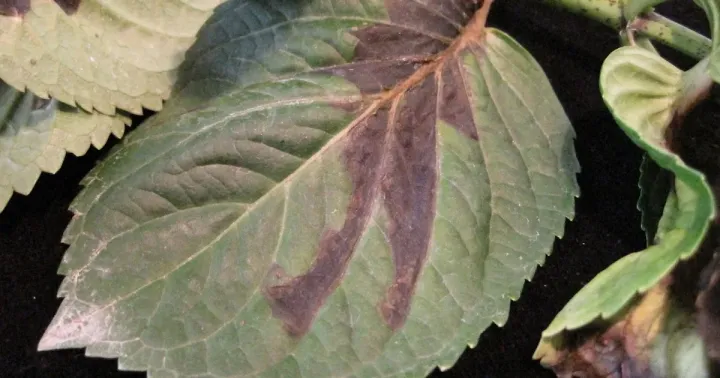
Early symptoms often appear as small, water-soaked spots on the leaves. As the infection progresses, these spots may darken or turn necrotic and are frequently constrained by the leaf veins, giving them an angular appearance.
During periods of high humidity, a bacterial exudate may be visible as a cloudy, milky liquid on the surface of infected tissues. Once dried, this exudate often leaves behind a crusty, whitish, or amber residue on the leaf surface.
Fruit symptoms typically manifest as oil-soaked spots or cracking on the rind. Internal tissue decay follows rapidly, characterized by a soft rot and often accompanied by an unpleasant odor caused by the decomposition of plant matter by secondary organisms.
Stem necrosis and vascular browning are classic indicators of systemic infection. These internal symptoms prevent the efficient translocation of nutrients, resulting in overall plant decline, chlorosis, and eventual death of the affected plant parts.
- Small water-soaked lesions on foliage.
- Angular leaf spots limited by venation.
- Visible bacterial ooze during wet weather.
- Cracking and rot on maturing fruit.
- Systemic wilting and stunted plant growth.
Control measures
The primary control strategy is the use of high-quality, pathogen-free certified seeds. Seed treatment protocols, such as hot water treatment or chemical disinfection, are vital to eliminate the pathogen at the source.
Crop rotation is an effective cultural practice to reduce the bacterial population in the soil. Avoiding susceptible hosts in the rotation cycle for at least two to three seasons allows the bacterial population to decline significantly.
Preventive applications of copper-based bactericides can help limit the spread of the pathogen in the field. It is crucial to apply these treatments early in the season before the bacteria have established a systemic infection.
Sanitation practices, including the removal and destruction of all infected plant residues, are mandatory. Disinfecting agricultural tools and machinery after working in infested areas prevents the mechanical spread of the bacteria to healthy fields.
In greenhouses, optimizing the climate by ensuring proper ventilation and utilizing drip irrigation instead of overhead watering effectively reduces the duration of surface leaf wetness, thereby suppressing the potential for bacterial outbreaks.
Causes diseases · 1
Discussion
No discussions yet — be the first.