
Poria latemarginata
Poria latemarginata
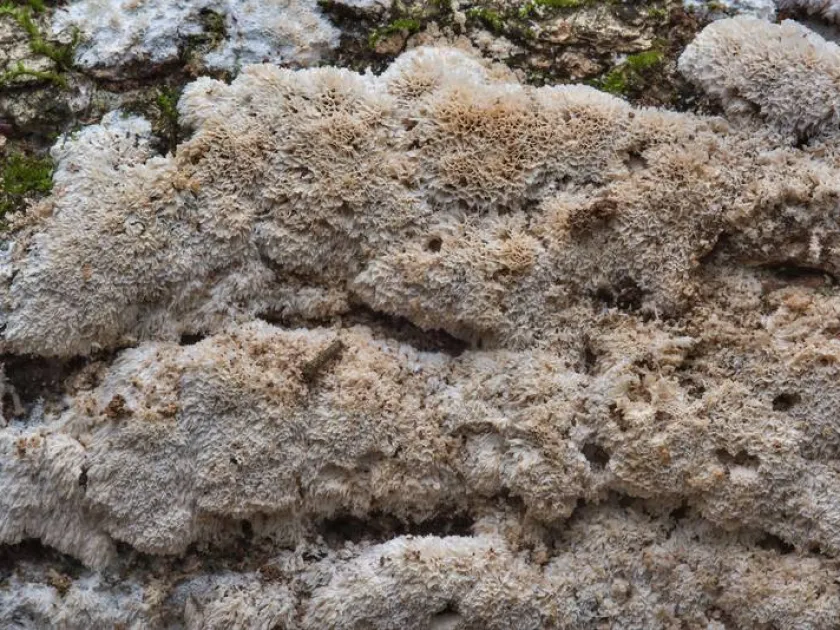
Description
How to identify
Poria latemarginata is a wood-decaying fungus belonging to the kingdom Fungi and the phylum Basidiomycota. In modern taxonomy, it is often classified within the genus Rigidoporus.
The fungus develops mycelium within wood tissues, forming white or cream-colored strands. The fruiting bodies appear as resupinate (spread out) crusts, often featuring a distinctively wide, sterile margin.
Its hymenophore is poroid, with angular pores. The tissue of the fruiting body is dense, becoming brittle or corky when dried, while maintaining its pale coloration.
This species typically acts as a saprotroph but can switch to a parasitic lifestyle on stressed woody plants. Its development is strongly correlated with high moisture levels and available dead organic matter.
Reproduction occurs through basidiospores, which are dispersed by air currents to colonize fresh wounds on bark or exposed timber surfaces.
What it damages
The fungus causes significant damage to forest stands and orchards. It is a known agent of intense white rot, which degrades the structural integrity of both tree trunks and root systems.
The pathogen affects a wide range of deciduous and coniferous trees. In orchards, it is often found on older fruit trees, entering through frost cracks or pruning wounds.
Wood decay is caused by the enzymatic breakdown of lignin and cellulose, which leads to a loss of mechanical strength and makes trees highly susceptible to windthrow.
Beyond forestry, the fungus may damage wooden structures that are in contact with soil or exposed to persistent dampness, leading to premature deterioration of the materials.
The economic impact involves reduced lumber quality and yield, as well as a decrease in the long-term productivity and safety of urban parkland areas.
When it appears
Active mycelial growth within the substrate occurs throughout the warm season, provided that the wood moisture content remains sufficient for fungal metabolism.
Fruiting body formation and peak spore dispersal typically occur in late summer and autumn when humidity and rainfall levels are at their annual maximum.
In controlled environments, such as greenhouses or protected forestry sites with stable microclimates, the fungus can maintain viability and activity nearly year-round.
The pathogen overwinters as vegetative mycelium directly within the infected wood, which provides significant protection against low-temperature stress.
Spore dissemination is highly dependent on periods of high atmospheric moisture, making rainy weather a critical factor for the infection of new sites.
Signs of infestation
The first visual sign of infestation is the emergence of white, cotton-like mycelium in bark cracks or on the cross-sections of felled trees.
At later stages, resupinate fruiting bodies form on the trunks, appearing as pale or cream-colored patches with characteristic broad margins.
Infected wood exhibits a bleached, whitish color and a soft, fibrous texture, often crumbling or delaminating easily under physical pressure.
A distinct, musty fungal odor is frequently associated with areas of active mycelial colonization and tissue decomposition.
Affected trees often show symptoms of general decline, including premature leaf drop, dieback of individual branches, and reduced annual radial growth.
Control measures
The primary control strategy involves strict forest hygiene, including the prompt removal and disposal of infected, dead, or wind-damaged trees to reduce inoculum pressure.
Minimizing mechanical injury to bark during silvicultural or agricultural operations is crucial, as these wounds provide primary entry points for the pathogen.
All pruning wounds and large mechanical injuries should be immediately treated with appropriate disinfectants or wound sealants to prevent fungal colonization.
Improving soil drainage and preventing waterlogging around the base of the trunk significantly reduce the risk of infection in managed landscapes.
For wooden structures, maintenance requires complete replacement of heavily decayed sections or the application of deep-penetrating fungicidal preservatives to halt mycelial spread.
Causes diseases · 1
Discussion
No discussions yet — be the first.