
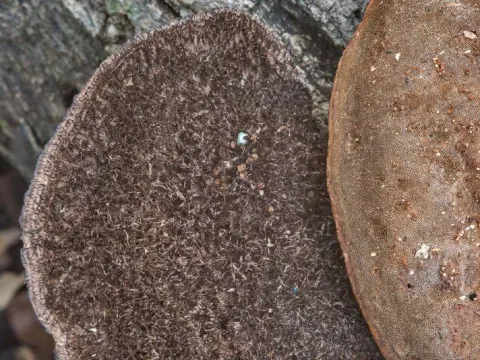
Polyporus hydnoides
Polyporus hydnoides
Polyporus hydnoides belongs to the kingdom Fungi and the genus Polyporus. It is a wood-inhabiting fungus, acting as a saprotroph or a weak parasite on various tree species.
What the section contains
Polyporus hydnoides
The fruiting bodies are identifiable by their tough, leathery texture and a unique hymenium surface covered in small spines or teeth, which distinguishes this species from typical pore-bearing polypores.
The fungus reproduces through basidiospores that are spread via wind or water. Once these spores reach a wound or exposed wood on a tree, they germinate to develop a mycelial network.
Taxonomically, it is classified within the family Polyporaceae. Recent studies emphasize its role in the decomposition of hardwood materials in various forest ecosystems across its range.
Its mycelium extensively penetrates the xylem, where it secretes enzymes to break down lignin and cellulose, effectively converting wood into a softer, degraded state.
The primary hosts for Polyporus hydnoides are deciduous trees. The fungus is frequently observed on fallen logs, stumps, and standing dead trees, where it actively participates in organic matter cycling.
While often considered a decomposer of dead wood, it can pose a risk to weakened or stressed live trees in forest stands, potentially accelerating their decline if host defenses are compromised.
The infection leads to white rot, a form of decay that reduces the structural integrity of the wood. This makes the affected timber brittle and physically unstable.
In the timber industry, this fungus can cause significant damage to stored lumber if the moisture content is not controlled, leading to economic losses and degradation of wood quality.
Severe infestations weaken the trunk and branches, making trees prone to wind breakage and secondary attacks by wood-boring insects, further endangering tree longevity.
The most visible sign is the appearance of fruiting bodies on the trunk or branches. These structures often display brown or ochre hues with a characteristic spiny undersurface.
Internally, the wood undergoes a marked change in appearance and texture. It becomes fibrous and light-colored, signaling the active enzymatic breakdown of the lignin-cellulose complex.
Mycelial mats can often be found underneath the bark of infected trees. These white or yellowish strands serve as a reservoir for further spread throughout the wood tissue.
Structural deformities, such as bark cracking, localized depressions, or hollowed-out sections of the trunk, indicate that the fungus has been active for an extended period.
Early canopy dieback, yellowing of leaves, and premature leaf drop are common secondary symptoms indicating that the pathogen has severely disrupted the tree's internal transport system.
Sanitation practices are essential for managing this pathogen. Removing infected, dead, or dying trees from the forest helps reduce the amount of inoculum available in the environment.
Proper clearing of logging slash and debris is critical, as these materials provide the necessary moist environment for the fungus to establish and produce new spores.
For industrial wood, maintaining appropriate storage conditions—specifically low humidity and adequate airflow—prevents the moisture buildup required for fungal growth.
Chemical treatments or wood preservatives can be applied to high-value timber to protect it from colonization by Polyporus hydnoides and other wood-decaying fungi.
Regular forest health monitoring and rapid response to localized outbreaks allow forest managers to contain the spread before the fungus causes widespread damage to the timber resource.