
Phoma rot
Phoma exigua
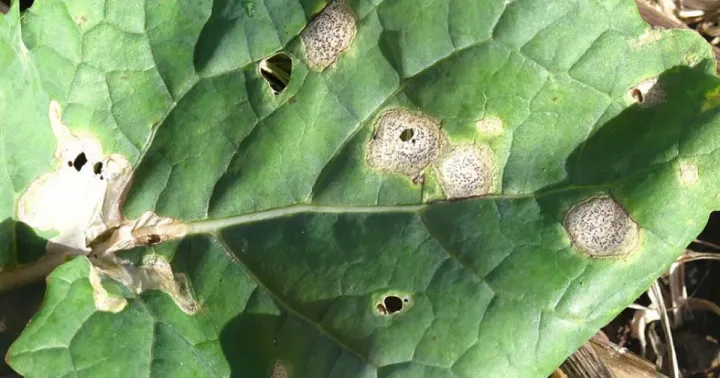
Description
How to identify
The causal agent of Phoma rot, the fungus Phoma exigua, belongs to the kingdom Fungi, genus Phoma. It is an anamorphic fungus that reproduces using pycnidia, which are specialized fruiting bodies that develop within plant tissues.
The pathogen is characterized by significant ecological plasticity, enabling it to persist for long periods in soil and on plant debris. Under favorable conditions, the fungus produces septate mycelium and abundant conidia, which facilitate the spread of infection.
Systematically, this species is a widespread soil-borne and seed-borne pathogen capable of infecting both cultivated and wild plant species across diverse climatic zones.
Laboratory identification involves microscopic examination of symptomatic tissues, where characteristic dark pycnidia containing spore masses can be observed.
A critical biological feature is the fungus's ability to act as a saprotroph, allowing it to survive in the soil without a host plant for several years.
What it damages
Phoma exigua is a polyphagous pathogen, affecting a wide range of agricultural crops, most notably potatoes, tomatoes, legumes, flax, and sunflowers.
In potatoes, the pathogen causes a specific type of rot known as button rot. It manifests as small, depressed, dark lesions on tubers, which reveal dry, hollow cavities when cut open.
Infection of stems and leaves leads to premature wilting of plants and a significant reduction in photosynthetic capacity, which directly causes a severe decrease in crop yield.
In legumes, the disease causes necrotic stem lesions that impede the transport of water and nutrients, resulting in the death of individual shoots or the entire plant.
The damage occurs both in the field and during storage, where the disease can spread from infected tubers to healthy ones, causing substantial post-harvest losses.
When it appears
The disease cycle typically initiates in spring when soil temperatures reach 10–15°C and moisture levels remain high, utilizing contaminated seeds or soil as primary inoculum sources.
The spread of conidia is intensified during rainfall and periods of high humidity, as free moisture is essential for spore germination on the surfaces of vegetative plant parts.
Disease development peaks in the latter half of the growing season, particularly when dense foliage creates a microclimate that retains humidity, promoting secondary infection cycles.
In storage facilities, the development of Phoma exigua persists throughout the storage duration if temperatures remain above the optimal storage range for the crop.
The lifecycle includes both primary infection from soil-borne inoculum and subsequent cycles of infection that can affect multiple plants within a single growing season under favorable conditions.
Signs of infestation
The first signs of infection appear as small dark spots on stems, leaves, or tubers, which gradually expand and turn brown or black in color.
Affected tissues often show epidermis cracking, and the center of the necrotic lesions features small black dots, which are the pycnidia, a key diagnostic indicator.
Infected potato tubers exhibit depressed lesions resembling a "button" shape, where the decayed tissue becomes dry and can easily be separated from healthy tissue.
While a faint gray fungal growth may appear under very high humidity, the lesions typically remain dense and well-defined in drier conditions, which is characteristic of dry rots.
Advanced stages of the disease manifest as plant yellowing, loss of turgor, and eventual death of the plant, indicating extensive damage to the vascular system or root crown.
Control measures
Management of Phoma rot relies on integrated agricultural practices, primarily strict crop rotation to break the survival cycle of the fungus in the soil.
- Using certified, pathogen-free seeds and planting materials.
- Treating seeds and tubers with fungicides before planting to prevent initial infection.
- Thorough removal and destruction of crop residues that serve as the primary reservoir for the pathogen.
- Timely application of systemic fungicides during periods favorable for pathogen dissemination.
Ensuring optimal storage conditions, including proper drying, ventilation, and warehouse disinfection, is crucial to prevent the spread of Phoma rot during the winter season.
Causes diseases · 1
Discussion
No discussions yet — be the first.