
Phoma leaf spot of sugar beet
Neocamarosporium betae
Description
How to identify
The causal agent of Phoma leaf spot is the fungus Neocamarosporium betae (formerly known as Phoma betae). It belongs to the phylum Ascomycota and is a significant pathogen affecting sugar beet and related chenopods.
The fungus survives as mycelium and pycnidia on crop debris left in the soil or on infected seeds. Pycnidia serve as the primary source of inoculum, releasing conidia under humid conditions that spread via rain splash or wind.
The life cycle is closely linked to environmental moisture. Optimal development occurs at temperatures between 15°C and 22°C. The pathogen can remain viable in the soil for several seasons, making crop rotation crucial for management.
The fungus is capable of infecting the crop at all growth stages, from seedling emergence to maturity. Its ability to survive in diverse climates makes it a persistent threat in many sugar beet-growing regions worldwide.
Genetic diversity within Neocamarosporium betae populations can sometimes complicate control strategies, as certain strains may exhibit varying levels of aggressiveness toward specific sugar beet hybrids.
What it damages
The disease causes significant economic loss by reducing both yield and quality. Seedling blight, often referred to as "black leg," causes high mortality in young stands, leading to poor crop establishment.
On mature plants, the disease causes necrotic leaf spots. Severe infections lead to premature senescence of the foliage, which reduces the plant's photosynthetic capacity and hinders sugar accumulation in the root.
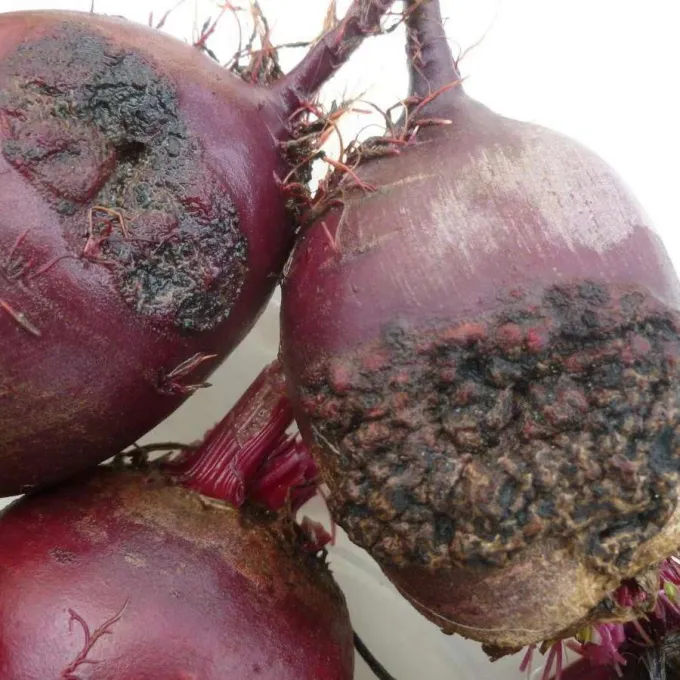
Root rot, specifically dry rot of the crown, is a major concern. It renders the beets unsuitable for processing, lowers the sugar content, and creates entry points for secondary pathogens during storage.
In sugar beet storage facilities (clamps), the infection can spread rapidly between roots, resulting in significant losses. This decay is exacerbated by poor ventilation and high humidity in the piles.
- Reduced seedling emergence and stand density.
- Loss of foliage due to necrotic spotting.
- Decreased root weight and sugar content.
- Storage rot and total loss of infected roots.
Signs of infestation
Early symptoms appear on seedlings as dark brown lesions on the hypocotyl. Affected seedlings often collapse and die, resulting in stunted growth or total disappearance of plants in the row.
Mature leaves display circular or oval spots that are light brown or tan in color. A defining characteristic of this disease is the presence of small, black, pinhead-sized pycnidia scattered within the lesions.
Crown rot symptoms include darkening and hardening of the internal root tissue. In advanced stages, dry rot creates deep cavities inside the crown, which may be filled with greyish fungal mycelium.
The disease typically progresses from the crown downwards into the main body of the root. Unlike soft rot, Phoma-induced decay is generally firm and dry, unless complicated by secondary bacterial infections.
Identification is confirmed by observing the distinctive concentric zoning of the leaf spots and the presence of fruiting bodies (pycnidia) under magnification or occasionally with the naked eye.
Control measures
The first line of defense is the use of high-quality, fungicide-treated seeds. This protects the vulnerable germinating seedlings from soil-borne and seed-borne inoculum of Neocamarosporium betae.
Cultural practices such as a 3-to-4-year crop rotation are essential to prevent the buildup of pathogen populations in the soil. Deep plowing of crop residues is also recommended to speed up their decomposition.
Foliar fungicide applications during the growing season are effective when initial signs of leaf spot appear. Systemic fungicides, particularly those containing triazoles, offer good control and protection.
Maintaining balanced soil fertility, with adequate levels of potassium and phosphorus, strengthens the plants' natural defense mechanisms against fungal penetration and colonization.
At harvest, minimizing mechanical damage to the roots is critical. Healthy, undamaged skin prevents infection during the storage phase, and proper ventilation in piles is necessary to keep the roots dry and healthy.
Causes diseases · 4
Discussion
No discussions yet — be the first.