
Pea mild mosaic virus
Pea mild
Pea mild mosaic virus (PMMV) is a plant virus belonging to the genus Comovirus within the Secoviridae family. It is a significant pathogen affecting various species of legumes worldwide.
What the section contains
Pea mild mosaic virus
The virus consists of isometric particles approximately 28–30 nm in diameter. Its genetic material is composed of single-stranded RNA, which is essential for its replication within the plant host cells.
This virus is known for its ability to be seed-borne, allowing it to survive through the winter in seeds and potentially travel long distances via seed distribution.
Transmission primarily occurs through mechanical means and insect vectors, particularly various aphid species. Understanding the vector dynamics is critical for managing the spread in commercial fields.
Laboratory diagnosis usually involves enzyme-linked immunosorbent assay (ELISA) or molecular methods like RT-PCR to distinguish it from other legume viruses with similar symptoms.
The primary host for PMMV is field pea (Pisum sativum), though other legumes such as vetch and broad beans can also serve as hosts. The virus spreads systemically through the plant's vascular system.
The economic impact of the virus is significant, characterized by yield reduction and impaired seed quality. Infected plants exhibit lower biomass and reduced pod set compared to healthy ones.
Seed-borne infection leads to uneven field emergence and stunted seedlings. In severe cases, the entire plant population in a patch can be compromised, necessitating the destruction of the infected crop.
The virus affects nitrogen-fixing efficiency by inhibiting the proper development of root nodules, which leads to lower soil fertility benefits and poorer plant vigor.
Losses also include secondary infections. Because the plant is weakened by the virus, it becomes highly susceptible to opportunistic bacterial and fungal pathogens.
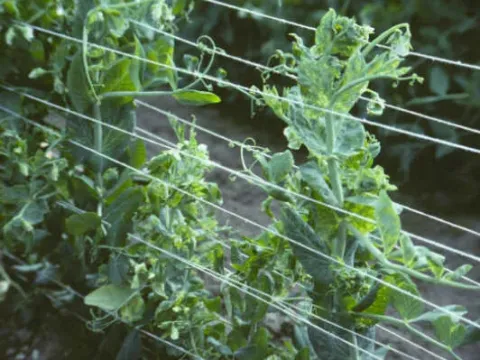
The symptoms of Pea mild mosaic virus are typically characterized by a mild mosaic pattern, mottling, and slight chlorosis on the leaves. The term "mild" refers to the relatively subtle nature of the foliage discoloration.
Stunting is a common feature in affected plants. The internodes may be shortened, resulting in a bushy or compressed appearance of the stems.
Leaf deformation may occur in some cultivars, ranging from slight puckering to more severe distortion of the leaf margins. Growth rate is noticeably reduced in the early developmental stages.
Reproductive development is delayed, and pods may be fewer in number, smaller, and occasionally display mottled surfaces themselves. Seed weight and viability are often significantly reduced.
- Mottling and mild mosaic leaf patterns.
- Reduced plant height and stunting.
- Interveinal chlorosis (yellowing).
- Deformed or small pods.
- Reduced seedling vigor and germination.
The most effective strategy for managing PMMV is the use of high-quality, virus-tested, and certified disease-free seeds. This prevents the primary introduction of the virus into a new field.
Integrated Pest Management (IPM) is essential to control the insect vectors, particularly aphids, which spread the virus from wild hosts to crop fields.
Crop rotation should be practiced diligently, with a gap of at least 3 to 4 years between planting legume crops to reduce the survival of the virus in the soil environment.
Sanitation of the field margins is crucial. Removing weeds that act as potential reservoirs for the virus prevents early season infection of emerging crops.
Breeding and planting resistant or tolerant cultivars is the ultimate goal in sustainable management. Development of such varieties offers a reliable way to maintain high yields despite the presence of the pathogen.