
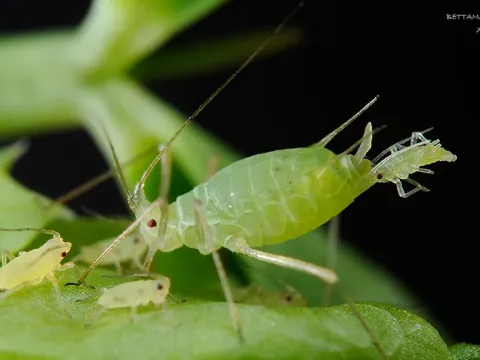
Pea aphid
Common pea
The pea aphid (Acyrthosiphon pisum) is a significant sap-sucking insect belonging to the family Aphididae, notorious for damaging legume crops worldwide.
What the section contains
Pea aphid
Adults are relatively large compared to other aphid species, reaching 3–5 mm in length, with a light green, pear-shaped body and notably long legs and antennae.
The species reproduces through both parthenogenesis and sexual mating, allowing for rapid colonization of fields throughout the growing season.
It acts as a primary vector for numerous plant viruses, most notably the pea enation mosaic virus and various potyviruses, which are often more damaging than the aphid feeding itself.
Winged females, known as alates, appear as the population density increases to facilitate movement to new host plants during summer months.
Pea aphids primarily infest pea crops, alfalfa, clover, vetch, and various beans, causing direct yield losses through sap extraction.
By feeding on phloem sap, the aphids drain energy from the plant, leading to stunted growth, reduced pod set, and smaller seed size.
In addition to physical damage, the honeydew secreted by the aphids serves as a substrate for sooty mold, which inhibits photosynthesis and reduces plant vigor.
Severe infestations can lead to total crop failure, especially in dry, warm years when aphids multiply at an exponential rate.
Feeding damage is most severe on the tender terminal buds and flowers, which are crucial for the reproductive success of the plant.
The pea aphid typically overwinters in the egg stage on perennial forage legumes like alfalfa or red clover.
Nymphs hatch in early spring when temperatures rise, subsequently migrating to annual legumes like peas as the weather warms up.
Population peaks generally coincide with the flowering and pod-filling stages of the pea plant, representing the highest risk window for growers.
Environmental factors such as high humidity and moderate temperatures (15–25°C) are ideal for the rapid development of successive aphid generations.
As day length decreases and temperatures drop in autumn, sexual forms develop to lay winter-hardy eggs on perennial hosts, completing the annual cycle.
The most obvious sign of infestation is the presence of large colonies of green insects clustered on the stems, leaves, and growing tips of the plants.
Leaves often show signs of curling, yellowing, and necrotic spotting as a result of the plant's reaction to aphid feeding and viral infection.
The sticky residue (honeydew) on the plant surface is a diagnostic sign of active aphid feeding, often accompanied by the presence of ants.
Plants affected by aphid-transmitted viruses exhibit characteristic mosaic patterns, leaf distortion, and severe reduction in plant height.
Loss of flowers and malformed, shriveled pods at harvest are critical indicators that aphid pressure was high during the flowering period.
Integrated Pest Management (IPM) is essential, starting with the use of pest-resistant pea cultivars whenever available.
Cultural practices include planting early to avoid the peak aphid colonization period and ensuring adequate isolation from overwintering perennial legume fields.
Biological control plays a significant role; farmers should encourage populations of predatory lady beetles, lacewings, and parasitic wasps.
Chemical control via selective insecticides is recommended when aphid counts reach established economic threshold levels per plant.
- Regular field scouting to monitor population density.
- Use of yellow sticky traps to track winged aphid flights.
- Managing border weeds that may serve as reservoirs for viruses.
- Maintaining soil fertility to ensure plants can withstand minor infestations.