
Pea mosaic virus
Wisconsin pea
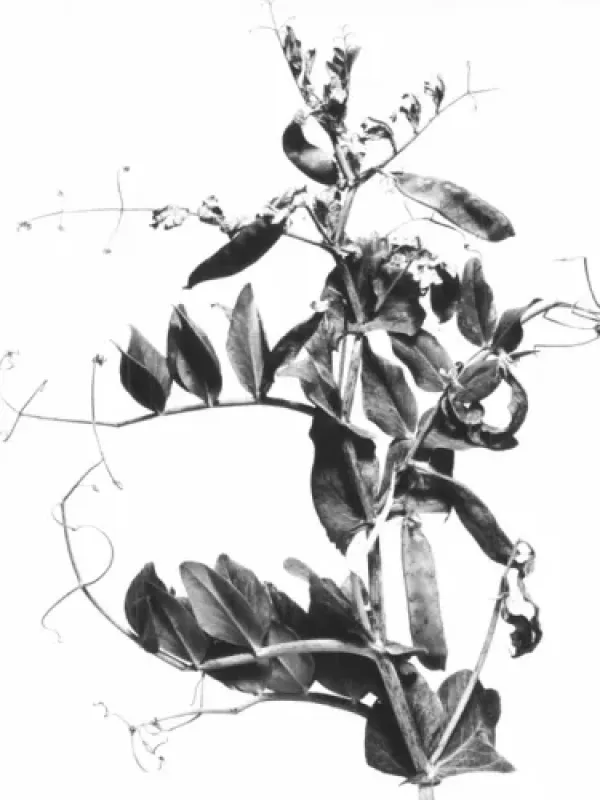
Description
How to identify
Pea mosaic virus (PMV) is a plant pathogen belonging to the genus Potyvirus, family Potyviridae, characterized by flexible, filamentous virions containing single-stranded RNA.
Taxonomically, it is often considered a strain of Bean yellow mosaic virus (BYMV), which is crucial for laboratory identification and diagnostic purposes.
The virus is an obligate parasite and cannot survive in the soil or in dead plant debris; it relies entirely on living hosts and insect vectors to persist in the ecosystem.
Transmission occurs in a non-persistent manner, meaning aphids can acquire the virus from an infected plant within seconds and immediately transmit it to a healthy plant.
Perennial legumes such as clover and alfalfa serve as primary reservoirs, allowing the virus to overwinter and migrate into annual pea fields during the growing season.
What it damages
The virus primarily affects members of the Fabaceae family, including garden peas, beans, lupines, and various vetches, causing systemic infection.
Once infected, the metabolic processes of the plant are severely impaired, leading to reduced photosynthesis, lower nutrient uptake, and overall stunted growth.
The economic damage is characterized by significant yield losses, reduced seed weight, and decreased quality of harvested produce, rendering it unfit for market.
In addition to yield reduction, affected plants become more susceptible to other environmental stresses, such as heat, drought, or secondary fungal infections.
If the infection occurs early in the plant development stage, the crop failure can be substantial, leading to severe economic losses for farmers.
When it appears
Infection cycles begin in the spring as aphids migrate from overwintering perennial hosts onto emerging pea seedlings in the fields.
The spread of the virus is heavily influenced by weather patterns; warmer, drier springs often lead to higher aphid populations and faster viral spread.
Peak infection periods typically coincide with the rapid growth stages of the pea crop, when plants are most attractive to insect vectors.
In mid-summer, while aphid activity might decline due to extreme heat, the virus has usually already established itself within the field, causing localized hotspots.
Secondary infections continue throughout the season as aphids move between neighboring plants, spreading the virus effectively within the dense crop canopy.
Signs of infestation
The hallmark of the disease is a mosaic pattern on the leaves, featuring alternating light and dark green patches that often follow the leaf veins.
Plants often exhibit severe stunting, reduced internode length, and a generally bushy or rosetted appearance compared to healthy plants.
Leaf deformation, including curling, crinkling, and rolling, is frequently observed as the infection disrupts normal tissue development.
Flowers may show discoloration or reduced formation, while pods are often smaller, distorted, and contain fewer, shriveled seeds.
- Mosaic pattern of yellow and green leaf spotting.
- Leaf crinkling, curling, and malformation.
- Stunting and shortened internodes of the main stem.
- Reduced pod size and seed shriveling.
- Systemic chlorosis along the leaf veins.
Control measures
Effective management begins with spatial isolation, planting pea fields far from known reservoirs of the virus, such as perennial forage legumes.
Strict weed management, particularly of leguminous weeds in and around the field, is essential to remove potential sources of the inoculum.
Chemical control of aphid populations using systemic or contact insecticides is a critical strategy to interrupt the transmission cycle during the early stages.
Breeding and utilizing resistant or tolerant cultivars remains the most sustainable and efficient approach to mitigating the impact of the virus.
Optimizing planting dates to avoid the peak flight times of migratory aphids can significantly decrease the risk of early-season primary infections.
Causes diseases · 1
Discussion
No discussions yet — be the first.