
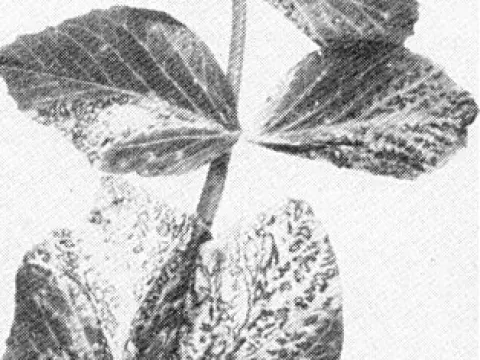
Pea early-browning virus
Pea early
Pea early-browning virus (PEBV) is a plant pathogenic virus belonging to the genus Tobravirus, characterized by a bipartite positive-sense single-stranded RNA genome.
What the section contains
Pea early-browning virus
The virus is transmitted by soil-inhabiting ectoparasitic nematodes belonging to the genera Trichodorus and Paratrichodorus, which feed on the root systems.
PEBV is known for its ability to persist in the soil for extended periods, remaining viable within the bodies of its nematode vectors or in infected root debris.
The virus exhibits a wide host range, infecting various legumes, vegetables, and ornamental plants, which facilitates its persistence in diverse agricultural ecosystems.
Molecular detection methods, such as RT-PCR and ELISA, are essential for accurate identification, as field symptoms can be confused with other abiotic or biotic stresses.
PEA early-browning virus causes severe damage to pea crops (Pisum sativum), leading to stunted growth, reduced pod set, and significant yield losses.
In addition to peas, the virus affects crops like faba beans, alfalfa, and potatoes, where it causes distinct symptoms like spraing or ringspot patterns on tubers.
The infection is systemic, meaning the virus moves throughout the plant, disrupting physiological processes, including photosynthesis and nutrient uptake.
Seed transmission plays a critical role in the long-distance spread of the virus, turning seeds into primary inoculum sources for subsequent growing seasons.
Economic damage is often cumulative, as infected fields suffer from reduced plant vigor, poor grain quality, and increased susceptibility to secondary infections.
The virus typically appears in the early spring, coinciding with the period of high nematode activity in the soil, which is driven by increasing temperatures and moisture.
Initial infections occur through the roots of young seedlings, allowing the virus to establish itself early in the plant's development cycle.
Cool, wet spring weather provides the optimal environment for both the vector population and the initial development of the viral symptoms in the foliage.
While symptom expression might become less visible during hot summer months, the virus continues to circulate within the soil and host plants.
Persistence of the virus over winter is ensured by perennial weeds and infected soil, which serve as reservoirs for the next season's primary outbreaks.
The hallmark symptom is a striking bright yellow (lemon-yellow) chlorosis of the shoot tips, which often appears shortly after germination or early growth.
Infected plants display significant stunting, characterized by shortened internodes and a bushy or dwarf appearance compared to healthy, robust plants.
Leaves may show mosaic patterns, necrotic spotting, or severe distortion, depending on the viral strain and the susceptibility of the host cultivar.
Pod development is severely compromised, resulting in malformed pods containing small, shriveled, or necrotic seeds, which significantly reduces the harvest quality.
- Bright yellow leaf chlorosis
- Stunted plant growth and dwarfism
- Deformed, small, and shriveled pods
- Necrotic patches or striping on stems
The primary control strategy involves the use of resistant or tolerant cultivars, which can limit viral replication and mitigate crop loss.
Implementing effective crop rotation cycles is crucial to disrupt the lifecycle of the nematode vectors, preventing the buildup of virus populations in the soil.
Rigorous phytosanitary measures are required for seed production, ensuring that only virus-free, tested seeds are used for planting in new areas.
Control of volunteer plants and weeds is necessary, as these act as green bridges for the virus between consecutive growing seasons.
Nematicide application can be considered in high-pressure fields, although it is often limited by regulatory requirements and environmental sustainability concerns.