
Onion yellows
Onion yellows
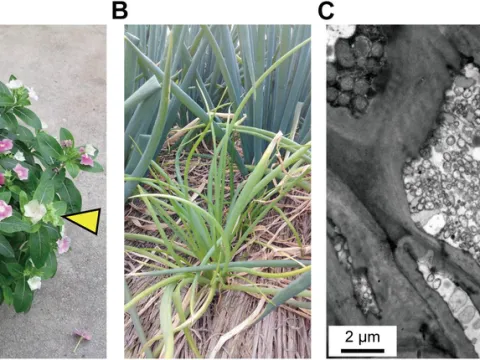
Onion yellows is a systemic plant disease caused by phytoplasmas, specifically Candidatus Phytoplasma asteris. These are specialized, wall-less prokaryotes that inhabit the phloem tissue of infected plants, effectively hijacking their nutrient transport system.
What the section contains
Onion yellows
Phytoplasmas are classified within the class Mollicutes. They possess small genomes and rely exclusively on an insect vector for transmission and a host plant for metabolic support. They cannot survive outside of these hosts for extended periods.
The primary transmission mechanism is through phloem-feeding insects, most notably leafhoppers. When a leafhopper feeds on an infected plant, it acquires the phytoplasma, which then circulates through the insect's body before the insect becomes a permanent vector.
The disease cycle involves the overwintering of the pathogen in perennial weeds or alternative host crops. In the spring, leafhoppers acquire the phytoplasma from these sources and migrate to onion fields, initiating the primary infection.
Diagnosis in the field is based on symptomology, while definitive confirmation requires molecular techniques such as PCR (Polymerase Chain Reaction) to detect the specific DNA of the phytoplasma in plant tissues.
The disease affects various Allium species, including bulb onions, garlic, shallots, and leeks. The damage is cumulative, leading to significant reductions in bulb quality, size, and storability, rendering crops unsuitable for commercial market.
Seed production is severely compromised by the infection. Plants infected with phytoplasmas often show reduced seed viability and deformed flowers. This makes saving seeds from infested fields a significant risk for spreading the disease into future seasons.
Yield losses can be catastrophic, sometimes exceeding 50% in areas with high leafhopper pressure. The systemic nature of the infection means that once a plant is colonized, it becomes a permanent source of inoculum within the field.
Secondary infections are common, as weakened plants are highly susceptible to opportunistic bacterial soft rots. This leads to the rapid collapse of the bulb tissues and total loss of individual plants during the growing season.
Economic impacts include not only the loss of harvestable produce but also the increased costs associated with heavy insecticide applications and the necessity of discarding infected planting materials to maintain certification standards.
The earliest visible symptom is the yellowing (chlorosis) of the leaf tips, which gradually progresses downward along the leaf blade. The foliage eventually loses its turgor, becomes limp, and turns a distinct pale or yellowish-green hue.
Infected plants exhibit marked stunting and growth reduction. They appear significantly smaller than healthy plants in the same field. Leaf development is often distorted, and the overall plant architecture may appear irregular or clumped.
Bulb development is severely hampered, resulting in small, soft, and watery bulbs. In advanced stages, the root system decays prematurely, depriving the plant of nutrients and water, leading to rapid wilting under heat stress.
Reproductive organs often display dramatic changes, such as the greening of flower petals (phyllody). Instead of normal flower formation, the floral parts may transform into leaf-like structures, and the production of fertile seeds is inhibited.
- Chlorosis (yellowing) starting from leaf tips
- Stunting and growth retardation
- Deformed inflorescences and phyllody
- Premature root rot and weak bulb formation
- Reduced bulb weight and quality
Management of Onion yellows is centered on controlling the insect vectors, as there are no effective curative chemical treatments available once a plant is infected with phytoplasma. The goal is to minimize the transmission rate.
Regular application of systemic insecticides is crucial to manage leafhopper populations. Timing is key, with applications targeted during peak insect migration periods, particularly on the edges of the fields adjacent to perennial grasses.
Cultural control includes rigorous weed management. Eliminating perennial weeds in and around the field is essential to remove the reservoirs of the phytoplasma, thereby breaking the disease cycle before it reaches the onions.
Using high-quality, certified disease-free onion sets or seeds is the most important preventive measure. Growers should avoid sourcing materials from regions or farms with a history of phytoplasma outbreaks.
Spatial isolation is another effective strategy. Planting onions far from forage crops, cereals, or permanent pastures—which serve as breeding grounds for leafhoppers—can significantly reduce the risk of secondary infections and pest migration.