
Onion neck rot
Botrytis byssoidea
Description
How to identify
Botrytis byssoidea is a pathogenic fungus belonging to the kingdom Fungi and the order Helotiales. It is primarily recognized as a specialized pathogen causing neck rot in onion (Allium cepa) and related species.
The fungus is characterized by the production of dense, greyish-white mycelium and conidiophores bearing spores. It also produces sclerotia, which are hard, black resting structures that allow the fungus to persist in the soil for several years.
The life cycle of the pathogen is closely tied to the onion crop cycle. Infection typically occurs through wounds or dying neck tissues during the pre-harvest and harvest phases. The sclerotia serve as the primary inoculum source in the soil.
This species is distinguished from other Botrytis species by its morphological characteristics and its high degree of host specificity to the Allium genus, making it a critical threat to onion production globally.
Advanced diagnostic techniques, including microscopic examination and molecular analysis, are often required to distinguish B. byssoidea from other closely related fungi that also cause rotting in stored onions.
What it damages
The primary hosts of Botrytis byssoidea are onion and shallot. The pathogen attacks the neck region, leading to rapid decay of the bulb tissues which renders the product unmarketable.
Damage caused by this fungus is most severe during the storage period. As infected bulbs decay, they release spores that can rapidly spread the infection to adjacent healthy bulbs in storage bins.
Economic losses in onion production are substantial, as neck rot often goes undetected until it is too late to prevent widespread spoilage. This impacts both the fresh market and the processing industry.
Beyond direct tissue destruction, the rot creates an environment conducive to colonization by other opportunistic saprophytic organisms, further accelerating the complete breakdown of the bulb.
In addition to bulbs, the pathogen can also infect onion seed stalks and inflorescences, thereby reducing seed yield and potentially contaminating the seed supply with dormant fungal structures.
When it appears
Infection generally begins late in the growing season, particularly when plants approach maturity. High humidity and moderate temperatures provide optimal conditions for the pathogen to thrive.
Harvest time is a critical window for infection. Wet, cool weather during harvest increases the risk of conidia penetrating the weakening neck tissues of the onion plants as they begin to dry down.
Once harvested, the pathogen remains latent in the bulb tissues until conditions become favorable, or it continues its slow progression into the interior of the bulb.
In storage, the environmental conditions are paramount. Temperatures exceeding 5-10°C combined with high humidity significantly accelerate the rate of mycelial growth and rot development.
Seasonal outbreaks are most frequent in regions with high rainfall towards the end of the cropping season, as moisture encourages the sporulation of the fungus on infected plant debris.
Signs of infestation
The first external sign of infection is a softening of the neck tissue. The area may appear water-soaked and sunken compared to the firm, healthy parts of the bulb.
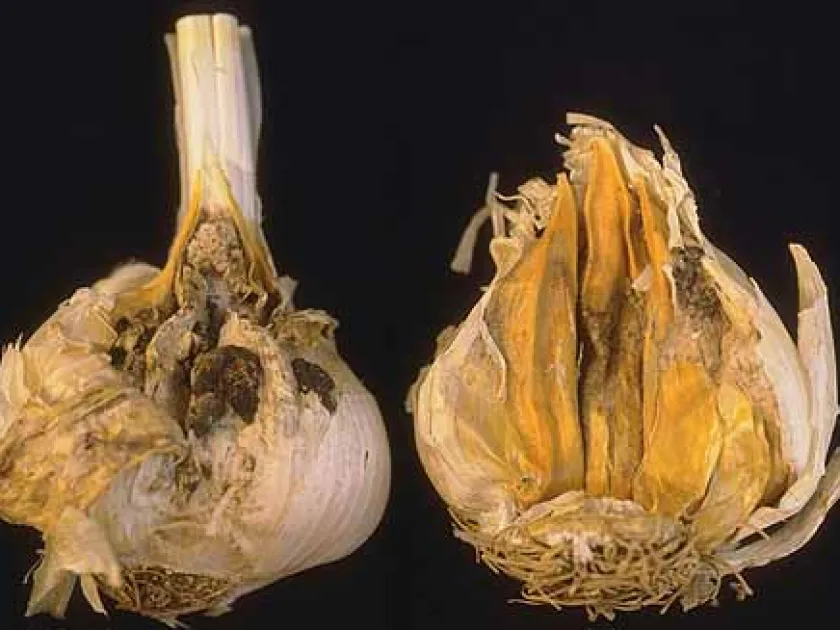
As the disease progresses, a fluffy grey mould, consisting of fungal spores and mycelium, appears on the neck region. This is often followed by the development of small, black, hard sclerotia.
Upon slicing an infected onion, the interior scales show signs of discoloration, typically appearing light grey or brown, and become soft and pulpy.
The infection follows a characteristic progression from the neck downwards into the center of the bulb, often creating a clear boundary between diseased and healthy tissue.
Affected onions often emit a characteristic, sharp, unpleasant odour of decay, which is a common indicator of a significant infestation within a batch of stored produce.
Control measures
Cultural practices are the most effective way to manage neck rot. This includes ensuring long crop rotations (at least 3-4 years) to prevent the build-up of inoculum in the soil.
Proper curing is critical; harvested onions must be dried thoroughly in well-ventilated areas to ensure the necks are fully closed and hardened before going into storage.
- Use high-quality, disease-free seed or sets.
- Harvest during dry weather to prevent moisture from encouraging infection.
- Maintain low temperature (near 0°C) and low relative humidity in storage.
- Remove and destroy all infected plant debris from the field.
- Avoid over-fertilizing with nitrogen, which can delay maturity and keep necks succulent.
Careful sorting and grading prior to storage are essential to remove any damaged or immature bulbs that could serve as entry points for the pathogen.
Regular inspection of the stored crop allows for the early removal of infected onions, thereby preventing the spread of the fungus to surrounding healthy bulbs.
Causes diseases · 1
Discussion
No discussions yet — be the first.