
Onion yellow
Onion yellow
Description
How to identify
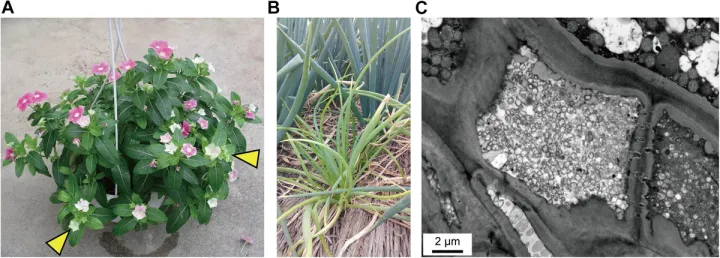
Onion yellows is a systemic plant disease caused by phytoplasmas, which are specialized wall-less prokaryotes belonging to the class Mollicutes.
These pathogens are obligate parasites that colonize the phloem tissue of host plants, disrupting the transport of essential nutrients and sugars.
The disease is naturally transmitted by phloem-feeding insects, primarily leafhoppers, which acquire the pathogen while feeding on infected plants.
Phytoplasmas survive the winter in perennial weed hosts and infected biennial crops, serving as a continuous source of inoculum for new plantings.
Once introduced into the plant, the pathogen spreads systemically, making recovery of the infected individual impossible under field conditions.
What it damages
This pathogen impacts a wide range of Allium species, including bulb onions, shallots, garlic, and several ornamental varieties.
The infection significantly impairs the plant's ability to store carbohydrates, which leads to stunted bulb development and reduced overall yield.
Marketability is severely compromised as affected plants exhibit poor growth, chlorosis, and reduced size, failing to meet quality standards.
Bulbs from infected plants have poor post-harvest shelf life and are prone to rapid tissue degradation and susceptibility to secondary pathogens.
High levels of infection in a field can lead to substantial economic losses, especially when the disease incidence occurs early in the growing season.
Signs of infestation
The most prominent symptom is a progressive yellowing of the leaves, starting from the tips and moving downwards toward the base of the plant.
Infected plants display distinct signs of stunting and dwarfing, often failing to reach their normal height compared to healthy crops.
Leaf tissue may lose turgor, become brittle, or show abnormal twisting, significantly reducing the vigor of the affected onion crop.
When seed stalks (scapes) are affected, they often exhibit malformations, resulting in poor flower development and non-viable seeds.
- Progressive chlorosis and yellowing of foliage.
- Significant stunting and reduced plant height.
- Leaf distortion and premature wilting.
- Malformed flower stalks in seed-bearing plants.
Control measures
Management focuses on reducing the population of insect vectors and eliminating primary reservoirs of the phytoplasma within the farming system.
Rigorous weed control is essential to minimize overwintering sites for both the pathogen and the leafhopper vectors around the field.
Planting only high-quality, certified, and disease-free seeds or sets is the most effective preventative measure against establishing the disease.
Regular monitoring and application of systemic insecticides can help manage leafhopper populations, thereby breaking the disease transmission cycle.
Early identification and rogueing of symptomatic plants help limit the spread of the pathogen, though it is only effective if performed promptly.
Causes diseases · 2
Discussion
No discussions yet — be the first.