
Orchid Cercospora leaf spot
Cercospora odontoglossi
Description
How to identify
The causative agent of this disease is the fungus Cercospora odontoglossi, which belongs to the kingdom Fungi and the phylum Ascomycota. This microscopic phytopathogen is highly adapted to infecting the epidermal tissues of various orchid species.
The fungus spreads primarily through conidia, which are easily dispersed by water droplets during irrigation or through air currents in greenhouses. It can persist for long periods on plant debris, making it a challenging pathogen to eradicate completely.
The life cycle of the pathogen is heavily dependent on moisture. Conidia germination and penetration into the leaf tissue occur most efficiently when free moisture is present on the leaf surface, usually through the stomata or microscopic wounds.
The fungus develops optimally at temperatures ranging from 20°C to 28°C. During this stage, the mycelium rapidly colonizes the intercellular spaces, secreting enzymes that destroy the cellular integrity of the host plant.
Diagnosis is often delayed because the initial phase of the infection is invisible to the naked eye. Only after the fungus has established a colony and begun producing spores on the leaf surface do the first distinct symptoms appear.
What it damages
A wide range of orchid species is susceptible to Cercospora odontoglossi, with notable impact on genera like Odontoglossum, Cattleya, and Laelia. The disease primarily targets the foliage, significantly affecting the plant's ability to photosynthesize.
The pathogenicity involves the necrosis of leaf tissues, which results in a substantial reduction of the leaf's photosynthetic area. This energy deficiency leads to stunted growth, loss of vigor, and the potential failure of the orchid to bloom.
Severe infections can cause premature leaf drop, which weakens the plant's structural integrity. Because orchids rely on stored nutrients in their pseudobulbs, chronic leaf loss leads to a gradual decline in the plant's overall health and reserves.
Furthermore, the necrotic spots serve as entry points for secondary pathogens, including bacteria and other fungi. These opportunistic infections often progress faster than the original Cercospora, leading to rapid tissue decay and plant death.
In commercial nurseries, this pathogen can cause significant economic losses by rendering plants unsellable. Proper management is essential to maintain the quality of the collection and prevent the spread of the disease to healthy stock.
Signs of infestation
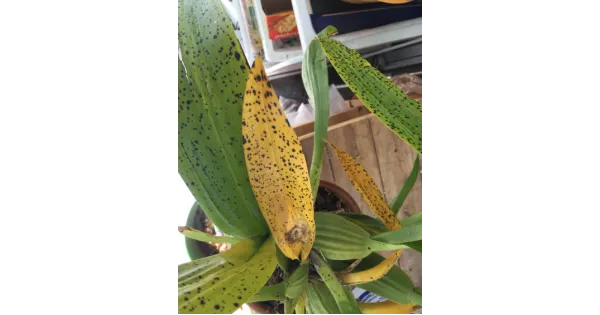
The first signs of infection are small, yellow-green spots appearing on the underside of the leaves. As the fungus progresses, these spots expand, often turning brown, gray, or black with irregular shapes.
A characteristic symptom is the presence of a distinct halo or a light-colored ring surrounding the necrotic lesion. Over time, the center of the spot dries out and may become brittle, occasionally causing the tissue to tear and form small holes.
Under high humidity conditions, a grayish or olive-colored fungal growth can be observed on the undersides of the leaves within the spotted areas. This represents the sporulating structures of the fungus and is a primary diagnostic indicator.
Unlike viral infections, which often show mosaic patterns, Cercospora infections are localized and distinctly demarcated. The spots do not produce any unpleasant odor, which distinguishes them from severe bacterial soft rot.
As the disease advances, multiple spots may coalesce, covering large portions of the leaf. The entire leaf eventually becomes chlorotic, loses its turgidity, and dies, starting from the tip or the edges inward.
Control measures
The primary control measure is the immediate quarantine of all symptomatic plants. Removing infected individuals from the main collection is vital to prevent spore dispersal to healthy neighbors.
Sanitation is key; all heavily infected leaves should be surgically removed using sterile tools. It is recommended to cut into healthy tissue and treat the wounds with a broad-spectrum fungicide or an antiseptic powder to prevent new infections.
Chemical control involves the application of systemic fungicides, particularly those containing copper, mancozeb, or triazole compounds. Rotating active ingredients is crucial to avoid the development of fungicide resistance in the fungal population.
Modifying the growing environment is essential for long-term control. Ensure that the irrigation method avoids wetting the leaves, and prioritize high-quality air circulation to keep the leaf surfaces dry.
- Improve air ventilation in the greenhouse or growing area.
- Maintain humidity levels below 70% to inhibit spore germination.
- Disinfect all cutting tools with alcohol or a flame between plants.
- Avoid overhead watering during periods of high humidity.
Discussion
No discussions yet — be the first.