
Onion yellow dwarf virus
Iris yellow
Description
How to identify
Onion yellow dwarf virus (OYDV) is a serious phytopathogen belonging to the Potyvirus genus and the Potyviridae family. It is a major cause of viral diseases in plants within the Allium genus.
The virus consists of flexuous filamentous particles containing single-stranded RNA. It is highly contagious and spreads primarily through vectors or mechanical plant wounding.
Scientific identification typically relies on ELISA or RT-PCR testing, as visual symptoms can easily be confused with nutrient deficiencies or environmental stress.
The virus survives in perennial onion species, ornamental alliums, and infected sets or bulbs stored from the previous season.
Transmission occurs non-persistently through various aphid species, meaning the virus can be acquired and transmitted within seconds of feeding.
What it damages
The host range is largely confined to Allium species, including onions, garlic, shallots, and leeks, causing significant economic losses worldwide.
Infection leads to stunted plant growth, which directly correlates to a significant reduction in bulb size and total marketable yield.
Quality issues are common, as infected bulbs tend to have poor storage life and are more susceptible to secondary fungal or bacterial infections.
In seed production fields, the virus negatively impacts both the quality and quantity of the harvestable seeds produced by the plants.
The systemic nature of the virus ensures that once a plant is infected, the pathogen spreads throughout the entire vascular system, affecting all growing tissues.
Signs of infestation
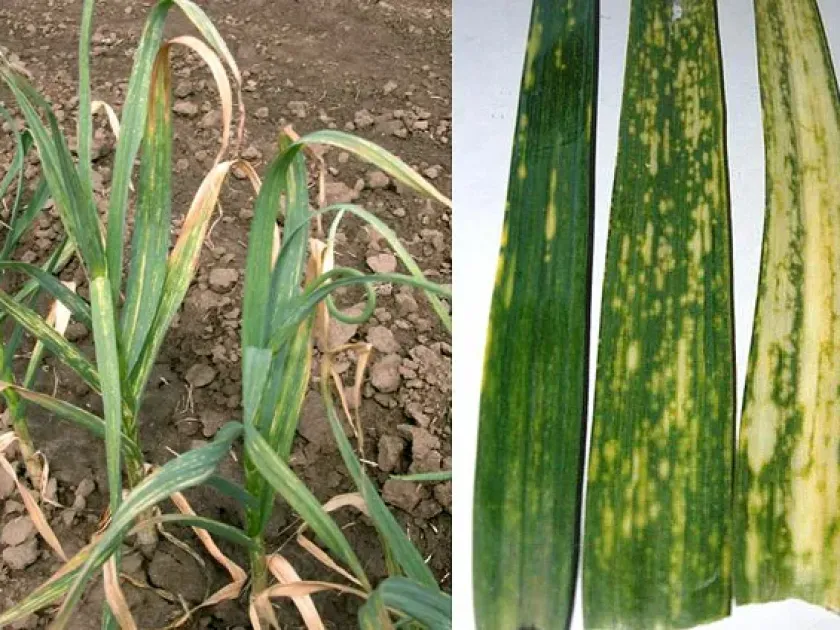
Characteristic symptoms include yellowing, streaking, or chlorotic mottling on the leaves, which often appear in the early stages of plant development.
Leaves often exhibit severe deformation, becoming curled, twisted, or flattened, leading to an overall disheveled appearance of the crop.
Stunting is the most prominent sign, where the plant height remains significantly lower than that of healthy neighboring plants in the field.
Flower stalks of infected plants are often shorter and malformed, which interferes with proper pollination and the development of high-quality seeds.
- Chlorotic yellow stripes on leaves.
- Leaf distortion and curling.
- Significant stunted growth.
- Reduced bulb weight and quality.
Control measures
The primary control strategy is the use of virus-free certified seeds and healthy planting sets to prevent the introduction of the pathogen.
Rogueing infected plants early in the season is critical to reduce the source of the virus inoculum within the field.
Effective management of aphid populations through the use of insecticides or reflective mulches helps to interrupt the transmission cycle.
Maintaining spatial isolation between older, potentially infected perennial plots and new seasonal plantings is essential for crop protection.
Strict weed control is necessary to remove alternate hosts for both the virus and the aphid vectors that facilitate its spread.
Causes diseases · 1
Discussion
No discussions yet — be the first.