
Onion Botrytis leaf blight
Botrytis squamosa
The causal agent of the disease is the fungus Botrytis squamosa, which belongs to the family Sclerotiniaceae and is a major pathogen in the genus Allium.
What the section contains
Onion Botrytis leaf blight
The fungus survives the winter primarily as sclerotia buried in the soil or within decaying onion debris left in the field after harvest.
During the spring, under conditions of moderate temperature and high humidity, these sclerotia produce conidia, which serve as the primary inoculum for infection.
Spore dissemination is highly efficient through wind currents and rain splash, allowing the fungus to spread rapidly across onion plantations.
The pathogen requires prolonged periods of leaf wetness to germinate and penetrate the epidermis, establishing itself within the plant tissues.
Botrytis leaf blight primarily affects onions, garlic, and leeks, causing significant yield losses in both fresh market and processing crops.
By destroying the green leaf area, the fungus reduces the plant's capacity for photosynthesis, which directly leads to smaller and lower-quality bulbs.
Severe infections result in premature death of the foliage, which compromises the plant's structural integrity and leaves it vulnerable to secondary infections.
The economic impact includes not only yield reduction but also increased costs for fungicide applications and potential storage losses during post-harvest handling.
Fields with high levels of infection often show a patchy distribution, which can progress to total foliage collapse if the weather remains favorable for the pathogen.
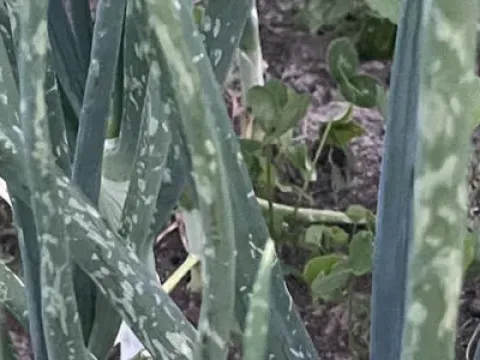
Initial symptoms are characterized by small, white-to-light-grey spots on the leaves, which are often accompanied by a light halo.
As the disease progresses, these lesions expand and may become sunken; in moist conditions, they often develop a greyish mycelial mass on their surface.
The tips of the leaves begin to yellow and wither, eventually leading to a complete decline and collapse of the entire leaf structure.
Symptoms are most visible on older leaves first, gradually moving upward toward the newer growth, significantly reducing the crop's vitality.
- Development of numerous white necrotic spots.
- Leaf tip dieback and browning.
- Grey mold growth during high humidity.
- Premature yellowing and collapse of onion tops.
Effective management begins with long-term crop rotation, avoiding planting onions in fields where the pathogen has been detected for at least three years.
Deep plowing of crop residues is essential to bury sclerotia deep in the soil, effectively reducing the primary source of infection for the next season.
Maintaining adequate plant spacing improves air circulation within the canopy, which helps to keep foliage dry and inhibits fungal development.
Fungicide application is a critical component of control; products containing strobilurins or triazoles should be applied preventively or at the first sign of symptoms.
Integrated pest management (IPM) practices, including proper irrigation scheduling and field sanitation, remain the best defense against Botrytis squamosa.