
Orange wheat blossom midge
Eastern wheat
Description
How to identify
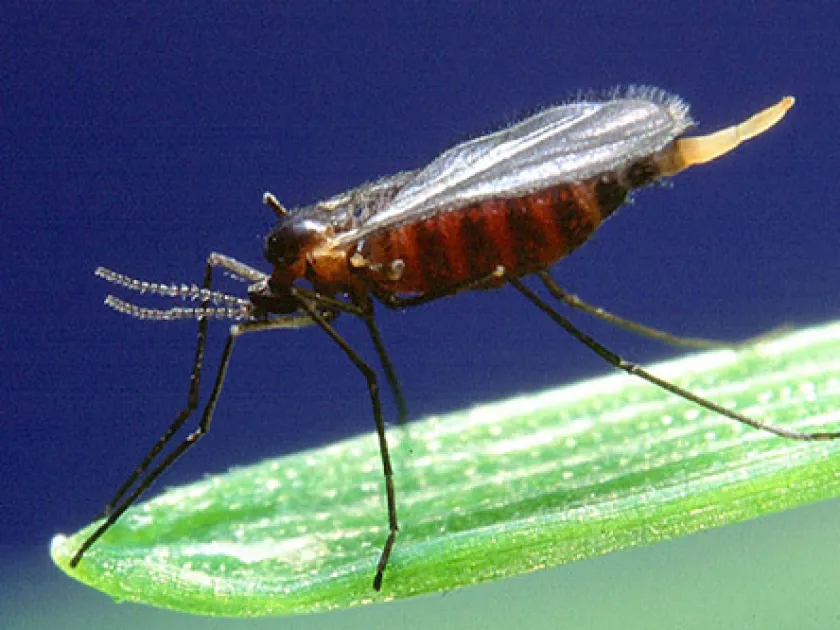
The orange wheat blossom midge (Sitodiplosis mosellana) is a tiny insect belonging to the Cecidomyiidae family. The adult female is approximately 2-3 mm long, with a delicate, orange-red body and wings covered in fine hairs, characteristic of this species.
Larvae are the most recognizable stage for agronomists, characterized by a vibrant lemon-yellow color. As they feed and grow within the wheat head, they transition from active early-stage larvae to less mobile, plump individuals before entering diapause in the soil.
Identifying this pest in the field can be challenging due to its nocturnal activity and short adult lifespan of only a few days. Presence is usually detected through meticulous inspection of the ear during the flowering stage or by using pheromone traps.
This species is highly adapted to temperate climates. Its ability to remain in the soil in a state of diapause for multiple years if environmental conditions are unfavorable makes it a persistent threat in many wheat-growing regions globally.
Proper identification is crucial for effective management. It is often distinguished from other gall midge species by its specific host range, primarily wheat, and the distinct damage patterns caused to the developing grain embryos.
What it damages
The economic damage is caused by the larvae feeding on the developing wheat grain. By sucking the juices from the ovary, they directly interfere with grain filling, resulting in shriveled, deformed, or entirely empty grains (often called "floret sterility").
Beyond the direct reduction in yield weight, the feeding activity disrupts the integrity of the grain, leaving it highly susceptible to secondary fungal infections like Fusarium. This leads to the production of mycotoxins, severely degrading grain quality.
Yield loss varies based on the infestation density. While low levels of larvae may result in minimal loss, heavy infestations can reduce the number of grains per ear and the overall test weight of the harvest by significant margins, often reaching 30% or more.
Infested wheat ears often display visible signs of distress, including distortion of the glumes and an uneven ripening process. The structural changes in the ear make the crop look prematurely aged or unevenly developed compared to healthy fields.
Wheat cultivars with specific structural traits, such as those that flower quickly or have tightly closed glumes, often show higher tolerance to the midge. Choosing the right variety is a fundamental step in minimizing potential crop losses.
When it appears
The emergence of adults typically coincides with the booting and heading phases of winter and spring wheat. Soil moisture and warm temperatures act as triggers, with rainfall significantly increasing the number of emerging midges.
The life cycle is perfectly synchronized with the phenology of the wheat crop. Egg-laying occurs during the flowering period, as the larvae require the soft, succulent tissues of the young ovary to feed immediately upon hatching.
Under normal conditions, there is one generation per year. However, environmental stress such as drought can force larvae to remain in the soil, skipping a season and potentially emerging in mass numbers when conditions eventually become favorable.
After completing their feeding cycle, usually before the hard dough stage of the grain, larvae drop to the ground. They burrow into the soil to overwinter or enter long-term diapause, effectively hiding from most field management practices.
Forecasting models based on temperature accumulation (growing degree days) and moisture levels are essential tools for farmers to predict emergence and time insecticide applications to provide the highest level of crop protection.
Signs of infestation
- Distorted, shriveled, or empty grains within the wheat ear.
- Yellow larvae found inside the husks upon manual inspection.
- Discoloration or premature ripening of specific parts of the ear.
- Glumes appearing forced open due to the mechanical presence of larvae.
- Massive flight activity of small, orange-colored gnats at dusk.
Control measures
Cultural control via crop rotation is a primary defense. Moving wheat fields away from previous-year sites disrupts the life cycle, as emerging midges will fail to find a suitable host, significantly reducing local population pressure over time.
Deep tillage after harvest is an effective mechanical method to bury larvae or expose them to natural predators and desiccation. This practice reduces the number of midges that successfully survive the winter and emerge the following season.
Chemical control relies on timing insecticide applications during the adult emergence and egg-laying phase. Because the larvae are protected once they enter the wheat head, targeting the adults with systemic or contact products is crucial for success.
Biological control plays a vital role in natural suppression. Parasitic wasps are significant predators of midge larvae. Maintaining field margins and minimizing the use of broad-spectrum pesticides supports these natural enemy populations.
Integrated Pest Management (IPM) is the gold standard, involving pheromone monitoring, weather-based forecasting, and strictly controlled use of insecticides only when the economic threshold is reached, ensuring both profit and environmental safety.
Causes diseases · 1
Discussion
No discussions yet — be the first.