
Ophiostoma fimbriatum
Ophiostoma fimbriatum
Description
How to identify
Ophiostoma fimbriatum is an ascomycete fungus and a significant plant pathogen known for causing severe vascular and root diseases across various plant species worldwide.
The fungus is classified within the Ophiostomatales order. Its life cycle involves the formation of perithecia, which are microscopic, long-necked fruiting bodies that release spores, facilitating widespread distribution.
This pathogen exhibits strong saprophytic capabilities, allowing it to survive in soil debris for extended periods even in the absence of a host plant, making eradication difficult.
Microscopic examination of Ophiostoma fimbriatum reveals characteristic hyphae and reproductive structures that distinguish it from other root-rot fungi in field samples.
The adaptability of this fungus to various environmental conditions, combined with its efficient transmission methods, marks it as a serious concern for agricultural biosecurity in many countries.
What it damages
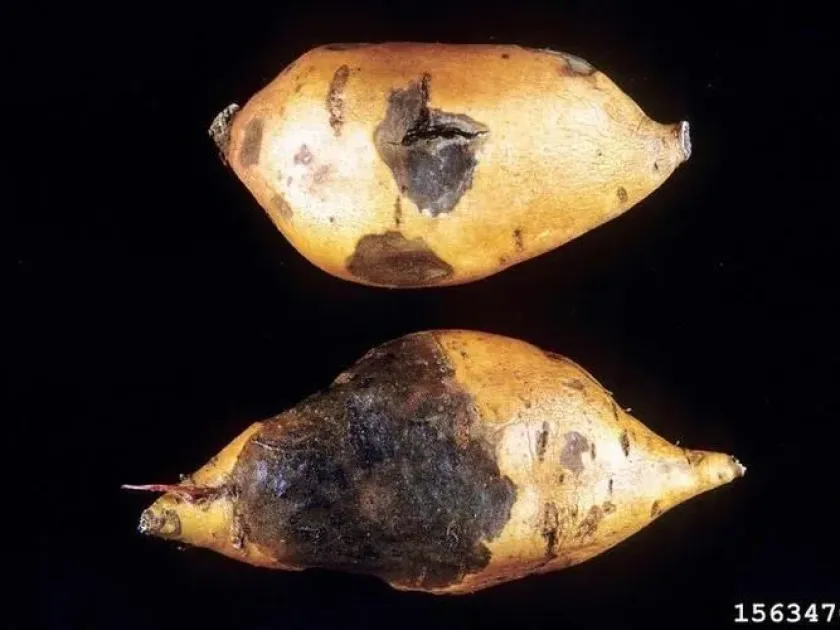
The most devastating impact of Ophiostoma fimbriatum is observed on sweet potatoes, where it causes a disease commonly known as black rot, leading to substantial yield losses.
Beyond root crops, the pathogen is infamous for infecting various hardwood trees, such as plane trees, where it causes severe cankers and vascular wilt, eventually leading to tree mortality.
The pathogen primarily enters through wounds during harvest, planting, or through insect feeding, establishing itself quickly in the plant tissue and spreading through the root system.
Post-harvest damage is particularly significant, as the fungus spreads rapidly in storage facilities, turning healthy produce into black, decayed waste within a matter of weeks.
The economic impact involves not only the direct loss of harvest but also costs associated with quarantine measures, destruction of infected plants, and the loss of long-term soil productivity.
Signs of infestation
Infected sweet potatoes display sunken, dark brown to charcoal-black lesions on the skin, which gradually extend deep into the flesh, creating a firm and dry decay.
When the tissue is cut, a characteristic internal vascular browning is observed. In highly humid environments, a sparse grey mold layer may develop over the surface of the lesions.
For affected seedlings, the primary symptoms are yellowing and wilting of the foliage, followed by the darkening of the lower stem, which eventually causes the plant to collapse.
In woody plants, the signs include sunken necrotic patches on the bark, internal discoloration of the wood, and crown dieback, which is indicative of vascular blockage.
- Dark, sunken spots on tubers or roots.
- Internal browning of vascular tissues.
- Yellowing and wilting of plant tops.
- Development of black fungal structures (perithecia).
- Rapid expansion of decay in storage conditions.
Control measures
The primary control strategy for Ophiostoma fimbriatum involves the use of pathogen-free propagules and certified planting material to ensure no initial infection is introduced.
Cultural practices, such as maintaining a strict crop rotation and removing all infected plant debris from the field, are essential to reduce the inoculum levels in the soil.
Good storage hygiene is critical; all equipment, crates, and storage facilities must be disinfected regularly to prevent the cross-contamination of harvested crops.
Fungicidal treatments can be applied as a preventive measure for seeds or tubers, though their effectiveness depends on proper application and the overall level of field sanitation.
Farmers are advised to monitor fields closely for early symptoms and immediately rogue out infected plants, destroying them away from the planting site to contain the outbreak.
Causes diseases · 2
Discussion
No discussions yet — be the first.