
Onion yellow dwarf virus
Garlic common
Description
How to identify
Onion yellow dwarf virus (OYDV) is a plant pathogenic virus belonging to the genus Potyvirus and the family Potyviridae. It is one of the most serious virus diseases affecting Allium species globally.
The virus is characterized by a positive-sense single-stranded RNA genome. It is non-persistently transmitted by several aphid species and can also be spread through infected bulbs used as planting stock.
As an obligate parasite, it relies entirely on its host plants for replication, spreading systemically through the phloem to all parts of the garlic or onion plant.
The virus is known for its high adaptability and ability to persist within the vegetative organs of the host, making it a permanent threat in perennial or multi-cycle crops.
Identification often requires serological (ELISA) or molecular (RT-PCR) testing, as symptoms can sometimes mimic nutritional deficiencies or other physiological disorders.
What it damages
The primary economic damage caused by OYDV is a substantial reduction in yield. Infected plants are severely stunted and fail to reach their full potential size and weight.
Bulbs from infected plants are typically smaller, deformed, and have reduced shelf life, which leads to significant losses during storage and transport processes.
The quality of garlic cloves is adversely affected; they may become shriveled or display internal discoloration, rendering the product unsalable for premium markets.
Increased susceptibility to secondary infections, such as bulb rot caused by fungi or bacteria, is a common consequence of the stress imposed by the viral infection.
Cumulative losses in yield increase over successive years if the same infected stock is repeatedly used for propagation, leading to a complete crop failure in worst-case scenarios.
Signs of infestation
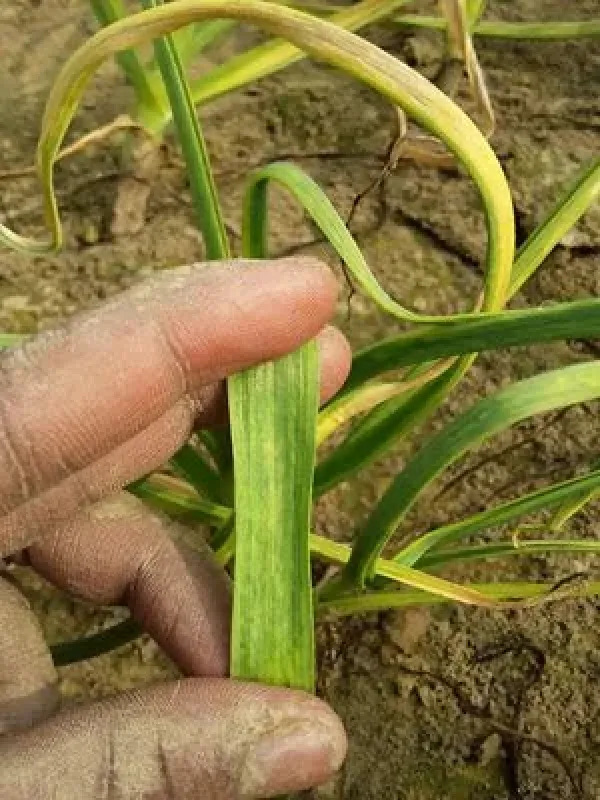
The name of the virus describes its most characteristic symptom: the yellowing and stunting (dwarfing) of leaves, which fail to grow to their normal height.
Leaves often show typical mosaic patterns, chlorotic stripes, and significant curling, flattening, or twisting, giving the plant a deformed and unhealthy appearance.
In many cases, the leaf blades become brittle and may tip-burn or wilt prematurely, especially during periods of high temperature or water stress.
The entire plant canopy appears uneven and sparse compared to healthy, vigorous crops, which is an indicator of the systemic spread of the virus within the field.
Symptoms are most pronounced in younger, actively growing plants, although latent infections can occur where plants show mild or no visible symptoms at all.
Control measures
The cornerstone of OYDV management is the use of virus-free, certified, or meristem-tip cultured planting material to establish new fields from clean stock.
Strict field sanitation, including the prompt removal and destruction of symptomatic plants as soon as they are identified, is vital to limit the spread of the virus.
Managing the populations of aphid vectors using timely insecticide applications can help reduce the frequency of virus transmission between and within fields.
- Maintaining adequate isolation distances between new plantings and old, potentially infected fields.
- Weed control to eliminate alternative hosts that may harbor the virus and aphid populations.
- Implementing rigorous crop rotation practices to minimize the risk of soil-borne or leftover plant material infection.
Integrated Pest Management (IPM) strategies, combining vector control with clean seed programs, are essential for successful long-term management of the disease.
Causes diseases · 1
Discussion
No discussions yet — be the first.