
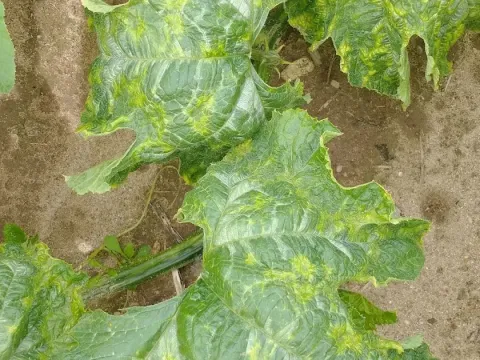
Squash mosaic
Squash mosaic
The causal agent of the disease is the Squash mosaic virus (SqMV), which belongs to the genus Comovirus within the Secoviridae family. This phytopathogenic virus contains a single-stranded RNA genome and primarily infects plants in the Cucurbitaceae family.
What the section contains
Squash mosaic
The virus exhibits high genetic diversity and is capable of spreading through both mechanical contact and seed transmission, as well as via specific insect vectors. Field identification can be challenging due to overlapping symptoms with other mosaic viruses.
Laboratory diagnostics typically involve Enzyme-Linked Immunosorbent Assay (ELISA) or Polymerase Chain Reaction (PCR) testing. These methods are essential for distinguishing SqMV from other common viruses like the Cucumber mosaic virus or Zucchini yellow mosaic virus.
In the wild, the virus is maintained by reservoir weeds within the Cucurbitaceae and Solanaceae families. Perennial plants can also serve as hosts, allowing the virus to overwinter and persist in the environment.
Geographic distribution is heavily influenced by the presence of specific insect vectors, particularly leaf-feeding beetles. Without these vectors, the intra-field spread of the virus occurs at a significantly slower pace.
The disease primarily affects cucurbit crops, including cucumbers, melons, pumpkins, squash, and watermelons. This leads to severe economic losses and diminished yields for farmers and gardeners alike.
Infection during the early growth stages causes significant deformation of leaves and fruit, rendering the harvest unmarketable. The plants exhibit stunted growth, often failing to reach their full physiological potential.
The disruption of photosynthetic activity in infected leaves leads to a compromised root system. This physiological stress makes the plants more susceptible to environmental factors like drought and temperature fluctuations.
Seed-borne transmission is a critical aspect of the virus's ecology, posing a constant threat to new plantations. Infected seeds often act as the primary ignition point for outbreaks in agricultural fields.
In cases of severe infestation, especially in greenhouse environments or large-scale fields, crop losses can range from 30 to 80 percent, depending on the cultivar's susceptibility and climate conditions.
Initial infection foci typically emerge as soon as seedlings appear or after transplanting. The activity of insect vectors aligns with warming weather, which coincides with the onset of the active growing season for cucurbits.
Throughout the growing season, the virus spreads rapidly if leaf-feeding beetles (such as Diabrotica spp.) are present, as they transfer viral particles during feeding sessions on host plant tissues.
During the summer months, high temperatures and inconsistent irrigation can exacerbate symptom severity. Environmental stress frequently accelerates the viral replication process within the host plants.
The end of the vegetative cycle is characterized by the accumulation of viral titers in fruits and seeds. Proper management and cleaning of fields post-harvest are vital to prevent carry-over into the following season.
Greenhouse conditions can facilitate faster disease progression compared to open fields due to the creation of a microclimate that is optimal for the survival and multiplication of insect vectors.
The first noticeable sign is the appearance of chlorotic spotting on young leaves, which eventually evolves into a complex mosaic pattern. Interveinal tissues may bulge, resulting in a characteristic crinkled or puckered appearance.
Leaf deformation is a common hallmark; leaves may become narrowed, strap-like, or display significant asymmetry. In bush-type cucurbits, shortened internodes can cause the plant to appear stunted or rosetted.
Fruits from infected plants often display clear signs of damage, such as light-colored streaks, mottling, wart-like outgrowths, or severe physical distortion. The internal tissue of the fruit may also show signs of necrosis or irregularity.
Flowering is frequently delayed, and the total number of set fruits is significantly reduced. Premature flower and fruit drop are common consequences of systemic infection.
An infected field is characterized by patches of stunted, low-growing plants with mottled or mosaic foliage, standing out against the healthier surrounding plants.
- Use only certified, virus-free seeds for planting.
- Implement systematic pest management to control insect vectors, particularly leaf-feeding beetles, using recommended insecticides.
- Remove and destroy weed hosts surrounding the field to eliminate viral reservoirs.
- Follow strict crop rotation practices, avoiding cucurbit planting on the same site more than once every 3-4 years.
- Rogue out and incinerate symptomatic plants immediately upon detection to stop secondary spread.