
Stachybotrys chartarum
Stachybotrys chartarum
Stachybotrys chartarum is an imperfect fungus belonging to the Stachybotryaceae family and the Hypocreales order. It primarily acts as a saprotroph, decomposing organic matter.
What the section contains
Stachybotrys chartarum
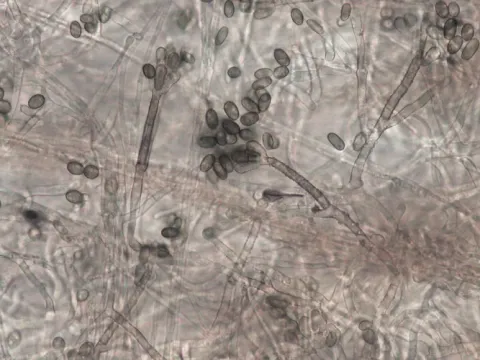
The mycelium typically exhibits a dark grey or olive-black color, creating a velvety appearance on infested substrates. The conidiophores are branched and bear clusters of ellipsoidal conidia at their tips.
This species is highly recognized for its ability to produce potent mycotoxins, including macrocyclic trichothecenes like satratoxin, which pose significant health risks to animals and humans.
Microscopic identification relies on the presence of phialides, the specialized cells that produce spores, which are essential for accurate laboratory classification.
As a cellulose-degrading fungus, it thrives on materials rich in cellulose, such as straw, hay, paper, and plant debris, making it a common contaminant in agricultural settings.
In agriculture, Stachybotrys chartarum primarily affects crop residues, stored hay, and grains that are kept in high-moisture conditions.
Although it rarely attacks healthy, living plants, it readily colonizes weakened tissues and stored products, leading to significant quality degradation and economic losses.
The primary concern involves the contamination of animal feed. Ingestion of mold-infested forage can lead to severe mycotoxicosis in livestock, resulting in poor health and reduced productivity.
In fields, the fungus accelerates the decomposition of plant residues, which can be problematic if mycotoxins accumulate in the soil or remain on debris.
Infested products lose their commercial value, develop a distinct musty odor, and become hazardous due to the concentration of toxins produced by the fungal metabolism.
The fungus thrives in environments with relative humidity levels above 85% and stable moderate temperatures, typically ranging from +20°C to +28°C.
Autumn and winter periods are particularly critical, as temperature fluctuations in storage facilities often lead to condensation, providing the moisture necessary for fungal outbreaks.
In the field, the development cycle is closely linked to the saturation of plant debris with moisture, especially after significant rainfall post-harvest.
Conidia germination is rapid when high levels of simple carbohydrates and cellulose are available, allowing the fungus to colonize material quickly.
Spores are predominantly spread through the air, facilitating the rapid colonization of large surfaces in poorly ventilated areas.
The first visual sign of infestation is the formation of dark green to black patches on the surface of the substrate, which eventually develop a dense, matted texture.
Infested materials may appear discolored, and their structural integrity can be compromised, causing tissues to become brittle or crumbly under pressure.
A distinct, pungent musty odor is a hallmark sign of Stachybotrys growth, often noticeable before the mold patches become visually prominent.
Laboratory confirmation often involves culturing samples on specific media, where the fungus produces characteristic colonies with abundant sporulation.
Regular monitoring of storage facilities usually reveals localized spots that expand rapidly, covering any available cellulose-based surface if left unchecked.
The most effective control strategy is the strict management of moisture levels: keeping stored grain and hay below 14-15% moisture effectively prevents fungal development.
Ensuring proper ventilation in storage barns and grain silos prevents stagnant air and condensation, which are primary drivers of mold outbreaks.
Regular sanitation of facilities, including the removal of organic residues, significantly reduces the environmental spore load and prevents re-infestation.
If mold is detected, contaminated materials must be isolated and disposed of immediately to prevent spores from spreading to healthy inventory.
- Apply approved fungicidal treatments for facility disinfection.
- Inspect all equipment and storage containers for cleanliness before use.
- Prioritize thorough drying of plant materials before placing them in long-term storage.