
Squash vein yellowing virus
Squash vein
Description
How to identify
Squash vein yellowing virus (SqVYV) is a plant-pathogenic virus belonging to the genus Ipomovirus and the family Potyviridae. This RNA virus is a significant threat to global cucurbit production, particularly in warm climates.
The virus is primarily transmitted by the silverleaf whitefly (Bemisia tabaci) in a semi-persistent manner. The insect acquires the virus after feeding on an infected plant for a short duration and can transmit it immediately to a healthy host.
Laboratory diagnosis via PCR or ELISA is essential because symptoms can easily be confused with abiotic disorders or other vascular pathogens like Fusarium oxysporum.
The geographical distribution of the virus mirrors the prevalence of the whitefly vector, making it a critical concern in regions where these pests are abundant throughout the growing season.
Understanding the epidemiology of SqVYV is crucial for nursery managers and farmers, as the virus can cause severe losses before clear symptoms are even observed.
What it damages
SqVYV infects a wide range of cucurbits, including watermelons, pumpkins, squash, cucumbers, and melons. It is most notorious for causing the "watermelon sudden wilt" syndrome.
The virus colonizes the phloem tissues, obstructing the transport of nutrients and water, which ultimately leads to a collapse of the plant's vascular system.
Economic damage is extreme, often resulting in total crop loss if the infection occurs during the fruit set or maturation stages. Fruits from infected plants are often unmarketable due to discoloration and lack of sweetness.
Besides immediate crop loss, the virus weakens the entire plant, making it highly susceptible to secondary invaders and physiological stress.
Since the virus can survive in wild cucurbit hosts, it acts as a constant threat in areas with high weed diversity near commercial fields.
Signs of infestation
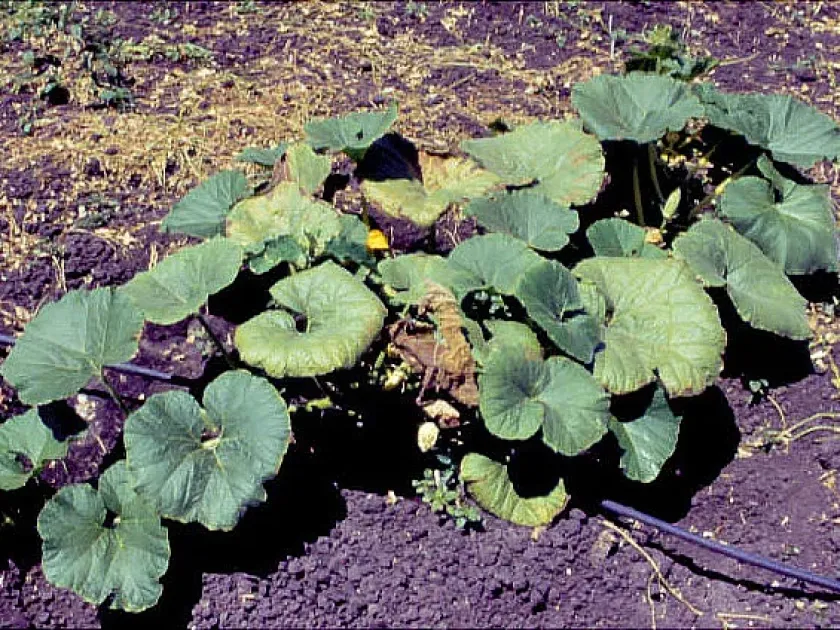
The hallmark symptom of SqVYV infection is the chlorotic yellowing of the leaf veins, which often progresses into a mosaic pattern across the entire leaf blade.
As the disease progresses, plants exhibit severe wilting, often starting from the older leaves and rapidly advancing to the entire vine, leading to total collapse.
Infected watermelon fruits are prone to internal flesh degradation, loss of rind color, and a general lack of internal quality, making them unsuitable for harvest.
Vegetative growth is often stunted, with leaves appearing distorted, thickened, or smaller than healthy ones, indicating systemic physiological disturbance.
- Veinal chlorosis on leaves
- Mosaic patterning on foliage
- Rapid wilting of vines
- Stunted growth and deformation
- Internal fruit quality loss
Control measures
Management of SqVYV is heavily dependent on the control of the whitefly population. Implementing a robust insecticide program early in the season is the most effective preventative measure.
Sanitation practices, including the removal of infected plants and the destruction of wild cucurbit weeds, are vital to reducing the primary inoculum source in the field.
Utilizing reflective mulches can help deter whiteflies from landing on plants during the critical early stages of crop development, thereby reducing initial infection rates.
Strategic planting schedules should be employed to ensure that young, highly susceptible crops are not positioned immediately adjacent to older, potentially virus-infested fields.
Monitoring for the presence of whitefly vectors using yellow sticky cards allows for timely intervention before the virus can establish an epidemic within the crop canopy.
Causes diseases · 1
Discussion
No discussions yet — be the first.