
Geminiviruses
Geminiviridae
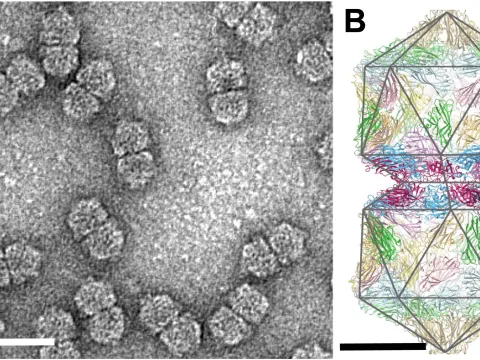
Geminiviruses (family Geminiviridae) are a large group of plant viruses characterized by their unique twin-like, incomplete icosahedral capsids. They contain single-stranded DNA and are responsible for significant losses in agricultural productivity globally.
What the section contains
Geminiviruses
These viruses are categorized into several genera, including Begomovirus, Mastrevirus, Curtovirus, and Topocuvirus. The classification is primarily based on the genome structure, host range, and the specific insect vector responsible for their transmission.
Unlike many other viral pathogens, geminiviruses are not transmitted mechanically through sap or tools. Their life cycle is strictly dependent on insect vectors such as whiteflies (Bemisia tabaci), leafhoppers, or treehoppers.
The genome of these viruses is known for high recombination rates, which allows them to adapt rapidly to new plant hosts and develop resistance to traditional breeding efforts. This genetic plasticity makes them difficult to control.
Molecular diagnostic techniques, such as PCR and ELISA, are essential for identifying these pathogens because symptoms can easily be confused with nutrient deficiencies, herbicide damage, or abiotic stress.
Geminiviruses impact a wide variety of economically important crops, including tomatoes, peppers, beans, cotton, maize, and sugar beets. In tropical and subtropical regions, they represent one of the most significant threats to food security.
Infection in the early stages of plant development can lead to a complete loss of marketable yield. Stunted growth, deformed foliage, and flower abortion are common outcomes of systemic geminivirus infection.
The viruses interfere with the plant's hormonal balance and photosynthetic capacity, which directly translates into reduced sugar production and smaller fruit development, leading to overall poor crop quality.
Persistent infection means that once a plant is infected, it remains a reservoir of the virus for the rest of its life, providing a constant source of inoculum for the rest of the field.
The economic impact includes not only direct yield loss but also the high costs associated with repeated insecticide applications, which are often required to control the insect vectors carrying the virus.
The occurrence and spread of geminiviruses are intrinsically linked to the population dynamics of their insect vectors. Outbreaks typically occur during warm, dry seasons when vector populations thrive and migrate.
Weeds often serve as the primary reservoir for both the virus and the insect vector during the off-season. When environmental conditions become favorable, the insects migrate from infected weeds to susceptible crop fields.
The latent period for symptom development varies depending on the viral species and the host plant, but high temperatures generally shorten this period, leading to rapid disease progression in the field.
Agricultural practices can influence the seasonality of the virus; for example, consecutive planting of susceptible crops creates a continuous bridge for the virus to survive and spread throughout the year.
In greenhouse settings, the virus can persist year-round if the vectors are not effectively managed, making winter production cycles potentially as vulnerable as summer ones.
The hallmark symptoms of geminivirus infection are leaf curling, yellowing, and severe stunting. These symptoms typically appear on the younger, upper leaves first as the virus spreads systemically.
- Interveinal chlorosis and yellowing (mosaic patterns).
- Upward or downward curling of leaf margins.
- Shortened internodes leading to a bushy, stunted appearance.
- Reduced fruit size and irregular fruit shape.
- Flower and fruit abscission, drastically reducing yields.
The pattern of symptom appearance in the field often follows the movement of vectors, appearing in clusters rather than randomly. This distribution is a key indicator for field scouting.
Distinguishing between geminivirus symptoms and nutritional deficiencies requires care; however, unlike nutrient deficiencies, viral symptoms do not respond to fertilization.
In some crops, such as tomatoes, the infection can cause the plant to stop developing new nodes entirely, giving it a stunted "rosette" or "broom-like" appearance that is highly characteristic of the infection.
Integrated Pest Management (IPM) is the most effective approach for controlling geminiviruses, focusing primarily on managing the population of insect vectors through early insecticide application.
Planting resistant or tolerant cultivars is considered the most sustainable strategy. However, because these viruses evolve rapidly, resistance can break down, requiring continuous efforts in plant breeding.
Sanitation practices, such as removing infected plants, controlling weeds near the fields, and maintaining proper isolation distances between crop fields, help lower the infection pressure.
Physical barriers, such as the use of insect-proof nets in greenhouses and nurseries, provide excellent protection by preventing the entry of vectors, effectively stopping the transmission cycle.
Crop rotation and scheduling planting dates to avoid peak vector activity can also significantly reduce the incidence of the disease in the field.