
Fusarium tricinctum
Fusarium tricinctum
Fusarium tricinctum is a soil-borne fungus belonging to the genus Fusarium, commonly found in various agricultural environments globally.
What the section contains
Fusarium tricinctum
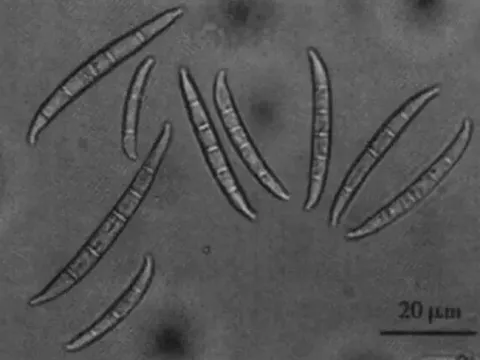
Microscopically, it is distinguished by the production of characteristic microconidia and macroconidia, which are key features for diagnostic laboratory identification.
The mycelium typically forms a fluffy, white-to-pinkish colony that grows rapidly on potato dextrose agar and other standard culture media.
This pathogen survives adverse conditions through the formation of chlamydospores, which remain viable in the soil for extended periods of time.
As a pathogen, it is recognized for its ability to produce various secondary metabolites, including specific trichothecene mycotoxins that threaten crop quality.
The fungus primary attacks cereal crops, including wheat, barley, rye, and oats, causing significant yield losses in affected fields.
It is a causative agent of Fusarium head blight (FHB), which targets the ear of the plant during the critical flowering and grain-filling stages.
Beyond head blight, it can also induce root and stem rots, leading to reduced nutrient uptake and stunted plant development.
Seedling blight is another common symptom, where the pathogen kills young sprouts before they can establish in the field.
Economic damage occurs not only through yield reduction but also via grain contamination, making harvested products toxic and unusable.
The development of the pathogen is highly dependent on environmental conditions, peaking during warm and humid weather with temperatures between 18°C and 25°C.
Infection cycles usually initiate during the anthesis stage of cereal crops, when fungal spores are dispersed by wind and rain onto susceptible floral parts.
High moisture levels during the grain-filling stage promote the rapid spread of the fungus throughout the canopy.
During the off-season, the pathogen persists saprophytically on crop debris left on the soil surface, ensuring an inoculum source for the next season.
Warm spring temperatures trigger the reactivation of the fungus from the soil, facilitating the infection of new emerging seedlings.
The primary symptom is the premature bleaching of spikes or individual spikelets, which stand out clearly against the healthy green tissues of the plant.
A characteristic salmon-pink to orange fungal growth (sporodochia) often appears on the glumes and rachis under high humidity.
Root system damage often manifests as brown necrotic lesions on roots and the base of the stem, resulting in lodging or plant death.
Grains harvested from infected spikes are typically shriveled, discolored, and have a reduced weight compared to healthy grains.
- Premature bleaching of the cereal head.
- Pinkish mold growth on the spikelets.
- Darkening of the stem base and root rot.
- Shriveled and deformed kernels.
Effective management begins with the use of high-quality, fungicide-treated seeds to ensure protection during the germination stage.
Crop rotation is a fundamental practice; avoiding consecutive years of susceptible cereal crops helps break the infection cycle of the fungus.
Deep plowing or incorporation of crop residues into the soil significantly reduces the primary inoculum source for subsequent seasons.
Application of systemic fungicides during the flowering window (anthesis) is the most effective chemical measure to control head infection.
Maintaining optimal field drainage and balanced soil fertility can reduce plant stress, making crops more resistant to initial pathogen invasion.