
Fusarium subglutinans
Fusarium subglutinans
Description
How to identify
Fusarium subglutinans is a fungal pathogen belonging to the Ascomycota division and the genus Fusarium. It is characterized by the production of microconidia arranged in chains or false heads, which serves as a primary diagnostic feature under microscopic examination.
This fungus acts as a facultative parasite, capable of surviving in the soil or on crop residues as a saprophyte. Its ability to persist in the environment for extended periods makes it a persistent challenge for agricultural production systems worldwide.
Systemically, F. subglutinans is recognized for its metabolic diversity, producing various mycotoxins, including moniliformin and fumonisins. These compounds are significant contaminants in agricultural products, raising serious concerns regarding food and feed safety.
Identification often requires molecular techniques, such as PCR assays, to differentiate this species from other closely related members of the Fusarium fujikuroi species complex. Accurate identification is essential for developing targeted disease management programs.
The life cycle involves both sexual and asexual reproduction, with asexual conidia serving as the main source of inoculum for infection. Environmental factors like high humidity and temperatures between 20-30°C significantly promote sporulation and infection spread.
What it damages
The primary host of Fusarium subglutinans is maize (corn), where it causes severe ear rot and seedling blight. The pathogen invades the kernels and cob tissues, leading to significant reductions in both yield quantity and the nutritional quality of the grain.
Beyond maize, this fungus affects a broad range of crops, including sorghum, pineapples (causing fusariosis), and various cereals. In pineapples, for instance, it is a devastating pathogen that affects fruit development and leads to systemic rot.
Economic losses arise not only from the direct destruction of grain but also from the secondary effects, such as reduced germination rates in seeds. Infected seeds often fail to emerge or produce weak seedlings that are susceptible to other environmental stresses.
The damage to the plant's vascular system hampers the transport of water and nutrients. This physiological impairment leads to stunted growth, premature yellowing of leaves, and in severe cases, the complete collapse of the plant structure.
Impacts on food security are profound, as contaminated grain is unfit for human consumption due to the presence of harmful mycotoxins. This leads to substantial economic losses for farmers and increases the risks to the livestock industry.
Signs of infestation
The most visible sign of Fusarium subglutinans on corn ears is the development of a white to salmon-pink mycelial mat. This fungal growth often covers individual kernels or clusters, gradually spreading across the ear during wet periods.
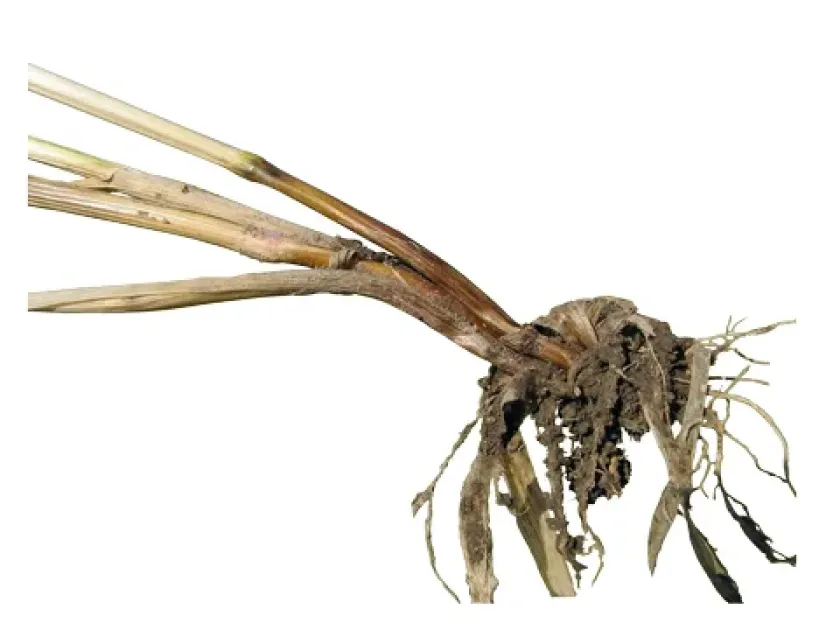
Root rot symptoms include the discoloration of root tissues, which turn brown or reddish and become soft. The degradation of the root system reduces the plant's ability to anchor firmly in the soil, increasing the risk of lodging during strong winds.
Stem rot manifests as internal decay, where the pith tissues become discolored and fragile. In advanced stages of the disease, the stalk integrity is compromised, leading to structural failure and potentially significant harvest losses.
Seedling blight caused by this pathogen presents as water-soaked lesions on the coleoptile and roots. Infected seeds typically show poor germination and are often covered in white fungal hyphae before they reach the soil surface.
These symptoms, while indicative, can be confused with other fusarium species infections. Therefore, observation of the specific growth patterns of the fungus on artificial media is often necessary for confirmed diagnosis.
Control measures
The most effective strategy for managing Fusarium subglutinans involves the selection and planting of resistant hybrid varieties. Genetic resistance is the cornerstone of integrated disease management, significantly reducing infection rates in the field.
Seed treatment with systemic fungicides is crucial to protect germinating seeds from soil-borne inoculum. Applying appropriate chemical protectants ensures that the crop gets off to a healthy start, minimizing early-season vulnerability.
Cultural practices, such as crop rotation with non-host crops, are vital to reduce the accumulation of the pathogen in the soil. Avoiding continuous corn monoculture helps to lower the pathogen's primary inoculum level over time.
Integrated pest management (IPM) focusing on insects like the corn borer is essential. By controlling these pests, producers limit the mechanical wounds on ears that serve as entry points for fungal spores, thereby decreasing overall infection levels.
Managing soil moisture and promoting the rapid decomposition of crop residues through tillage are effective methods to decrease the fungal population. Healthy, balanced soil fertility also helps plants maintain robust immunity against pathogen attacks.
Causes diseases · 2
Discussion
No discussions yet — be the first.