
Fusarium solani
Fusarium solani
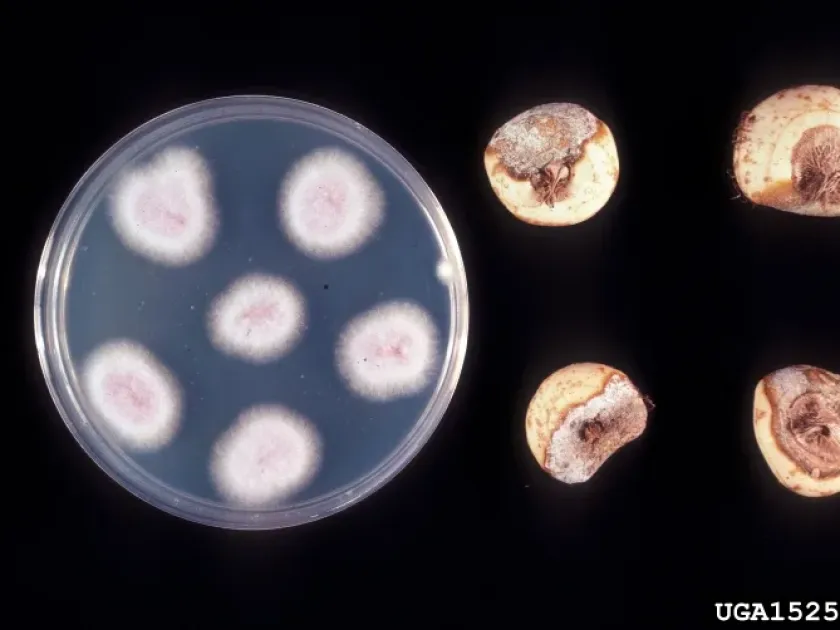
Description
How to identify
Fusarium solani is an imperfect fungus belonging to the genus Fusarium within the Ascomycota division. It is a persistent soil-borne pathogen known for its ability to survive for years in soil through chlamydospores.
Microscopically, the fungus is characterized by spindle-shaped macroconidia with several septa, along with microconidia produced in chains or false heads. It can also form dark blue or brown sclerotia.
The pathogen displays high genetic diversity and physiological specialization, allowing different strains to adapt to various host plants and environmental conditions across diverse geographical regions.
While often acting as a saprotroph breaking down organic matter, Fusarium solani readily switches to a parasitic mode when conditions facilitate infection, making it a highly opportunistic pathogen.
Laboratory diagnosis via fungal culturing and microscopic analysis is essential for accurate species identification, as visual symptoms in the field often resemble other fusarium species.
What it damages
This pathogen has an exceptionally broad host range, including potatoes, legumes (soybeans, beans, peas), and various vegetable crops. It primarily targets the root system and vascular tissues of its hosts.
In potatoes, Fusarium solani is a major cause of dry rot in storage and stem-end rot in the field. This can lead to substantial losses in both yield quantity and the overall marketability of the product.
For leguminous crops, the fungus causes severe root rot. By colonizing the root cortex and vascular bundles, it restricts the plant's ability to uptake water and nutrients, resulting in stunted growth.
The infection process often acts as a precursor for other opportunistic pathogens, including bacteria, which exacerbate the degradation of the plant tissue, leading to premature wilting and mortality.
Economic damage is twofold: it reduces the harvest volume significantly and compromises the quality of the produce, rendering it unsuitable for long-term storage or export.
When it appears
Infection cycles typically begin early in the season when chlamydospores germinate in the rhizosphere of developing seedlings. Rapid colonization occurs under warm and moist soil conditions.
The fungus thrives in soil temperatures ranging from 20–28°C. During these conditions, the fungal mycelium grows aggressively, invading the roots and moving upward through the vascular system.
Late-season stress, particularly heat and drought, often triggers rapid wilting in plants whose root systems were previously weakened by the pathogen, making the symptoms more apparent in late summer.
As the growing season ends, the fungus continues to survive on crop residues. It forms resilient structures that remain dormant in the soil profile until the next growing season begins.
Agricultural practices, such as excessive irrigation or poor field drainage, significantly promote the spread of the pathogen by facilitating the movement of spores through the soil moisture.
Signs of infestation
Initial symptoms include the chlorosis and curling of lower leaves, which gradually progress upward as the plant's vascular system becomes increasingly obstructed by fungal mycelium.
Root systems exhibit dark brown to black necrotic lesions. The cortex of the roots often becomes soft and sheds easily, and internal tissues may turn pink or reddish due to fungal toxins.
On potato tubers, external symptoms manifest as sunken, dry, and necrotic patches. Beneath these lesions, the internal flesh may develop cavities filled with a whitish, powdery mass of fungal spores.
Under high humidity, a characteristic fluffy fungal growth may appear on the surface of infected tissues, signaling the presence of abundant conidia that can be spread by water or farming tools.
Wilting symptoms are often irreversible; once the vascular tissues are clogged by the fungus, the plant fails to recover its turgor pressure even after irrigation or rainfall.
Control measures
Integrated management is essential, starting with crop rotation that avoids planting susceptible species in the same field for at least 3 to 4 years to break the infection cycle.
Seed treatment with systemic fungicides is a standard preventive measure, effectively protecting the seed and young seedlings from soil-borne inoculum during the most vulnerable developmental stages.
Good soil management is crucial: ensuring proper drainage and soil aeration helps prevent the conditions that favor the rapid growth and spread of Fusarium solani.
- Deep plowing of crop residues to promote decomposition.
- Maintaining optimal soil pH, as very acidic soils can favor fungal growth.
- Prompt removal and disposal of heavily infected plants to reduce inoculum levels.
Biological control agents, particularly Trichoderma species, have shown success in suppressing the pathogen by competing for space and nutrients in the rhizosphere.
Causes diseases · 3
Discussion
No discussions yet — be the first.