
Brick-red spots
Brick-red spots
Brick-red spots is a plant disease caused by the parasitic green algae known as Cephaleuros virescens. This pathogen is unique because it is an algal species that has adapted to a parasitic lifestyle on higher plants.
What the section contains
Brick-red spots
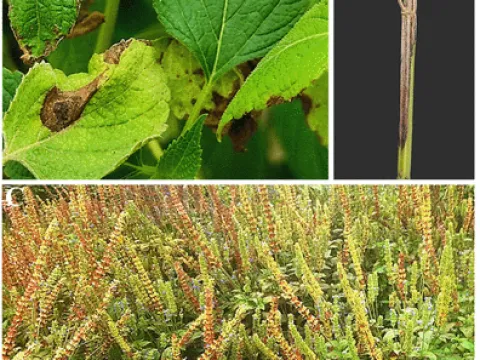
The organism appears as a velvet-like growth of a rusty or brick-red color on the leaves, twigs, and sometimes fruits of various perennial hosts. This is a result of the algae producing sporangiophores on the surface of the plant tissue.
Taxonomically, the pathogen belongs to the genus Cephaleuros within the class Ulvophyceae. It thrives in humid tropical and subtropical climates where it infects a wide array of broad-leaved evergreen species.
Unlike common fungal pathogens, this algae contains chlorophyll and performs photosynthesis, yet it still extracts nutrients from the host, causing physiological stress.
Field identification is primarily based on the distinctive color and texture of the spots, which are easily distinguishable from typical fungal infections once the sporangial growth is developed.
The disease affects numerous economically important crops, including tea, coffee, citrus, mango, and various ornamental plants like magnolias, camellias, and rhododendrons.
The damage is primarily caused by the colonization of the leaf epidermis, which hinders normal photosynthesis and causes local cell death. This results in chlorosis and reduced metabolic efficiency.
In addition to leaf damage, severe infections can cause stem lesions and bark cracking on young branches, which creates entry points for secondary pathogens and wood-rotting fungi.
In heavy infestation scenarios, the algae can cause extensive defoliation, which severely weakens the plant and reduces its potential yield and overall vigor.
Plantations of tea and citrus are particularly susceptible to yield losses when favorable weather conditions persist, leading to reduced marketability of the produce.
The pathogen is highly active during seasons with high relative humidity and frequent rainfall, which are necessary for the release and dispersal of zoospores via water films.
Development is optimal at temperatures ranging from +20°C to +28°C, and the disease cycle is frequently correlated with the rainy season in subtropical agricultural regions.
The spreading mechanism relies on splashing water from rain or irrigation systems, which carries the zoospores to healthy leaf surfaces where they germinate and infect new tissue.
During dry or cool periods, the algae remains in a resting state within the host tissues, waiting for the return of favorable environmental conditions to resume sporulation.
In evergreen hosts, the pathogen acts as an endophyte or parasite that survives throughout the year, ensuring a steady source of infection whenever environmental factors align.
The primary symptom is the appearance of small, circular or irregular spots on the leaf surface, which eventually develop a characteristic rusty or brick-red color.
These spots are initially inconspicuous but become raised and velvety as the algal sporangiophores emerge through the plant cuticle.
- Circular rusty or orange-red patches on leaf blades.
- Yellowing (chlorosis) in the leaf tissue immediately surrounding the spots.
- Leaf necrosis and premature dropping of infected foliage.
- Development of lesions and fissures on the bark of younger branches.
- Stunted growth of new shoots due to nutrient diversion to the algae.
Advanced infections lead to the coalescence of spots, covering large areas of the leaf surface and causing significant stress to the entire foliage system.
Effective management begins with improved orchard sanitation, including the removal and destruction of severely infected leaves and branches to reduce the inoculum load.
Cultural practices such as proper pruning are essential to improve air circulation and sunlight penetration into the canopy, which keeps the leaf surface dry and unfavorable for algal growth.
Chemical control involving copper-based fungicides is the most common and effective method for protecting susceptible crops during the periods of high humidity and rainfall.
Balancing plant nutrition, particularly avoiding excessive nitrogen, helps maintain a thicker cuticle and improves the plant's overall resistance to parasitic colonization.
Integrated Pest Management (IPM) strategies focusing on canopy management and timely chemical applications are recommended for sustainable control in high-value commercial plantations.