
Bramble yellow
Bramble yellow
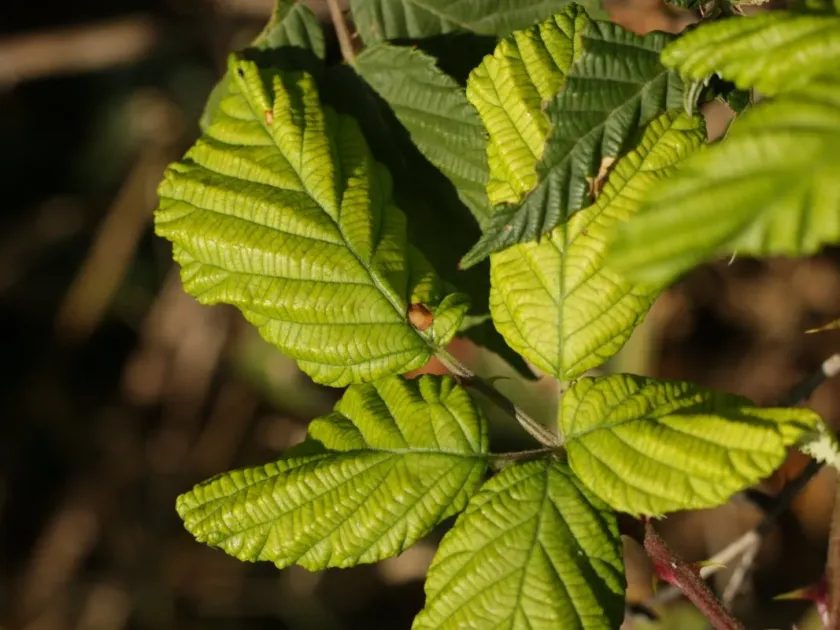
Description
How to identify
Bramble yellow is caused by the Bramble yellow vein virus (BYVV), which belongs to the Ilarvirus genus. It is a severe pathogen that systemically infects plants in the Rubus genus.
The virus particles are spherical and contain single-stranded RNA. It is classified as a persistent and systemic pathogen, meaning it spreads throughout the entire vascular network of the host plant.
This virus is typically spread through vegetative propagation of infected stock and mechanical contact during pruning or field operations. It can also be transmitted via pollen or specific insect vectors.
In many regions, wild blackberry populations act as an environmental reservoir for the virus, allowing it to persist near cultivated fields throughout the year.
Diagnosis in the field is difficult as symptoms often overlap with nutrient deficiencies or other viral infections. Reliable detection requires molecular techniques like RT-PCR or ELISA tests.
What it damages
The disease primarily affects commercial blackberry varieties and blackberry-raspberry hybrids. Once a plant is infected, the virus remains present throughout its lifespan.
The virus causes a significant decrease in vigor and yield. Infected plants struggle to assimilate nutrients, leading to reduced growth rates and poor structural development of the canes.
Productivity drops substantially, and the berries produced by infected plants are often small, crumbly, and low in sugar content, making them unfit for the fresh market.
Over several seasons, the economic viability of an entire plantation can be destroyed, as the virus spreads from infected plants to neighboring healthy ones.
The damage is cumulative, with the most severe impact on yield appearing in the second and third years after initial infection, leading to high financial losses for growers.
Signs of infestation
The most recognizable sign is the distinct yellowing of the leaf veins, which often progresses into a mosaic or chlorotic pattern across the entire leaf surface.
Leaves frequently exhibit significant deformation, including curling, crinkling, or stunted growth. The overall foliage density of the plant is usually reduced compared to healthy counterparts.
Growth of the canes is stunted or inhibited, and in some varieties, excessive branching can occur. Flowering may be reduced, and those flowers that do form often fail to set fruit.
- Yellow banding along leaf veins.
- Mottling and chlorosis of leaves.
- Stunted shoot elongation.
- Deformed fruits with poor flavor.
Symptoms are most pronounced during the cooler, active growth periods of spring. During the heat of mid-summer, symptoms may seem to fade, but the virus remains active.
Control measures
The most critical control measure is to start with virus-indexed, certified disease-free nursery stock. Never propagate from bushes with unknown health histories.
Early identification and rigorous removal of infected plants are essential. Once a plant is suspected to be infected, it should be rogued out and destroyed by burning.
Strict hygiene protocols must be followed during pruning. All tools should be disinfected between plants using a bleach solution or high-percentage alcohol to prevent mechanical transmission.
Integrated Pest Management (IPM) is necessary to control insect vectors like aphids and leafhoppers, which are known to spread the virus between plants in the field.
Maintaining a buffer zone of non-host plants between the plantation and wild bramble thickets can help reduce the potential for external viral pressure.
Causes diseases · 1
Discussion
No discussions yet — be the first.