
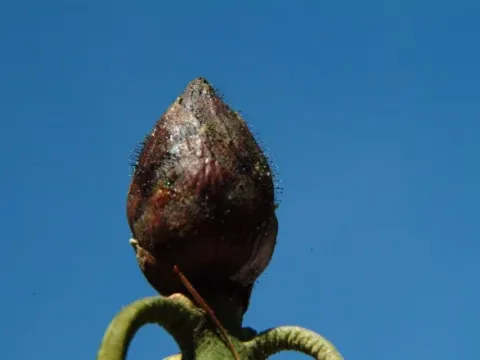
Briosia azalea
Briosia azalea
Briosia azalea is a pathogenic fungus that specifically targets plants within the Ericaceae family, most notably azaleas and rhododendrons. It is classified as a significant pathogen responsible for bud blast and leaf necrosis in various ornamental settings.
What the section contains
Briosia azalea
As an ascomycete fungus, it completes its life cycle by forming mycelial structures within the host tissue, eventually producing conidia that serve as the primary source of inoculum. Its biological strategy relies on high humidity for the efficient dispersal of spores.
The taxonomic position of this organism places it among the fungi that cause rapid decay of sensitive tissues. It is considered an obligate parasite, thriving exclusively on living host plants under specific climatic conditions.
Laboratory diagnosis of Briosia azalea involves identifying the characteristic conidiophores and conidia. These microscopic structures form dark, velvety cushions on the host, which is a diagnostic feature used to distinguish it from other leaf spot pathogens.
Understanding the pathogen's development is crucial for nursery managers. Since it spreads via wind and rain splash, the control of the environmental microclimate is essential to inhibiting its reproductive cycle and overall survival.
The primary impact of Briosia azalea is observed on the reproductive organs of the host plant. The fungus invades developing buds, causing them to blacken and wither, which prevents the plant from flowering and significantly impacts its aesthetic and commercial value.
Leaf infection is another major symptom, characterized by necrotic lesions that expand over time. As the infection progresses, these lesions damage the leaf's photosynthetic apparatus, causing chlorosis, wilting, and ultimately premature leaf drop.
The pathogen can also affect succulent shoots, causing localized necrosis and deformation. In severe cases, this leads to the dieback of entire branches, forcing intensive pruning and compromising the plant's structural integrity.
The systemic weakness caused by the fungus makes infected plants more susceptible to secondary environmental stresses, such as drought or frost. This cumulative damage often leads to the long-term decline of the plant if left untreated.
For ornamental nurseries, the presence of Briosia azalea can be devastating. Because the pathogen spreads rapidly in dense, humid conditions, a single infected plant can quickly become a source of an epidemic across the entire batch.
Early symptoms appear as brown spots on the flower buds during the spring season. As the fungus develops, these spots turn dark and the buds shrivel, often covered in a fine, powdery layer of fungal spores.
A distinctive sign is the development of black, velvety spore-bearing structures on the undersides of leaves. These cushions are the visible manifestation of the pathogen’s reproductive phase and are highly active during wet weather.
Leaves often show a yellowing halo around the necrotic spots, indicating the plant's stress response to fungal toxins. Over time, the affected leaf tissue becomes brittle and may fall off prematurely.
Shoot deformation is a common secondary sign in areas where the fungus has established itself. Infected stems may show sunken lesions that interrupt the flow of nutrients to the terminal buds.
- Darkened, shriveled flower buds;
- Velvety black spore cushions on leaf undersides;
- Expanding necrotic leaf spots;
- Premature defoliation;
- Tip dieback and shoot distortion.
Effective management begins with strict sanitation practices. All infected plant parts, including fallen leaves and buds, must be removed and destroyed to reduce the primary inoculum load in the garden or nursery.
Improving air circulation is a critical cultural practice. Pruning the canopy of rhododendrons and azaleas helps reduce humidity within the foliage, creating an environment that is less favorable for fungal development.
Chemical control involving copper-based fungicides or systemic triazole compounds is recommended during the early spring. Regular applications are necessary to protect new growth from infection throughout the high-risk season.
In greenhouse settings, maintaining proper spacing and avoiding overhead irrigation can significantly mitigate the risk of Briosia azalea. Drip irrigation should be prioritized to keep foliage dry.
Monitoring the plants consistently, especially after periods of rainfall, allows for early intervention. Integrated pest management, combining cultural and chemical controls, is the most successful strategy for maintaining plant health.