
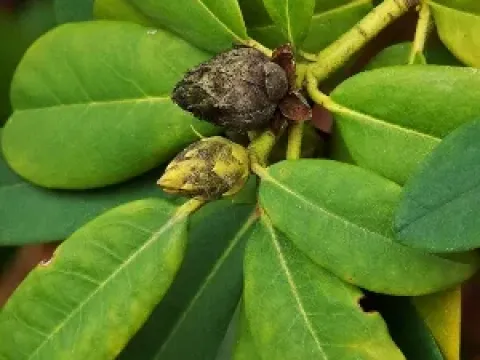
Briosia azaleae
Briosia azaleae
Briosia azaleae is a fungal pathogen belonging to the class Dothideomycetes. It is specifically recognized for causing infectious diseases in plants of the Ericaceae family, particularly azaleas and rhododendrons.
What the section contains
Briosia azaleae
The fungus is characterized by the production of synnemata, which are erect stalks that bear conidia at the apex, appearing as small, black, velvety tufts on host tissue.
It is classified as a necrotrophic pathogen, as it obtains nutrients by destroying the cells of the host plant, resulting in localized death of specific plant organs.
The taxonomic classification places it within the order of Dothideales, indicating a complex life cycle that often includes both asexual and sexual reproductive phases.
Identification often relies on microscopic examination of the conidiophores and conidia to differentiate this pathogen from other fungi that cause similar necrotic symptoms.
The primary host range of Briosia azaleae includes various species of azaleas and rhododendrons, which are staple plants in temperate ornamental gardening.
The most significant damage occurs to the flower buds, which become infected and fail to develop, leading to complete floral loss in affected specimens.
If left unmanaged, the fungus can progress from the buds into the adjacent twigs, causing localized lesions and eventual dieback of the affected branches.
High levels of infestation significantly deplete the plant's energy reserves, as it continuously attempts to recover from the loss of its reproductive buds.
The aesthetic value of the shrub is compromised not only by the lack of flowers but also by the presence of unsightly black necrotic tissue that persists on the plant.
The disease cycle is highly dependent on humidity, with peak infection periods occurring during the cool, wet weather typical of early spring.
Conidia are released and dispersed primarily by rain splash and wind, allowing the fungus to spread rapidly among neighboring plants in close proximity.
The infection process is most successful when moisture remains on the surface of the buds for extended periods, facilitating spore germination and penetration.
During the warmer and drier summer months, the metabolic activity of the fungus slows down, although it persists within the plant tissue in a dormant state.
As autumn and winter approach, the fungus prepares for survival, overwintering in the dead buds and twigs, ready to initiate new infections the following spring.
Early symptoms involve small brown discolorations on the outer scales of the flower buds, which quickly expand as the fungus colonizes the internal tissues.
- Development of characteristic black, velvety spore-producing tufts on buds.
- Complete failure of buds to open during the spring flowering season.
- Necrotic brown lesions that eventually turn black, resembling fire blight or cold damage.
- Death of branch tips where the infection has migrated from the bud base.
- General weakening of the plant structure due to repeated annual infections.
Infected buds often become hard, dry, and brittle, remaining attached to the branches long after they should have opened or fallen.
The distinction between this disease and cold injury is the presence of the dark, velvety fungal structures visible under a hand lens during moist conditions.
The most effective management strategy is rigorous sanitation, which involves the physical removal and destruction of all infected buds and twigs immediately upon discovery.
Maintaining adequate plant spacing and ensuring good airflow within the canopy are crucial practices to reduce the humidity levels that favor fungal development.
Fungicidal treatments can be applied as a preventative measure, specifically targeting the period before bud break to protect the susceptible tissues from infection.
Avoiding overhead irrigation is highly recommended to minimize the period of leaf and bud wetness, thus interrupting the transmission cycle of the fungal spores.
Gardeners should prioritize the use of disease-resistant varieties and ensure that plants are placed in well-drained soil to support overall plant vigor and immunity.