
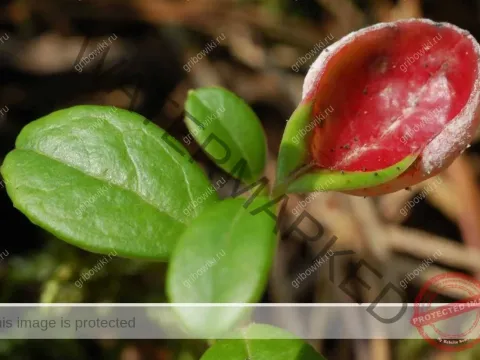
Exobasidium vaccinii
Exobasidium vaccinii
Exobasidium vaccinii is a fungal plant pathogen belonging to the phylum Basidiomycota. It is a specialized parasite that primarily attacks members of the Ericaceae family, causing significant physiological disruptions in the host plants.
What the section contains
Exobasidium vaccinii
The fungus is classified within the order Exobasidiales. It is an obligate parasite, meaning it requires the living tissue of its host to complete its complex biological life cycle and reproduce.
The host range includes various berries such as blueberries, cranberries, lingonberries, and related ornamental shrubs like rhododendrons. The disease is commonly referred to as red leaf or leaf gall.
Infection results in hypertrophy and hyperplasia of plant cells. This damage leads to weakened growth, premature leaf drop, and a drastic reduction in fruit yield, which is particularly detrimental for commercial berry farming.
The pathogen is most active during periods of cool and wet weather in the spring and early summer. Moisture is crucial for the germination of basidiospores and the colonization of new leaves and shoots.
The fungus survives the winter season as mycelium within the dormant buds and stems of the host. When growth resumes in spring, the fungus develops spores that are dispersed by wind and splashing rain to infect new tissues.
Visible symptoms include the development of fleshy, discolored galls on the leaves. These spots often change color from pale green to vibrant pink or bright red as the infection progresses.
A white, velvety fungal mat appears on the underside of the leaves, representing the sporulation stage. As the infection peaks, these spots often turn necrotic, causing the leaves to shrivel and drop prematurely.
Integrated pest management strategies are essential, starting with the prompt removal and destruction of infected plant parts to reduce the source of inoculum in the field.
- Sanitation and pruning
- Improved air circulation
- Copper-based fungicide applications
- Early season preventative sprays
- Site selection for better drainage
Application of fungicides, such as copper-based compounds, is most effective when performed early in the season, just before bud break. Routine monitoring of plantations during the spring flush is necessary to detect and mitigate the spread of the fungus effectively.