
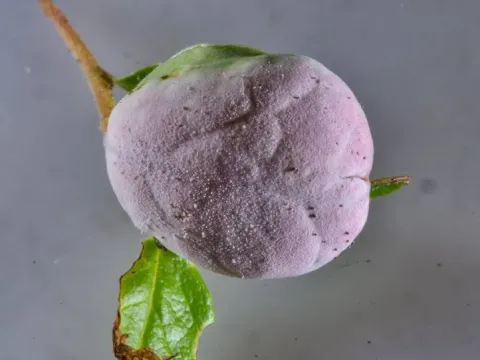
Exobasidium rostrupii
Exobasidium rostrupii
Exobasidium rostrupii is a specialized fungal pathogen belonging to the phylum Basidiomycota. It primarily parasitizes members of the Ericaceae family, with a distinct preference for the lingonberry (Vaccinium vitis-idaea).
What the section contains
Exobasidium rostrupii
As an obligate parasite, this fungus lives within the tissues of its host. It is classified under the order Exobasidiales, a group known for causing hypertrophy and other morphological deformations in host plants.
The fungus lacks traditional mushroom-like fruiting bodies. Instead, it produces its reproductive structures directly on the surface of the infected plant parts, appearing as a visible layer of spore-producing hyphae.
Identification is typically confirmed through microscopic analysis of the basidia and spores. Field identification is based on the characteristic abnormal growth patterns induced by the mycelial development within the host tissues.
This species is highly adapted to the ecological niche of lingonberry habitats, demonstrating a sophisticated co-evolutionary relationship with its host to ensure survival and propagation.
The pathogen targets the vegetative organs of the lingonberry, specifically leaves and tender shoots. Infection forces the plant to divert nutrients to the infected areas, leading to structural abnormalities.
Hypertrophy, or excessive cell growth, causes leaves to thicken and deform. These distorted tissues are less efficient at photosynthesis, leading to reduced overall vigor of the host plant.
Crop loss is a significant consequence of Exobasidium rostrupii infection. The energy deficit in the plant results in fewer flowers and, subsequently, a lower yield of berries in commercial or wild settings.
Chronic infections can weaken the plant over several seasons, making it more susceptible to other abiotic stresses, such as drought or frost, and secondary pathogen infestations.
In dense lingonberry patches, the disease can spread rapidly, causing patches of the colony to become unproductive and stunted, significantly impacting the commercial potential of the harvest.
The disease cycle is strictly synchronized with the lingonberry's growing season. Infection begins in the spring when favorable temperature and humidity levels promote spore germination.
Basidiospores are the primary means of dissemination, spread through the air or rain splashes. High relative humidity is a prerequisite for successful colonization and infection of new tissues.
The most visible symptoms appear during the peak of the growing season, typically in late spring and early summer. During this time, the fungus produces its white, velvety spore layer.
As the season progresses toward autumn, the fungal activity decreases. The pathogen enters a dormant phase, surviving as mycelium within the shoots and buds of the lingonberry plant throughout the winter.
Micro-environmental conditions such as poor drainage, high shade, and lack of air circulation are the primary drivers that exacerbate the seasonal spread of this fungal pathogen.
The most prominent sign of Exobasidium rostrupii is the appearance of thickened, distorted leaves. These areas often show distinct discoloration, ranging from pale yellow to deep red.
During periods of high humidity, the undersides of infected leaves develop a white, felt-like coating. This is the sporulation stage of the fungus, representing a massive release of basidiospores.
Infected shoots frequently display curling or twisting. In some cases, the internodes may shorten significantly, creating a stunted, bunched appearance often referred to as a "witches' broom" effect.
As the infection cycle concludes, the affected tissues may become necrotic and brittle. Leaves turn brown and drop prematurely, leaving the stems scarred or weakened.
Early diagnosis is critical. Even subtle localized thickenings or unnatural color variations on a lingonberry leaf should be treated as potential signs of an active fungal infection.
Effective management begins with strict sanitation practices. Growers should manually remove and destroy any infected plant material to minimize the load of fungal spores in the environment.
Improving the growing environment is essential. This includes thinning out dense plantings to increase airflow and sunlight penetration, which helps keep the foliage dry and inhibits fungal growth.
Chemical control involving fungicides, particularly copper-based sprays, can be effective if applied early in the spring before the peak of sporulation occurs.
Integrated pest management strategies should be employed, focusing on maintaining plant health through proper nutrition and soil moisture management to boost the lingonberry's innate immunity.
Regular scouting of the patches is necessary to catch the infection at its inception. If localized outbreaks are controlled immediately, the need for wide-scale chemical intervention can be significantly reduced.