
Powdery mildew of cucurbits
Sphaerotheca fuliginea
Description
How to identify
The pathogen Sphaerotheca fuliginea belongs to the kingdom Fungi, phylum Ascomycota. It is a highly specialized obligate parasite that feeds exclusively on the living tissues of the host plant.
The fungal mycelium develops primarily on the surface of plant organs, forming specific attachment structures called haustoria. Through these, the fungus penetrates epidermal cells to absorb nutrients, disrupting the plant's photosynthesis processes.
Reproduction occurs via conidia, which form chains on conidiophores. Under unfavorable conditions or at the end of the season, the pathogen produces cleistothecia—dark fruiting bodies that ensure overwintering in the soil or on plant debris.
The pathogen exhibits high plasticity, allowing it to adapt to various microclimatic conditions in both greenhouses and open fields. Throughout its evolution, the species has developed significant genetic variability, helping it overcome the immunity of certain crop cultivars.
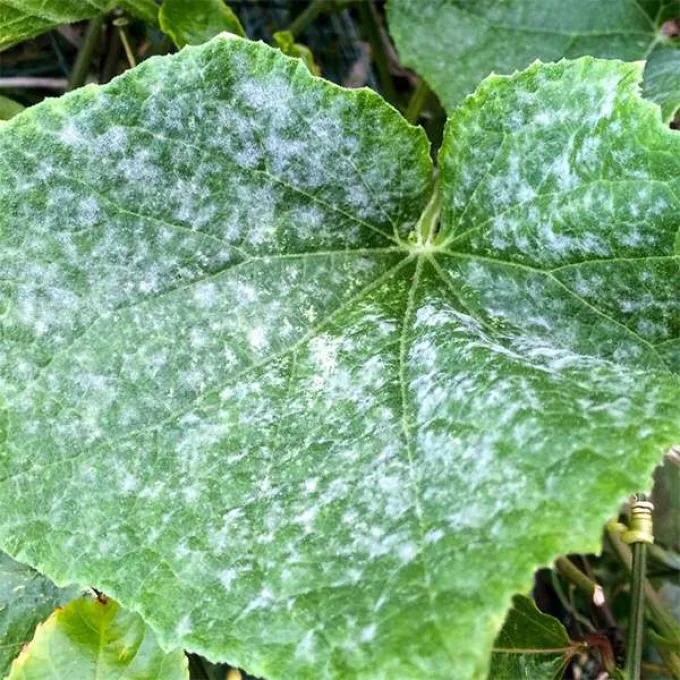
In laboratory settings, identification is performed via microscopic analysis of conidiophore structures and cleistothecia size. Visually, the fungus is easily distinguished by its characteristic white, flour-like coating that turns greyish or brownish over time.
What it damages
This pathogen affects a wide range of crops in the Cucurbitaceae family, including cucumbers, zucchini, squash, pumpkins, melons, and watermelons. In protected cultivation, the pathogen's impact is significantly higher due to the possibility of a year-round life cycle.
The primary damage occurs on leaves, where most photosynthetic activity takes place. Infection leads to premature wilting, yellowing, and necrosis, significantly reducing the vegetative mass of the plant.
Damage to stems and petioles restricts the transport of nutrients and water to the fruits, causing stunted growth, deformity, and reduced commercial quality. Yield losses can reach 50–70% during severe outbreaks.
Infected fruits suffer from poor taste and reduced shelf life. The disruption of leaf tissue integrity also makes the plant more susceptible to secondary bacterial infections, which worsen the overall phytosanitary status of the crop.
Severe powdery mildew development during the flowering stage leads to massive flower and fruit abortion, preventing early production. Chronic infestation weakens the plant's immune system, making it vulnerable to other opportunistic pathogens.
When it appears
The primary source of infection is overwintered cleistothecia, as well as mycelium on crop debris or weeds. Infection often starts in localized hotspots where air humidity remains consistently high for extended periods.
Active infection development occurs within a temperature range of +16°C to +25°C. Optimal conditions for spore germination involve moderate humidity, though the presence of surface water on leaves is not strictly necessary for the fungus to spread.
In greenhouses, the disease progresses rapidly when ventilation is inadequate and when there are drastic temperature fluctuations between night and day. Crowded plantings and excessive nitrogen fertilization favor rapid spread across the entire crop area.
The incubation period for the fungus ranges from 3 to 7 days, depending on ambient temperatures. Within one season, the pathogen can produce 10 or more generations of conidia, leading to exponential increases in the infection pressure.
Spore dissemination occurs via wind, irrigation water, as well as through contaminated tools and clothing of personnel. High transmission speed makes localizing outbreaks difficult without the use of effective fungicide treatments.
Signs of infestation
The first signs of infection are small spots of white powdery coating, typically appearing on the underside of older leaves. These spots eventually expand, merge, and cover the entire leaf surface on both sides.
The characteristic coating consists of a mass of mycelium and conidia. In severe cases, the leaves become brittle, curl upwards, and eventually wither.
On stems, the infection manifests as dense white patches that may eventually turn reddish or brownish as fruiting bodies (cleistothecia) form, signaling the pathogen's transition to a dormant state.
Secondary symptoms include chlorosis, where the leaf tissues turn yellow. The overall stunting of the plant is visible through slowed internode growth and a reduction in total foliage area.
- Appearance of white powdery spots on leaves.
- Curling and deformation of leaf blades.
- Yellowing and necrosis of infected areas.
- Formation of tiny black dots (cleistothecia) at the end of the season.
Control measures
Protection strategies include agronomic practices: crop rotation, deep plowing of plant residues, control of cucurbitaceous weeds, and the use of resistant cultivars and hybrids that possess specific resistance genes.
In greenhouses, it is critical to maintain an optimal microclimate, avoiding sharp temperature shifts and high humidity through regular ventilation. Reducing nitrogen fertilizers in favor of potassium-phosphorus applications strengthens plant cell walls.
Chemical control relies on the use of various fungicide groups, including sulfur-based products, triazoles, strobilurins, and systemic fungicides with curative properties. Treatments should be applied as soon as the first signs of disease appear.
A key practice is rotating fungicides from different chemical classes to prevent the development of resistant fungal populations. Timely removal and destruction of heavily infected plants in hotspots effectively curb the spread of infection.
Biological control methods involve using hyperparasitic fungi, such as Ampelomyces quisqualis, which effectively suppress the development of powdery mildew in greenhouse environments.
Causes diseases · 1
Discussion
No discussions yet — be the first.